

1,400
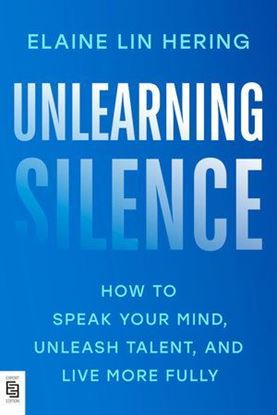
UNLEARNING SILENCE
Having a seat at the table doesn’t mean that your voice is actually welcome. Knowing something is wrong doesn't mean it's easy to speak up. In fact, there are incentives for many of us to stay silent. Why speak up if you know that it won’t be received well, and in fact, often makes things worse?
In Unlearning Silence, Hering explores how we’ve learned to be silent, how we’ve benefited from silence, how we’ve silenced other people—and how we might choose another way. She teaches how to recognize and unlearn unconscious patterns so we can make more intentional choices about how we want to show up in at home and at work. Only by unlearning silence can we more fully unleash talent, speak our minds, and be more complete versions of ourselves… and help other people do the same.
With compassion, clarity, and understanding, Hering guides readers through real-life examples and offers a concrete road map for doing this vital and challenging work.
1,400

995
UNNATURAL HISTORY
Los Angeles is a city of stark contrast, the palaces of the affluent coexisting uneasily with the hellholes of the mad and the needy. That shadow world and the violence it breeds draw brilliant psychologist Dr. Alex Delaware and Detective Milo Sturgis into an unsettling case of altruism gone wrong.
On a superficially lovely morning, a woman shows up for work with her usual enthusiasm. She’s the newly hired personal assistant to a handsome, wealthy photographer and is ready to greet her boss with coffee and good cheer. Instead, she finds him slumped in bed, shot to death.
The victim had recently received rave media attention for his latest project: images of homeless people in their personal “dream” situations, elaborately costumed and enacting unfulfilled fantasies. There are some, however, who view the whole thing as nothing more than crass exploitation, citing token payments and the victim’s avoidance of any long-term relationships with his subjects.
Has disgruntlement blossomed into homicidal rage? Or do the roots of violence reach down to the victim’s family—a clan, sired by an elusive billionaire, that is bizarre in its own right?
Then new murders arise, and Alex and Milo begin peeling back layer after layer of intrigue and complexity, culminating in one of the deadliest threats they’ve ever faced.
995
1,750
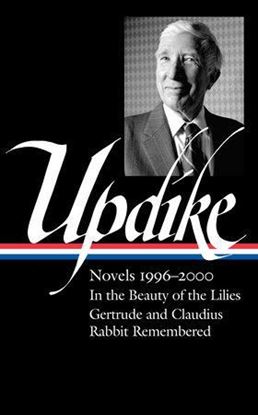
UPDIKE: NOVELS 1996–2000
The capstone volume of the Library of America edition of John Updike’s novels contains some of the master stylist and social observer’s most ambitious works.
In the Beauty of the Lilies (1996) opens in 1910, when Clarence Wilmot, a Presbyterian minister in Paterson, NJ, experiences a devastating loss of faith. This moment of crisis sets in motion an eighty-year, multigenerational saga whose subject is nothing less than the American Century and modernity itself, seen through the fluctuating fortunes of a single representative family.
In Gertrude and Claudius, Updike boldly imagines the long backstory to the world’s most famous play, prompting readers to revisit and perhaps revise their judgments about Hamlet’s notorious uncle and mother. Drawing on the twelfth- and fifteenth century sources for Hamlet, but also inventing a new history for Claudius in his far-flung travels across medieval Europe, Updike creates a vivid and surprising origin story for the fabled rottenness in Shakespeare’s Denmark.
1,750
900
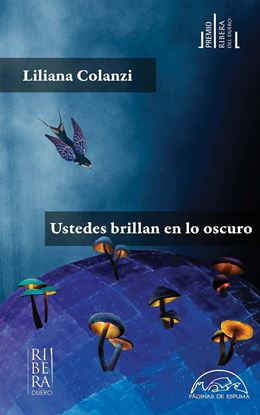
USTEDES BRILLLAN EN LO OSCURO
Los cuentos de Liliana Colanzi exploran diversas formas de narrar el tiempo, como el viaje geológico en una cueva, la búsqueda de las raíces históricas de la explotación del caucho en las ruinas de un pueblo amazónico, o la temporalidad dislocada de una colonia religiosa en la que sus personajes ansían deshacerse de las prohibiciones que los encallan en el pasado. En este libro la radiación es un agente invisible que afecta a los jóvenes que viven cerca de una central nuclear andina y a los recolectores de chatarra de una ciudad brasileña. Ustedes brillan en lo oscuro, libro galardonado con el Premio Ribera del Duero, crea espacios abigarrados y enigmáticos con una escritura inquietante y sensorial. El jurado, del que formaron parte los escritores Marta Sanz, Cristian Crusat y presidido por Rosa Montero, resaltó una obra de gran originalidad y potencia expresiva, que construye mundos extraños aunando las claves de ciencia ficción y realismo para llevar a cabo una crítica que nos sitúa ante el desconsuelo e inquietud de la vida
900

900
V13. CRONICA JUDICIAL
V13: viernes 13 de noviembre de 2015. En tres puntos diferentes de París se producen atentados yihadistas. El más grave es el de la sala Bataclan, donde están actuando los Eagles of Death Metal. El resultado de los ataques en el corazón de Francia es de ciento treinta muertos y más de cuatrocientos heridos. Años después, entre septiembre de 2021 y junio de 2022, se celebra el juicio en el Palacio de Justicia de la capital. Hay catorce acusados: el principal es el único superviviente de entre los terroristas de Estado Islámico que participaron en la masacre. El resto son colaboradores en distintos grados. Y además están los testigos, los familiares de las víctimas, los fiscales, los miembros del tribunal...
Emmanuel Carrère cubre el juicio y envía sus crónicas semanales a L’Obs. Esos textos son la base de este libro. En sus páginas encontramos la narración del juicio, la voz de las víctimas, los advenedizos que han tratado de hacerse pasar por víctimas, los héroes que ayudaron a detener a los criminales, los detalles entre bambalinas... La dimensión humana y la dimensión política. El resultado: un volumen sobrecogedor y un testimonio necesario. El periodismo hecho literatura a través de la perspicaz mirada de Carrère.
900

900
V2 (BOL)
Rudi Graf es un ingeniero alemán que soñaba con enviar cohetes a la luna, al que la guerra ha llevado hasta una pequeña localidad de la costa de Holanda. Allí colabora con Wernher von Braun en el lanzamiento de los cohetes V2 que están destruyendo la capital británica.
Kay Caton-Walsh es una joven oficial que trabaja para el gobierno británico descifrando imágenes aéreas. Tras sobrevivir al ataque de un V2 mientras se encontraba con su amante en una habitación de hotel, se presenta voluntaria para una misión secreta. En Bélgica, recién liberada de la ocupación alemana, se va a montar un operativo para tratar de averiguar la ubicación desde donde se envían los cohetes. Armadas con una regla de cálculo y algunas ecuaciones, Kay y sus compañeras están decididas a localizar y destruir las lanzaderas de los misiles.
900