


995
MALDICIONES Y MALDITOS EN HOLLYWOOD
Entre las décadas de los años veinte y cincuenta de la pasada centuria, las películas, que comenzaron siendo curiosidades de gabinete en ferias, lograron convertirse en el mayor espectáculo del mundo. Los protagonistas de aquellos shows de celuloide que encandilaban al público desde la gran pantalla, pronto fueron erigidos como reyes dominantes del imaginario colectivo del siglo XX.
Pero aquel panteón cada vez más poblado de rutilantes deidades, albergaba asimismo siniestros y decadentes bastidores, plagados de sombras sin fin: espectros, maldiciones, muertes extrañas, crímenes sin resolver, adicciones, magia sexual, satanismo… Hechos misteriosos, sucesos estremecedores y, en ocasiones, atroces ocurrían entre el lujo y la fatalidad, entre el oropel y la decadencia.
Crueles destinos inexorables, tanto de numerosas estrellas, como de aspirantes a serlo.
995
1,250
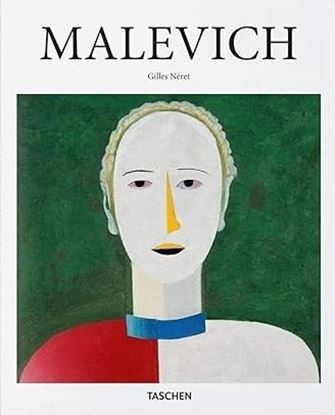
MALEVICH (BA-ART) (GB)
After flirtations with Realism, Impressionism, and Symbolism, Kiev-born Kazimir Malevich (18781935) found his métier in dissolving literal, representational figures and landscapes into pure emotionally-charged abstraction. In 1915, he created what is widely lauded as the first and ultimate abstract artwork: Black Square, a black rectangle on a white background, hailed as the zero point of painting, a seminal moment for modern and abstract practice.
1,250
1,250
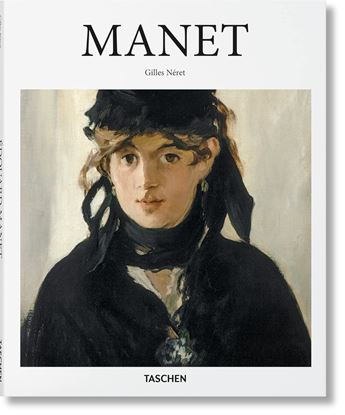
MANET (BASIC ART EDITION) (INT)
Lampooned during his lifetime for his style as much as his subject matter, French painter Édouard Manet (1832–1883) is now considered a crucial figure in the history of art, bridging the transition from Realism to Impressionism.
Manet’s work combined a painterly technique with strikingly modern images of contemporary life, centered on the urban Paris experience. He recorded the city’s parks, bars, and cabarets, often delighting in the frisson of underground or provocative content. The Paris salon rejected his Déjeuner sur l’herbe with its juxtaposition of fully dressed men and a nude woman, while the steady gaze and unabashed pose of the prostitute Olympia, a very modern reworking of Titian’s Venus of Urbino, caused a society scandal.
1,250
3,300
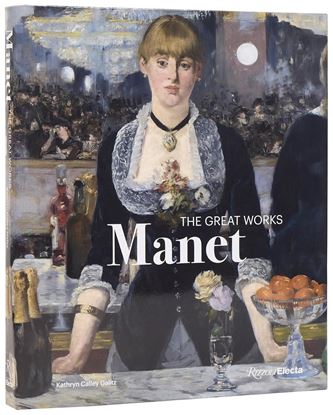
MANET. THE GREAT WORKS
With nearly one hundred seminal paintings, this publication celebrates the artist who paved the way for the Impressionist movement and the rise of modernism. Combining a radical technique with contemporary subjects, Manet’s groundbreaking works engage with modern Paris, depicting its new boulevards and fashionable parks and cafés along with a range of urban types, from ragpickers and prostitutes to barmaids and elegant Parisians.
Included here are the artist’s iconic scenes of modern life such as Luncheon on the Grass, with its shocking juxtaposition of a female nude and a pair of fully dressed men, and Olympia, a modern reworking of Titian’s Renaissance masterpiece, Venus of Urbino, that scandalized Paris in the 1860s and established Manet as the leader of the avant-garde.
3,300
3,600
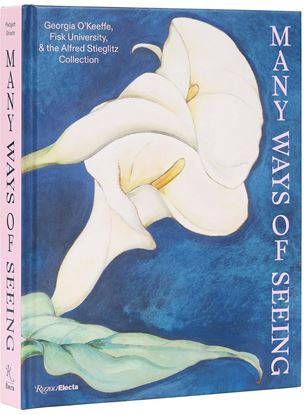
MANY WAYS OF SEEING.
Gifted in 1949 by Georgia O’Keeffe to Fisk University, a historically Black university in Nashville, the Alfred Stieglitz Collection includes 101 works from the estate of Alfred Stieglitz, O’Keeffe’s late husband. Part of his collection arriving at Fisk has long been a source of fascination in the field of American art, but this is the first publication to recount and analyze this complex and extraordinary history. The reverberations of the gift go far beyond O’Keeffe and Stieglitz, involving decades of students and faculty at Fisk, such as preeminent artists Aaron Douglas and David C. Driskell.
3,600
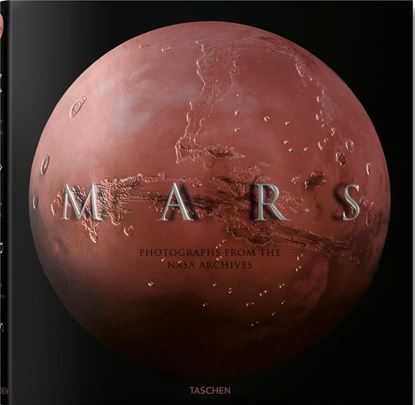
4,500
MARS. PHOTOGRAPHS FROM NASA (FO) (INT)
Early astronomers, drawn to Mars's fiery glow in the night sky, named the planet after their god of war. In the centuries since, Mars has captivated humankind as a source of endless speculation and a beacon of hope for its potential habitability. Through six decades of NASA’s pioneering research missions, the mysteries of the red planet have been gradually uncovered, revealing a world not so unlike our own that likely once supported life.
4,500