
1,350
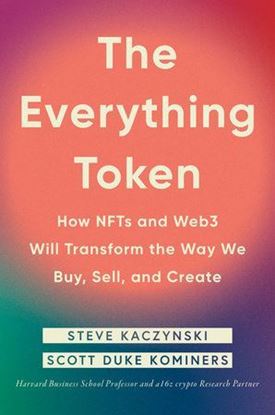
THE EVERYTHING TOKEN
NFTs aren’t just pictures on the internet, or a fad that has come and gone. Rather, they’re a new technology for creating digital assets and providing irrefutable proof of ownership. NFTs open up markets that have never before existed, and are already revolutionizing commerce and brand-building at everything from hot startups to Fortune 500 companies.
Kominers and Kaczynski have created a framework that explains what NFTs are, why they’re valuable, and how businesses can leverage them to build highly engaged and intensely loyal communities around their products and brands.
Through original research and industry experience, Kominers and Kaczynski describe the possibilities of this new digital frontier with clarity and rigor. The Everything Token is the essential primer on this innovation that has the potential to transform all aspects of business.
1,350
995
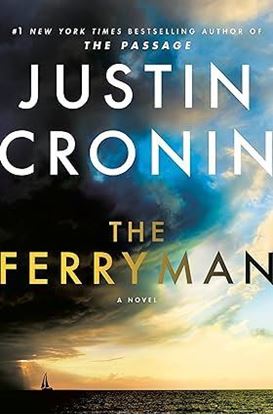
THE FERRYMAN
Founded by the mysterious genius known as the Designer, the archipelago of Prospera lies hidden from the horrors of a deteriorating outside world. In this island paradise, Prospera’s lucky citizens enjoy long, fulfilling lives until the monitors embedded in their forearms, meant to measure their physical health and psychological well-being, fall below 10 percent. Then they retire themselves, embarking on a ferry ride to the island known as the Nursery, where their failing bodies are renewed, their memories are wiped clean, and they are readied to restart life afresh.
Proctor Bennett, of the Department of Social Contracts, has a satisfying career as a ferryman, gently shepherding people through the retirement process—and, when necessary, enforcing it. But all is not well with Proctor. For one thing, he’s been dreaming—which is supposed to be impossible in Prospera. For another, his monitor percentage has begun to drop alarmingly fast. And then comes the day he is summoned to retire his own father, who gives him a disturbing and cryptic message before being wrestled onto the ferry.
995
2,500
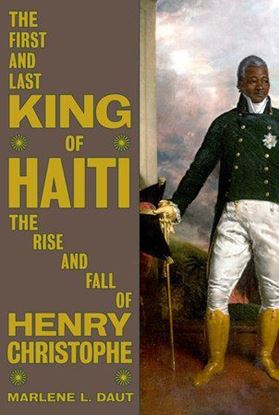
THE FIRST AND LAST KING OF HAITI
Slave, revolutionary, traitor, king, and suicide, Henry Christophe was, in his time, popular and famous the world over. Born in 1767 to an enslaved mother on the Caribbean island of Grenada, Christophe first fought to overthrow the British in North America, before helping his fellow enslaved Africans in Saint-Domingue, as Haiti was then called, to gain their freedom from France. Yet in an incredible twist of fate, Christophe ended up fighting with Napoleon’s forces against the very enslaved men and women he had once fought alongside. Later, reuniting with those he had betrayed, he offered to lead them and made himself their king. But it all came to a sudden and tragic end when Christophe—after nine years of his rule as King Henry I—shot himself in the heart, some say with a silver bullet.
Why did Christophe turn his back on Toussaint Louverture and the very revolution with which his name is so indelibly associated? How did it come to pass that Christophe found himself accused of participating in the plot to assassinate Haiti’s first ruler, Dessalines? What caused Haiti to eventually split into two countries, one ruled by Christophe in the north, who made himself king, the other led by President Pétion in the south?
The First and Last King of Haiti is a riveting story of not only geopolitical clashes on a grand scale but also of friendship and loyalty, treachery and betrayal, heroism and strife in an era of revolutionary upheaval.
2,500
1,450
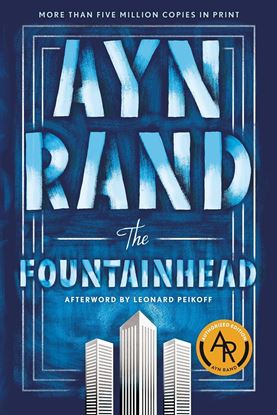
THE FOUNTAINHEAD
This modern classic is the story of intransigent young architect Howard Roark, whose integrity was as unyielding as granite...of Dominique Francon, the exquisitely beautiful woman who loved Roark passionately, but married his worst enemy...and of the fanatic denunciation unleashed by an enraged society against a great creator. As fresh today as it was then, Rand’s provocative novel presents one of the most challenging ideas in all of fiction that man’s ego is the fountainhead of human progress..
1,450
1,250
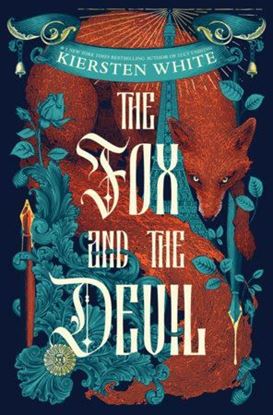
THE FOX AND THE DEVIL
Anneke has a complicated relationship with her father, Abraham Van Helsing—doctor, scientist, and madman devoted to the study of vampires—until the night she comes home to find him murdered, with a surreally beautiful woman looming over his body. A woman who leaves no trace behind, other than the dreams and nightmares that now plague Anneke every night.
Spurred by her desire for vengeance and armed with the latest forensic and investigatory techniques, Anneke puts together a team of detectives to catch this mysterious serial killer. Because her father isn’t the only inexplicable dead body. There’s a trail of victims across Europe, and Anneke is certain they’re all connected.
But during the years spent relentlessly hunting the killer, Anneke keeps crucial evidence to herself: infuriatingly coy letters, addressed only to her, occasionally soaked in blood, and always signed Diavola.
1,250
1,100
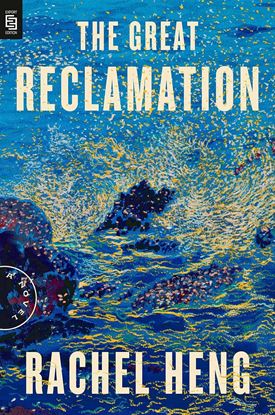
THE GREAT RECLAMATION (EXP)
Set against a changing Singapore, a sweeping novel about one boy’s unique gifts and the childhood love that will complicate the fate of his community and country
Ah Boon is born into a fishing village amid the heat and beauty of twentieth-century coastal Singapore in the waning years of British rule. He is a gentle boy who is not much interested in fishing, preferring to spend his days playing with the neighbor girl, Siok Mei. But when he discovers he has the unique ability to locate bountiful, movable islands that no one else can find, he feels a new sense of obligation and possibility—something to offer the community and impress the spirited girl he has come to love.
By the time they are teens, Ah Boon and Siok Mei are caught in the tragic sweep of history: the Japanese army invades, the resistance rises, grief intrudes, and the future of the fishing village is in jeopardy. As the nation hurtles toward rebirth, the two friends, newly empowered, must decide who they want to be, and what they are willing to give up.
1,100