1,300
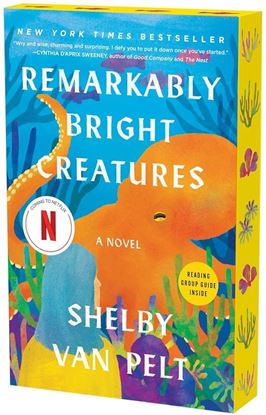
REMARKABLY BRIGHT CREATURES
After Tova Sullivan’s husband died, she began working the night shift at the Sowell Bay Aquarium, mopping floors and tidying up. Keeping busy has always helped her cope, which she’s been doing since her eighteen-year-old son, Erik, mysteriously vanished on a boat in Puget Sound over thirty years ago.
Tova becomes acquainted with curmudgeonly Marcellus, a giant Pacific octopus living at the aquarium. Marcellus knows more than anyone can imagine but wouldn’t dream of lifting one of his eight arms for his human captors—until he forms a remarkable friendship with Tova.
Ever the detective, Marcellus deduces what happened the night Tova’s son disappeared. And now Marcellus must use every trick his old invertebrate body can muster to unearth the truth for her before it’s too late.
1,300
1,350
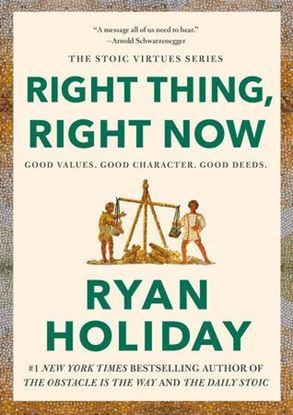
RIGHT THING, RIGHT NOW
For the ancients, everything worth pursuing in life flowed from a strong sense of justice or one’s commitment to doing the right thing, no matter how difficult. In order to be courageous, wise, and self-disciplined, one must begin with justice. The influence of the modern world often tells us that acting justly is optional. Holiday argues that that’s simply untrue—and the fact that so few people today have the strength to stand by their convictions explains much about why we’re so unhappy.
1,350
1,250
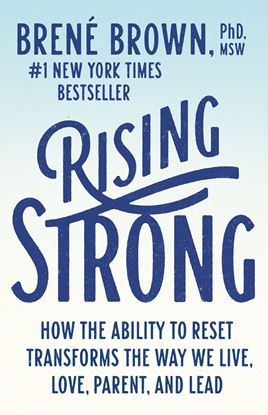
RISING STRONG
Social scientist Brené Brown has ignited a global conversation on courage, vulnerability, shame, and worthiness. Her pioneering work uncovered a profound truth: Vulnerability—the willingness to show up and be seen with no guarantee of outcome—is the only path to more love, belonging, creativity, and joy. But living a brave life is not always easy: We are, inevitably, going to stumble and fall.
It is the rise from falling that Brown takes as her subject in Rising Strong. As a grounded theory researcher, Brown has listened as a range of people—from leaders in Fortune 500 companies and the military to artists, couples in long-term relationships, teachers, and parents—shared their stories of being brave, falling, and getting back up. She asked herself, What do these people with strong and loving relationships, leaders nurturing creativity, artists pushing innovation, and clergy walking with people through faith and mystery have in common? The answer was clear: They recognize the power of emotion and they’re not afraid to lean in to discomfort.
Walking into our stories of hurt can feel dangerous. But the process of regaining our footing in the midst of struggle is where our courage is tested and our values are forged. Our stories of struggle can be big ones, like the loss of a job or the end of a relationship, or smaller ones, like a conflict with a friend or colleague. Regardless of magnitude or circumstance, the rising strong process is the same: We reckon with our emotions and get curious about what we’re feeling; we rumble with our stories until we get to a place of truth; and we live this process, every day, until it becomes a practice and creates nothing short of a revolution in our lives. Rising strong after a fall is how we cultivate wholeheartedness. It’s the process, Brown writes, that teaches us the most about who we are.
1,250

1,250
ROLL FOR ROMANCE
When Sadie Brooks unexpectedly loses her marketing job, she flees New York City to spend the summer with her best friend in small-town Texas, where joining his Dungeons & Dragons campaign is the perfect distraction while she plans her next steps.
In the game, she becomes Jaylie, a powerful human cleric blessed by the Goddess of Luck. But in real life, Sadie believes her luck has run out—until she meets Noah Walker, the outgoing bartender roped into joining their party as Loren, an adventurous and charismatic lute-strumming elf. Just as Jaylie finds herself succumbing to the bard’s charms over the course of their party’s travels, Sadie also begins to fall under Noah’s spell.
As their relationship progresses in both worlds, Sadie wonders if what they have might last beyond the game. But like his traveling bard character, Noah never stays in one place for long. When a new opportunity arises in New York, Sadie must face the truth about why she lost her job in the first place—and whether she and Noah have found something in Texas worth staying for. Torn between her career dreams in the city and the exciting uncertainty of a new adventure, she will have no choice but to roll the dice.
1,250

1,800
ROMANCING MISTER BRIDGERTON (4) DELUXE
Penelope Featherington has secretly adored her best friend’s brother for ... well, it feels like forever. After half a lifetime of watching Colin Bridgerton from afar, she thinks she knows everything about him, until she stumbles across his deepest secret . . . and fears she doesn’t know him at all.
Colin Bridgerton is tired of being thought of as nothing but an empty-headed charmer, tired of the notorious gossip columnist Lady Whistledown, who can’t seem to publish an edition without mentioning him. But when Colin returns to London from a trip abroad, he discovers nothing in his life is quite the same—especially Penelope Featherington. The girl who was always simply there is suddenly the girl haunting his dreams. When he discovers that Penelope has secrets of her own, this elusive bachelor must decide . . . is she his biggest threat— or his promise of a happy ending?
1,800
995
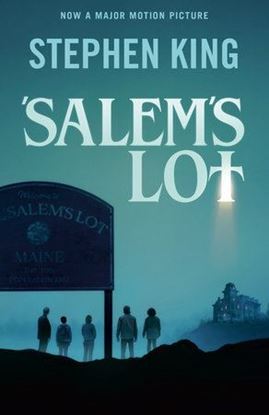
SALEM S LOT (MOVIE TIE-IN)
When two young boys venture into the woods, and only one returns alive, Mears begins to realize that something sinister is at work. In fact, his hometown is under siege from forces of darkness far beyond his imagination. And only he, with a small group of allies, can hope to contain the evil that is growing within the borders of this small New England town.
With this, his second novel, Stephen King established himself as an indisputable master of American horror, able to transform the old conceits of the genre into something fresh and all the more frightening for taking place in a familiar, idyllic locale.
995