

750
MY LIFE WITH THE WALTER BOYS (NETFLIX SE
Jackie's goal is perfection―perfect grades, the perfect look, getting into the perfect school. If she can achieve that, then maybe her too-busy mom and dad will take notice. But when her parents die in a tragic accident, Jackie is shipped off across the country to live with the Walters, her new guardians…who just happen to have eleven sons (plus a daughter who is basically one of the boys).
The Walter boys are loud, dirty, annoying―and, okay, some of the older boys might be Greek god level hot, but they don't think a city girl belongs on their horse ranch. How is Jackie supposed to fit into their chaotic world when she needs to keep her parents' memory alive by living up to the promise of perfect?
But as Jackie spends more time with the Walter boys, she begins to wonder if the perfection she's always strived for isn't the only way to find love after all.
750
1,250
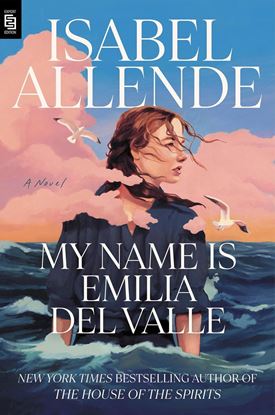
MY NAME IS EMILIA DEL VALLE (EXP)
In San Francisco in 1866, an Irish nun, abandoned following a torrid relationship with a Chilean aristocrat, gives birth to a daughter named Emilia del Valle. Raised by a loving stepfather, Emilia grows into an independent thinker and a self-sufficient young woman.
To pursue her passion for writing, she is willing to defy societal norms. At the age of seventeen, she begins to publish pulp fiction using a man’s pen name. When these fictional worlds can no longer satisfy her sense of adventure, she turns to journalism, convincing an editor at The Daily Examiner to hire her. There she is paired with another talented reporter, Eric Whelan.
As she proves herself, her restlessness returns, until an opportunity arises to cover a brewing civil war in Chile. She seizes it, as does Eric, and while there, she meets her estranged father and delves into the violent confrontation in the country where her roots lie. As she and Eric discover love, the war escalates and Emilia finds herself in extreme danger, fearing for her life and questioning her identity and her destiny.
1,250
1,850
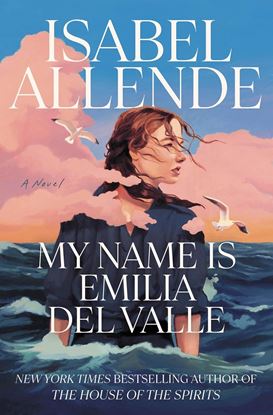
MY NAME IS EMILIA DEL VALLE (HC)
In San Francisco in 1866, an Irish nun, abandoned following a torrid relationship with a Chilean aristocrat, gives birth to a daughter named Emilia del Valle. Raised by a loving stepfather, Emilia grows into an independent thinker and a self-sufficient young woman.
To pursue her passion for writing, she is willing to defy societal norms. At the age of seventeen, she begins to publish pulp fiction using a man’s pen name. When these fictional worlds can no longer satisfy her sense of adventure, she turns to journalism, convincing an editor at The Daily Examiner to hire her. There she is paired with another talented reporter, Eric Whelan.
1,850
995
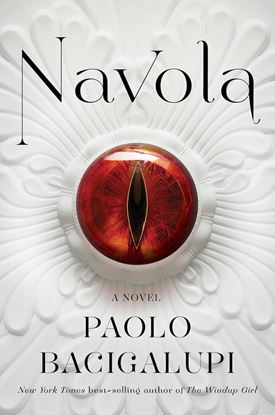
NAVOLA
In Navola, a bustling city-state dominated by a handful of influential families, business is power, and power is everything. For generations, the di Regulai family—merchant bankers with a vast empire—has nurtured tendrils that stretch to the farthest reaches of the known world. And though they claim not to be political, their staggering wealth has bought cities and toppled kingdoms. Soon, Davico di Regulai will be expected to take the reins of power from his father and demonstrate his mastery of the games of Navolese knowing who to trust and who to doubt, and how to read what lies hidden behind a smile. But in Navola, strange and ancient undercurrents lurk behind the gilt and grandeur—like the fossilized dragon eye in the family’s possession, a potent symbol of their raw power and a talisman that seems to be summoning Davico to act.
995
1,450
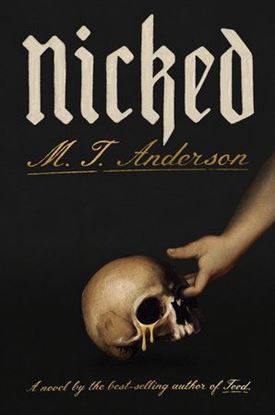
NICKED
The year is 1087, and a pox is sweeping through the Italian city of Bari. When a lowly monk is visited by Saint Nicholas in his dreams, he interprets the vision as a call to serve the sick. But his superiors, and the power brokers they serve, have different plans for the tender-hearted Brother Nicephorus.
Enter Tyun, a charismatic treasure hunter renowned for “liberating” holy relics from their tombs. The seven-hundred-year-old bones of Saint Nicholas are rumored to weep a mysterious liquid that can heal the sick, Tyun says. For the humble price of a small fortune, he will steal the bones and deliver them to Bari, curing the plague and restoring glory to the fallen city. And Nicephorus, the “dreamer,” will be his guide.
What follows is a heist for the ages, as Nicephorus is swept away on strange tides, and alongside even stranger bedfellows, to commit sacrilegious theft. Based on real historical accounts, Nicked is a swashbuckling saga, a medieval novel noir, a meditation on the miraculous, and a monastic meet-cute, filled with wide-eyed wonder at the world that awaits beyond our own borders.
1,450
1,250
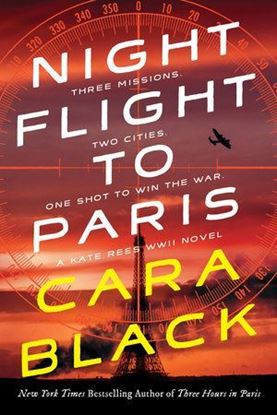
NIGHT FLIGHT TO PARIS
October 1942: it’s been two years since Kate Rees was sent to Paris on a British Secret Service mission to assassinate Hitler. Since then, she has left spycraft behind to take a training job as a sharpshooting instructor in the Scottish Highlands. But her quiet life is violently disrupted when Colonel Stepney, her former handler, drags her back into the fray for a risky three-pronged mission in Paris.
Each task is more dangerous than the next: Deliver a package of forbidden biological material. Assassinate a high-ranking German operative whose knowledge of invasion plans could turn the tide of the war against the Allies. Rescue a British agent who once saved Kate’s life—and get out.
Kate will encounter sheiks and spies, poets and partisans, as she races to keep up with the constantly shifting nature of her assignment, showing every ounce of her Oregonian grit in the process.
1,250