
1,350
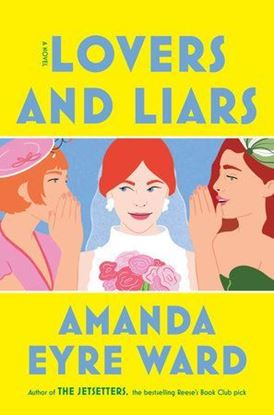
LOVERS AND LIARS
Once upon a time, the Peacock sisters were little girls who combed each other’s tangled hair. But decades of secrets have led them to separate lives—and to telling lies, to themselves and to one another.
Sylvie is getting married. Again. A librarian and widow who soothes her grief by escaping into books (and shelving them perfectly), Sylvie has caught the attention of an unlikely match: Simon Rampling, a mysterious, wealthy man from Northern England. Sylvie allows herself to imagine a life beside him—one filled with the written word, kindness, and companionship. She’s ready to love again . . . or is she?
Cleo is the golden child. A successful criminal defense lawyer with the perfect boyfriend, she is immediately suspicious of Simon. Is he really who he says he is? Cleo heads to Mumberton Castle with a case of investigative files, telling herself she will expose Simon and save her sister from more heartbreak . . . but who is she really trying to save?
Emma is living a lie. She can’t afford this fancy trip—and she definitely can’t tell her husband and sons why. She once dreamed of a line of her own perfumes. Fragrances allowed her to speak in silence. Now, that tendency for silence only worsens her situation. Will she emerge with her dignity and family intact?
When their toxic mother shows up, the sisters assume the roles they fell into to survive their childhood . . . but they just might find the courage to make new choices.
Set over a spectacularly dramatic weekend, in the grand halls of a sprawling castle estate—amid floor-to-ceiling libraries, falconry lessons, and medieval meals—Lovers and Liars is the unforgettable story of a family’s ability to forgive and to find joy in one another once again.
1,350
900
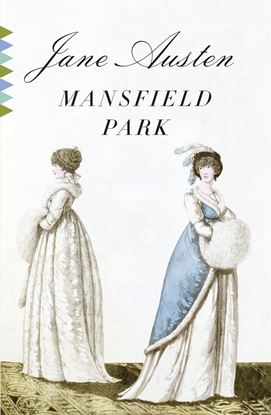
MANSFIELD PARK
Mansfield Park encompasses not only Jane Austen’s great comedic gifts and her genius as a historian of the human animal, but her personal credo as well—her faith in a social order that combats chaos through civil grace, decency, and wit.
At the novel’s center is Fanny Price, the classic “poor cousin,” brought as a child to Mansfield Park by the rich Sir Thomas Bertram and his wife as an act of charity. Over time, Fanny comes to demonstrate forcibly those virtues Austen most admired: modesty, firm principles, and a loving heart. As Fanny watches her cousins Maria and Julia cast aside their scruples in dangerous flirtations (and worse), and as she herself resolutely resists the advantages of marriage to the fascinating but morally unsteady Henry Crawford, her seeming austerity grows in appeal and makes clear to us why she was Austen’s own favorite among her heroines.
900
1,300
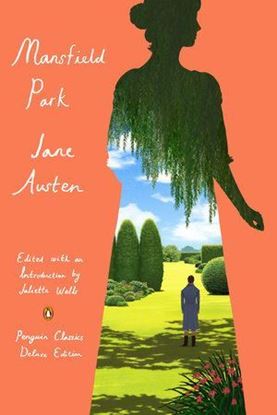
MANSFIELD PARK
Shy and penniless Fanny Price is brought up on her uncle Sir Thomas Bertram’s estate, Mansfield Park, as an act of charity. Sir Thomas also owns land— and benefits from the labor of enslaved people— in the Caribbean colony of Antigua. Fanny is miserable until her kind cousin Edmund Bertram takes her under his wing. Having secretly fallen in love with him, Fanny suffers severely when his head is turned by the captivating Mary Crawford. Fanny’s quiet fortitude makes Mansfield Park one of Austen’s most psychologically astute novels.
1,300
1,150
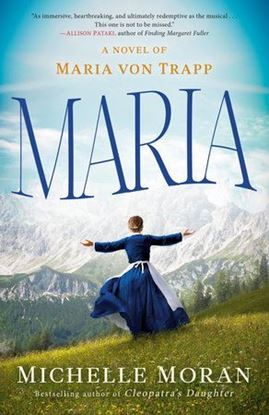
MARIA
In the 1950s, Oscar Hammerstein is asked to write the lyrics to a musical based on the life of a woman named Maria von Trapp. He’s intrigued to learn that she was once a novice who hoped to live quietly as an Austrian nun before her abbey sent her away to teach a widowed baron’s sickly child. What should have been a ten-month assignment, however, unexpectedly turned into a marriage proposal. And when the family was forced to flee their home to escape the Nazis, it was Maria who instructed them on how to survive using nothing but the power of their voices.
It’s an inspirational story, to be sure, and as half of the famous Rodgers & Hammerstein duo, Hammerstein knows it has big Broadway potential. Yet much of Maria’s life will have to be reinvented for the stage, and with the horrors of war still fresh in people’s minds, Hammerstein can’t let audiences see just how close the von Trapps came to losing their lives.
But when Maria sees the script that is supposedly based on her life, she becomes so incensed that she sets off to confront Hammerstein in person. Told that he’s busy, she is asked to express her concerns to his secretary, Fran, instead. The pair strike up an unlikely friendship as Maria tells Fran about her life, contradicting much of what will eventually appear in The Sound of Music.
A tale of love, loss, and the difficult choices that we are often forced to make, Maria is a powerful reminder that the truth is usually more complicated—and certainly more compelling—than the stories immortalized by Hollywood.
1,150
995
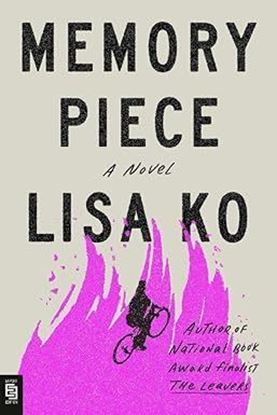
MEMORY PIECE
In the early 1980s, Giselle Chin, Jackie Ong, and Ellen Ng are three teenagers drawn together by their shared sense of alienation and desire for something different. “Allied in the weirdest parts of themselves,” they envision each other as artistic collaborators and embark on a future defined by freedom and creativity.
By the time they are adults, their dreams are murkier. As a performance artist, Giselle must navigate an elite social world she never conceived of. As a coder thrilled by the internet’s early egalitarian promise, Jackie must contend with its more sinister shift toward monetization and surveillance. And as a community activist, Ellen confronts the increasing gentrification and policing overwhelming her New York City neighborhood. Over time their friendship matures and changes, their definitions of success become complicated, and their sense of what matters evolves.
Moving from the predigital 1980s to the art and tech subcultures of the 1990s to a strikingly imagined portrait of the 2040s, Memory Piece is an innovative and audacious story of three lifelong friends as they strive to build satisfying lives in a world that turns out to be radically different from the one they were promised.
995
1,450
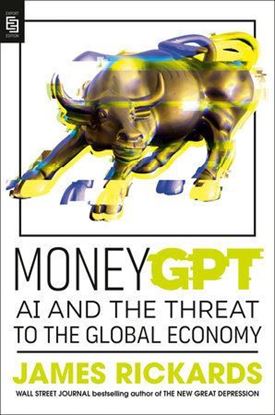
MONEYGPT
In November 2022, OpenAI released GPT-4 in a chatbot form to the public. In just two months, it claimed 100 million users—the fastest app to ever reach this benchmark. Since then, AI has become an all-consuming topic, popping up on the news, in ads, on your messenger apps, and in conversations with friends and family. But as AI becomes ubiquitous and grows at an ever-increasing pace, what does it mean for the financial markets?
In MoneyGPT, Wall Street veteran and former advisor to the Department of Defense James Rickards paints a comprehensive picture of the danger AI poses to the global financial order, and the insidious ways in which AI will threaten national security. Rickards shows how, while AI is touted to increase efficiency and lower costs, its global implementation in the financial world will actually cause chaos, as selling begets selling and bank runs happen at lightning speed. AI further benefits malicious actors, Rickards argues, because without human empathy or instinct to intervene, threats like total nuclear war that once felt extreme are now more likely. And throughout all this, we must remain vigilant on the question of whose values will be promoted in the age of AI. As Rickards predicts, these systems will fail when we rely on them the most.
1,450