


650
THE GRUFFALO
A mouse is taking a stroll through the deep, dark wood when along comes a hungry fox, then an owl, and then a snake. The mouse is good enough to eat but smart enough to know this, so he invents . . . the gruffalo! As Mouse explains, the gruffalo is a creature with terrible claws, and terrible tusks in its terrible jaws, and knobbly knees and turned-out toes, and a poisonous wart at the end of its nose. But Mouse has no worry to show. After all, there’s no such thing as a gruffalo. . . .
650

450
I LIKE BUGS
Black Bugs. Green Bugs. Fat Bugs. Buggy Bugs. I like bugs! There are all kinds of bugs! Whether they are big or small, whether they fly or crawl, bugs are our friends!
450
1,350
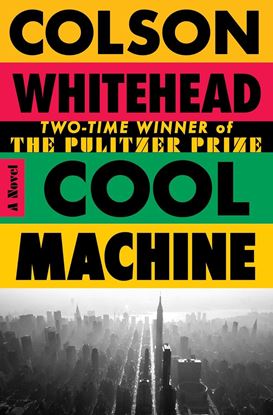
COOL MACHINE
1981. New York City is beginning to emerge from financial ruin and decline, energized by rampant real estate development and a Wall Street unchained by Reagan-era predatory capitalism. Up in Harlem, successful business owner/master fence Ray Carney has just been named Sterling Furniture’s Dealer of the Month. When the banks won’t give his beloved wife Elizabeth a loan for her new travel agency, however, Carney gambles on one last heist, and finds himself entangled with a legendary criminal mastermind.
1983. To some, Carney’s friend and partner in crime, Pepper, is a stone-cold sociopath. To others, a top thief with questionable people skills. Either way, he’s feeling his age in his troubled gut and his aching bones. When he takes on a bodyguard gig as a favor to Elizabeth, he’s plunged into the alien territory of the East Village art and club scene. Luckily for him, whether you’re uptown or down, everyone speaks the same language of violence—Pepper is a native speaker.
1986. Carney has always been haunted by his inability to save his cousin Freddie. Now, twenty years after Freddie’s death, he has a chance to rescue Freddie’s son from the violent forces of the city. But coming out of retirement and teaming up with Pepper again will mean risking the safety and security he’s spent decades building for his family, with only one shot to get it right.
1,350

1,250
THE INVISIBLE VOY
A simple act of kindness can transform an invisible boy into a friend…
Meet Brian, the invisible boy. Nobody in class ever seems to notice him or think to include him in their group, game, or birthday party . . . until, that is, a new kid comes to class.
When Justin, the new boy, arrives, Brian is the first to make him feel welcome. And when Brian and Justin team up to work on a class project together, Brian finds a way to shine.
1,250

650
THE MIRACULOUS JOURNEY
Once, in a house on Egypt Street, there lived a china rabbit named Edward Tulane. The rabbit was very pleased with himself, and for good reason: he was owned by a girl named Abilene, who adored him completely. And then, one day, he was lost. . . . Kate DiCamillo takes us on an extraordinary journey, from the depths of the ocean to the net of a fisherman, from the bedside of an ailing child to the bustling streets of Memphis. Along the way, we are shown a miracle — that even a heart of the most breakable kind can learn to love, to lose, and to love again.
Featuring black-and-white illustrations and a refreshed cover by Bagram Ibatoulline.
650
1,250
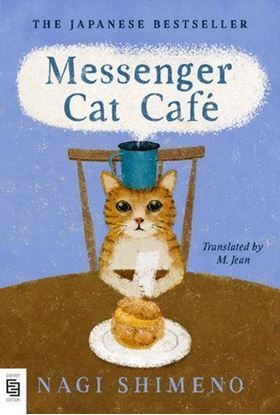
MESSENGER CAT CAFE
After a long life with a loving human family, tabby cat Fuuta has passed into the afterlife, but he is not as far from his owner, Michiru, as it seems. Slight openings bridge the divide between the lands of the living and the dead, and they can be traversed.
Eager to see Michiru again, Fuuta interviews for a position at Café Pont, a café that exists in the liminal space between the two worlds, known for its unique message delivery service: Customers leave requests with the name of the person they wish to meet, and a messenger cat is assigned to arrange the "meeting."
If Fuuta doesn’t maintain plausible deniability, he could cause panic amongst the living, or worse: He could upset the balance of the universe itself. It is a weighty task for an old tabby cat, but Fuuta is up for the challenge. After all, the job offers a special reward: the right to see Michiru. And he’ll do anything to reunite with his family.
1,250

650
THE SNAIL AND THE WHALE
When a tiny snail meets a humpback whale, the two travel together to far-off lands. It’s a dream come true for the snail, who has never left home before. But when the whale swims too close to shore, will the snail be able to save her new friend?
650
850
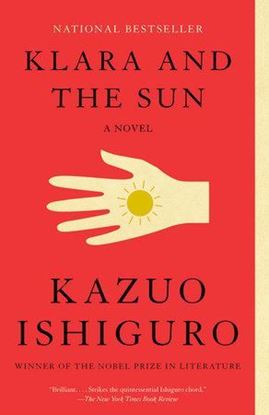
KLARA AND THE SUN (PB)
Here is the story of Klara, an Artificial Friend with outstanding observational qualities, who, from her place in the store, watches carefully the behavior of those who come in to browse, and of those who pass on the street outside. She remains hopeful that a customer will soon choose her, but when the possibility emerges that her circumstances may change forever, Klara is warned not to invest too much in the promises of humans.
A thrilling feat of world-building and a novel of exquisite tenderness and impeccable restraint, Klara and the Sun is a magnificent achievement, one that offers a look at our changing world through the eyes of an unforgettable narrator to explore the fundamental question: what does it mean to love?
850

650
WHICH ONE DOESN T BELONG?
Written by a celebrated math educator, this innovative inquiry encourages critical thinking and sparks memorable mathematical conversations. Children and their parents answer the same question about each set of four shapes: “Which one doesn’t belong?” There’s no one right answer–the important thing is to have a reason why. Kids might describe the shapes as squished, smooshed, dented, or even goofy. But when they justify their thinking, they’re talking math! Winner of the Mathical Book Prize for books that inspire children to see math all around them.
650
1,250
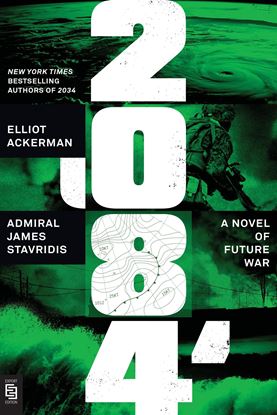
2084
A gripping drama and chilling prophecy about the possible path to war for a planet devastated by climate change
In their novel 2034, decorated military officers and award-winning authors Elliot Ackerman and Admiral James Stavridis imagined a war between the US and China. In their follow-up novel, 2054, they envisioned a breakdown in American politics fueled by a radical advance in AI. Now they make their boldest, most astonishing, and arguably most necessary leap—imagining the consequences of a climate war.
By the year 2084, the world is divided into the equatorial countries that bear the brunt of the climate crisis—led by Nigeria, Brazil, and Indonesia—and wealthier countries like China and the US, beset by their own problems after a series of civil wars. Tensions between the two sets of countries have reached a breaking point, until finally the so-called Reparationist nations of the equator decide that only military force can bring them justice.
1,250