

4,600
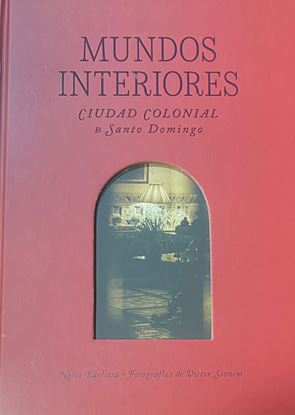
MUNDOS INTERIORES CIUDAD COLONIAL TD
Un libro fotográfico de los interiores de casas de la Ciudad Colonial de Santo Domingo. Este libro retrata los interiores de más de veinte casas eclécticas pertenecientes a artista, decoradores y descatadas figuras dominicanas y europeas.
4,600
5,995
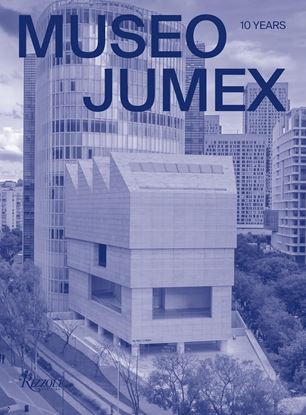
MUSEO JUMEX. 10 YEARS
This volume celebrates the 10th anniversary of Museo Jumex, Mexico City’s most important contemporary art museum, and its unique collection.
Located in the vibrant Polanco neighborhood of Mexico City, Museo Jumex opened its doors to the public in 2013 as a one-of-a-kind museum devoted to the production and discussion of contemporary art.
Founded by Eugenio López Alonso, a pioneer in the realm of contemporary art collecting in Mexico, and designed by Sir David Chipperfield, 2023 winner of the Pritzker Architecture award, Museo Jumex has achieved international recognition for its dual mission of bringing works of renowned international artists to Mexico for the first time and elevating the work of today’s Mexican and Latin American artists.
5,995
4,200
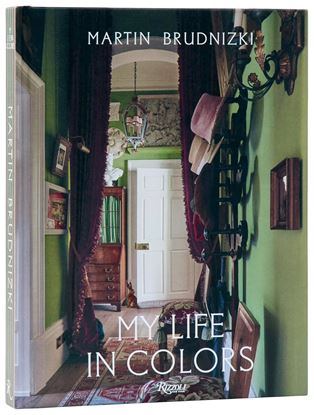
MY LIFE IN COLORS
For Brudnizki, color is an essential ingredient for storytelling and conjuring atmosphere. Color is a force that brings his spaces to life, defining them, and enhancing the experience within them; it is a character in itself and Brudnizki uses it to blur the lines between eras and styles, to marry heritage with modern luxury.
From the fantasy-full and decadent rococo interiors of London members club Annabel’s to the soft, muted palette of the Splendido’s Baronessa Suite and the Parisian spirit of the restaurant at New York’s outpost of Fouquet’s, Brudnizki’s signature paintbrush imbues his interiors with idiosyncrasy and flair.
In this enchanting volume, the designer draws inspiration from nature, art, fashion, and history to show us how color influences his life and work. The charming design of the book brings the magic of his world to life: classical busts are unmoored from their pedestals, silky peonies embellish texts, candelabras glow, and birds flutter free from their frescoes and travel with us for pages. Each chapter is devoted to a single color, illuminating how Brudnizki leverages the emotional power of color to enhance the overwhelmingly beautiful and luxurious spaces he creates.
4,200
1,350
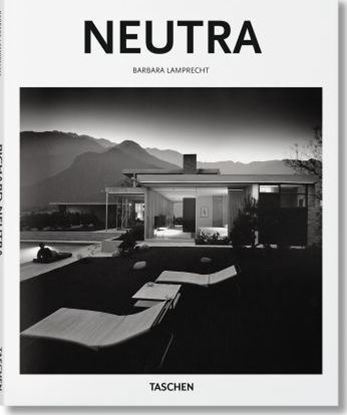
NEUTRA (BA-ARCH) (GB)
In the architecture of Richard Neutra (1892–1970), inside and outside find their perfect modernist harmony. As the Californian sun glints off sleek building surfaces, vast glass panel walls allow panoramic views over mountains, gardens, palm trees, and pools.
Neutra moved to the United States from his native Vienna in 1923 and settled in Los Angeles. He displayed his affinity with architectural settings early on with the Lovell House, set on a landscaped hill with views of the Pacific Ocean and Santa Monica Mountains. Later projects such as the Kaufmann House and Nesbitt House would continue this blend of art, landscape, and living comfort, with Neutra’s clients often receiving detailed questionnaires to define their precise needs.
This richly illustrated architect introduction presents the defining projects of Neutra’s career. As crisp structures nestle amid natural wonders, we celebrate a particularly holistic brand of modernism which incorporated the ragged lines and changing colors of nature as much as the pared down geometries of the International Style.
1,350
1,850
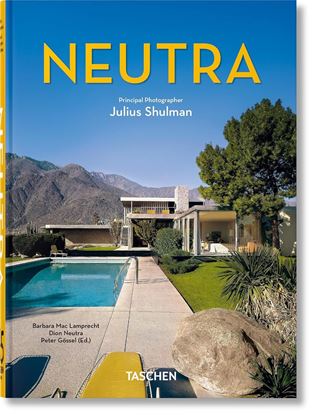
NEUTRA. 45TH ED.
Originally from Vienna, Richard Neutra came to America early in his career, settling in California. His influence on postwar architecture is undisputed, the sunny climate and rich landscape being particularly suited to his cool, sleek modern style.
Neutra had a keen appreciation for the relationship between people and nature; his trademark plate glass walls and ceilings which turn into deep overhangs have the effect of connecting the indoors with the outdoors. His ability to incorporate technology, aesthetics, science, and nature into his designs brought him to the forefront of Modernist architecture.
1,850
6,500
NEUTRA. COMPLETE WORKS (GB)
Originally from Vienna, Richard Neutra came to America early in his career, settling in California. His influence on postwar architecture is undisputed, the sunny climate and rich landscape being particularly suited to his cool, sleek modern style.
Neutra had a keen appreciation for the relationship between people and nature; his trademark plate glass walls and ceilings which turn into deep overhangs have the effect of connecting the indoors with the outdoors. His ability to incorporate technology, aesthetics, science, and nature into his designs brought him to the forefront of Modernist architecture.
6,500