

1,250
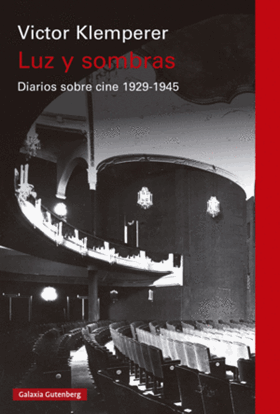
LUZ Y SOMBRAS
Presentamos íntegras por primera vez las anotaciones del diario del gran cronista Victor Klemperer sobre sus experiencias cinematográficas en los inicios de la era del cine sonoro. Desde el principio, el cinefilo es testigo de cómo la innovación tecnica se abre paso en la Alemania de 1929, y aunque inicialmente fue crítico con las películas sonoras, pronto cayó rendido ante las posibilidades de este nuevo formato. No era raro que viera varios filmes por semana. Sin embargo, los nacionalsocialistas se fueron apoderando del medio, y Klemperer acabará por quedar excluido de las salas de cine cuando en 1938 se prohíbe la entrada a los 'no arios'. Afortunadamente, ni siquiera eso pudo mantenerlo alejado de su gran pasión. Obligado a una existencia en la sombra, Klemperer experimentó momentos de luz ante la gran pantalla: 'Tanta música, humor, arte interpretativo y todo.
1,250
2,500
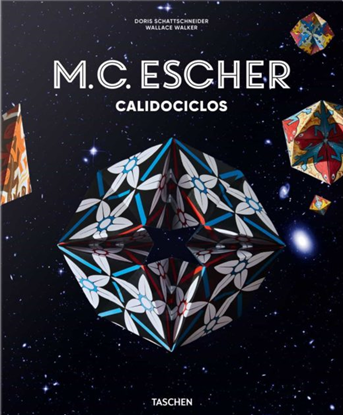
M.C. ESCHER. CALIDOCICLOS (VA)
Complicados patrones, elegantes formas geométricas e increíbles grafismos son los rasgos que convierten en fascinantes las creaciones de M.C. Escher. Este set pone en sus manos el mundo visual mágico del artista a través de 17 plantillas de papel listas para montar que le permitirán crear sus diseños multidimensionales y transformarlos, las veces que quiera, en objetos complejos, calidociclos entrelazados y mutantes. El cuadernillo incluye un análisis de los principios geométricos y la invención artística subyacente a estas maravillas ópticas.
2,500
1,995
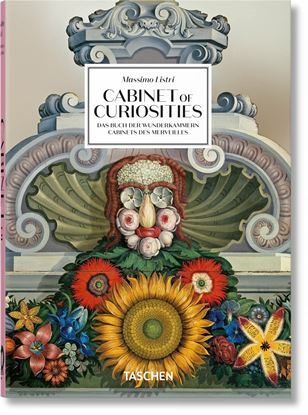
M.L. CABINET OF CURIOSITIES (40TH) (INT)
The Wunderkammer, or “cabinet of curiosities,” saw collectors gathering objects from many strands of artistic, scientific, and intellectual endeavor, in an ambitious attempt to encompass all of humankind’s knowledge in a single room.
From the Grand Duke Francesco I de’ Medici and Holy Roman Emperor Rudolf II to Archduke Ferdinand II of Habsburg, these aristocratic virtuosos acquired, selected, and displayed the objects in real-life catalogues that represented the entire world―spanning architecture, interior design, painting, sculpture, gemology, geology, botany, biology and taxonomy, astrology, alchemy, anthropology, ethnography, and history.
Marvel at the unicorn horns (narwhal tusks), gems, rare coral growths, Murano glasswork, paintings and peculiar mechanical automata. Browse through illustrations of exotic and mythical creatures and discover the famed “Coburg ivories,” an astounding collection of crafted artifacts. These collections are nothing short of a journey through time, from the Renaissance and Age of Discovery, the Mannerist and Baroque periods, up to the present day. Although many of these cabinets of curiosities no longer exist, others have been meticulously reconstructed, and new ones born.
1,995
1,995
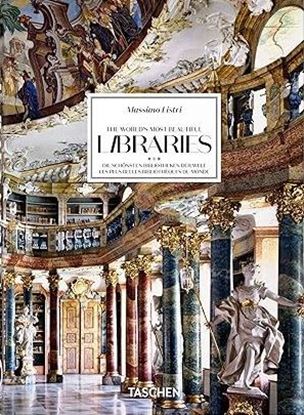
M.L. THE WORLDS MOST B. LIBRARIES (45)(I
From the mighty halls of ancient Alexandria to the coffered ceilings of the Morgan Library in New York, human beings have had a long, enraptured relationship with libraries. Like no other concept and like no other space, the collection of knowledge, learning, and imagination offers a sense of infinite possibility. It’s the unrivaled realm of discovery, where every faded manuscript or mighty clothbound tome might reveal a provocative new idea, a far-flung fantasy, an ancient belief, a religious conviction, or a whole new way of being in the world.In this new photographic journey, Massimo Listri travels to some of the oldest and finest libraries to reveal their architectural, historical, and imaginative wonder. Through great wooden doors, up spiraling staircases, and along exquisite, shelf-lined corridors, he leads us through outstanding private, public, educational, and monastic libraries, dating as far back as 766. Between them, these medieval, classical, baroque, rococo, and 19th-century institutions hold some of the most precious records of human thought and deed, inscribed and printed in manuscripts, volumes, papyrus scrolls, and incunabula. In each, Listri’s poised images capture the library’s unique atmosphere, as much as their most prized holdings and design details.Featured libraries include the papal collections of the Vatican Apostolic Library and the Trinity College Library, home to the Book of Kells and Book of Durrow. With meticulous descriptions accompanying each featured library, we learn not only of the libraries’ astonishing holdings—from which highlights are illustrated—but also of their often lively, turbulent, or controversial pasts. Like the Franciscan monastery in Lima, Peru, with its horde of archival Inquisition documents.At once a bibliophile beauty pageant, an ode to knowledge, and an evocation of the particular magic of print, Massimo Listri. The World’s Most Beautiful Libraries is above all a cultural-historical pilgrimage to the heart of our halls of learning, to the stories they tell, as much as those they gather in printed matter along polished shelves.
1,995
995
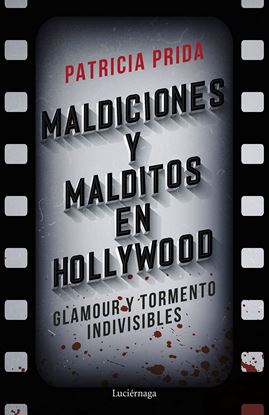
MALDICIONES Y MALDITOS EN HOLLYWOOD
Entre las décadas de los años veinte y cincuenta de la pasada centuria, las películas, que comenzaron siendo curiosidades de gabinete en ferias, lograron convertirse en el mayor espectáculo del mundo. Los protagonistas de aquellos shows de celuloide que encandilaban al público desde la gran pantalla, pronto fueron erigidos como reyes dominantes del imaginario colectivo del siglo XX.
Pero aquel panteón cada vez más poblado de rutilantes deidades, albergaba asimismo siniestros y decadentes bastidores, plagados de sombras sin fin: espectros, maldiciones, muertes extrañas, crímenes sin resolver, adicciones, magia sexual, satanismo… Hechos misteriosos, sucesos estremecedores y, en ocasiones, atroces ocurrían entre el lujo y la fatalidad, entre el oropel y la decadencia.
Crueles destinos inexorables, tanto de numerosas estrellas, como de aspirantes a serlo.
995
1,250
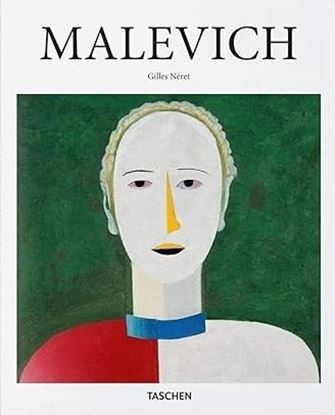
MALEVICH (BA-ART) (GB)
After flirtations with Realism, Impressionism, and Symbolism, Kiev-born Kazimir Malevich (18781935) found his métier in dissolving literal, representational figures and landscapes into pure emotionally-charged abstraction. In 1915, he created what is widely lauded as the first and ultimate abstract artwork: Black Square, a black rectangle on a white background, hailed as the zero point of painting, a seminal moment for modern and abstract practice.
1,250