1,995
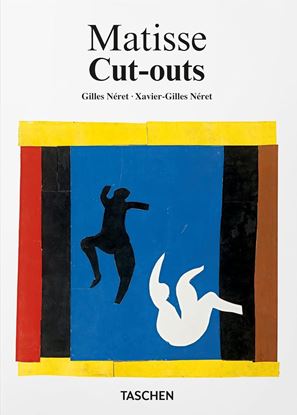
MATISSE. CUT-POUTS. (45TH) (INT)
Toward the end of his monumental career as a painter, sculptor, and lithographer, an elderly, sickly Matisse was unable to stand and use a paintbrush for long. In this late phase of his life—he was almost 80 years of age—he developed the technique of “carving into color,” creating bright, bold paper cut-outs. Though dismissed by some contemporary critics as the folly of a senile old man, these gouaches decoupées (gouache cut-outs) in fact represented a revolution in modern art, a whole new medium that reimagined the age-old conflict between color and line.This edition of the first volume of our original award-winning XXL book provides a thorough historical context to Matisse’s cut-outs, tracing their roots to his 1930 trip to Tahiti and continuing through to his final years in Nice. It includes many photos of Matisse, as well as some rare images by Henri Cartier-Bresson and the filmmaker F. W. Murnau, with texts by Matisse, publisher E. Tériade, the poets Louis Aragon, Henri Michaux, and Pierre Reverdy, and Matisse’s son-in-law Georges Duthuit.In their deceptive simplicity, the cut-outs achieved both a sculptural quality and an early minimalist abstraction, which would profoundly influence generations of artists to come. Exuberant, multi-hued, and often grand in scale, these works are true pillars of 20th-century art, and as bold and innovative to behold today as they were in Matisse’s lifetime.
1,995
1,250
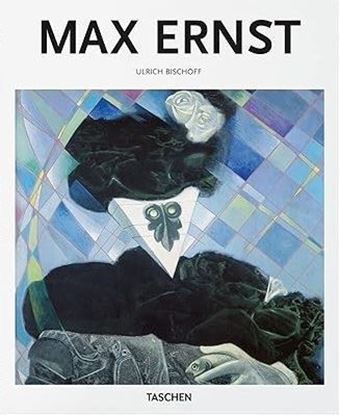
MAX ERNST (BA-ART) (E)
Max Ernst (1891-1976) transformó todo lo que tocó con una originalidad artística sin igual. Se convirtió en una de las figuras más importantes del dadaísmo y del surrealismo que ensanchó las fronteras del arte y rompió con la visión limitada de la cultura de su tiempo. Impulsado por la reacción a los horrores de la Primera Guerra Mundial, se convirtió en un pionero del movimiento dadaísta. La cancelación de la famosa exposición dadá en Colonia por “obscenidad” llevó a Ernst a pasar el resto de su vida en París, donde entró en contacto con los surrealistas.Por encima de todo, Ernst destaca por la variedad de estilos y técnicas que empleó. Su obra abarca desde la pintura, el dibujo y la escultura, pasando por textos y escenografías, hasta novelas de collage y el desarrollo de su propia técnica de frottage. Durante la Segunda Guerra Mundial, Ernst, como muchos de sus colegas, se convirtió en un “extranjero indeseable” y se vio obligado a emigrar, aunque regresó a Francia después de la guerra. Siguió desarrollando una carrera que abarcó décadas, y en 1954 recibió el Gran Premio de Pintura en la Bienal de Venecia.Este libro es un viaje por la magia, la intensidad y la fantasía. Es una puerta de entrada a la mente y el mundo complejo de Max Ernst.
1,250
1,450
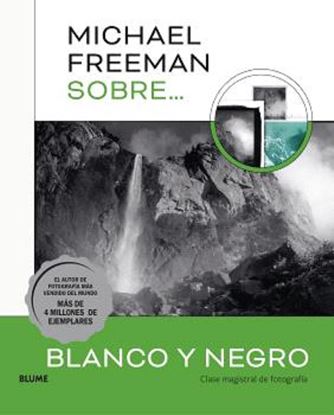
MICHAEL FREEMAN SOBRE BLANCO Y NEGRO
El autor superventas Michael Freeman aporta sus años de experiencia al estudio del estilo más perdurable y lleva la teoría y la práctica de este género clásico a la época moderna. En esta exhaustiva guía sobre la imagen en blanco y negro, Freeman estimula la creatividad personal y explica la práctica fotográfica de un modo comprensible y, por encima de todo, útil y práctico. La fotografía en blanco y negro al día, para informar e inspirar tanto a los puristas como a los nuevos practicantes de este género. La fotografía en blanco y negro no es solo la expresión más pura del proceso de creación de imágenes, sino también un camino esencial hacia una mejor comprensión de los principios fotográficos. Este libro explica cómo visualizar el mundo en blanco y negro mientras se captan imágenes y a desarrollar un instinto para poner en práctica la dinámica de la fotografía en blanco y negro.
1,450
1,600
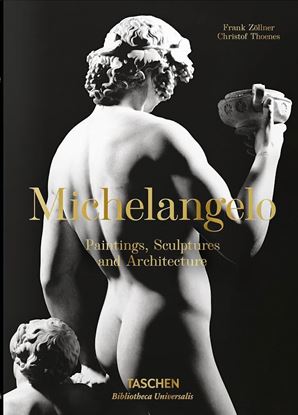
MICHELANGELO. PAINTINGS, SCULPTURES AND
Before reaching the tender age of 30, Michelangelo Buonarroti (1475–1564) had already sculpted Pietà and David, two of the most famous sculptures in the entire history of art. As a sculptor, painter, draftsman, and architect, the achievements of this Italian master are unique—no artist before or after him has ever produced such a vast, multifaceted, and wide-ranging œuvre.
This fresh TASCHEN edition traces Michelangelo’s ascent to the cultural elite of the Renaissance. Ten richly illustrated chapters cover the artist’s paintings, sculptures, and architecture, including a close analysis of the artist’s tour de force frescoes in the Sistine Chapel.Full-page reproductions and enlarged details allow readers to appreciate the finest details in the artist’s repertoire, while the book’s biographical essay considers Michelangelo’s more personal traits and circumstances, such as his solitary nature, his thirst for money and commissions, his immense wealth, and his skill as a property investor.
1,600
1,100
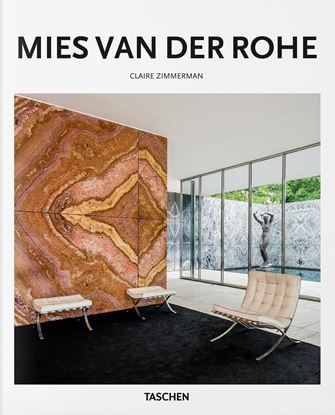
MIES VAN DER ROHE- BASIC ART
Famed for his motto “less is more,” Ludwig Mies van der Rohe (1886–1969) was one of the founding fathers of modern architecture and a hotly-debated tastemaker of twentieth-century aesthetics and urban experience.Mies van der Rohe’s philosophy was one of underlying truth in pure forms and proportions. With the help of contemporary technological and material developments, he sought a stripped-down purity to architecture, showcased by the likes of the Seagram Building and Farnsworth House. Some spoke out against this stark approach as the precursor to bland, generic cityscapes. Others cite Mies van der Rohe as the ultimate master of an abidingly elegant essence.This book presents more than 20 of Mies van der Rohe’s projects from the period 1906–1967 to introduce his groundbreaking practise and influence in both America and Europe.
1,100
950
MILAGRERIA Y ESCALAS DISONANTES
La expresividad y la sensibilidad únicas de Alfred Brendel al piano parecen trasladarse a las páginas del presente libro, en que el gran intérprete ofrece una visión crítica de la práctica pianística, especialmente de algunas composiciones de Beethoven y Schubert, así como un iluminador repaso de sus grabaciones. Siguiendo el hilo invisible que une música, palabras e imágenes, Brendel, lector voraz y de una curiosidad inagotable, pone además la mirada en el cine, y nos ofrece lúcidas observaciones sobre el séptimo arte que revelan su comprensión del mundo y su conocimiento de sí mismo.
950