
1,250
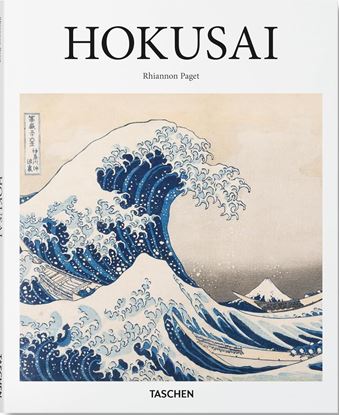
HOKUSAI (BASIC ART) (ES)
Meet the artist whose majestic breaking wave sent ripples across the world. Hokusai (1760–1849) is not only one of the giants of Japanese art and a legend of the Edo period, but also significantly influenced Western modernism, whose prolific gamut of prints, illustrations, paintings, and beyond forms one of the most comprehensive oeuvres of ukiyo-e art and a benchmark of japonisme. His influence spread through Impressionism, Art Nouveau, and beyond, enrapturing the likes of Claude Monet, Berthe Morisot, Edgar Degas, Mary Cassatt, and Vincent van Gogh.
1,250
999
1,995
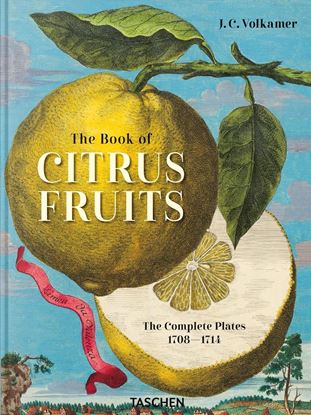
J.C. VOLKAMER. THE BOOK OF CITRUS FRUITS
Have you ever thought of citrus fruits as celestial bodies, angelically suspended in the sky? Perhaps not, but J. C. Volkamer (1644–1720) did―commissioning an extravagant and breathtaking series of large-sized copperplates representing citrons, lemons, and bitter oranges in surreal scenes of majesty and wonder.
Ordering plants by post mostly from Italy, Germany, North Africa, and even the Cape of Good Hope, the Nuremberg merchant Volkamer was a devotee of the fragrant and exotic citrus at a time when such fruits were still largely unknown north of the Alps. His garden came to contain a wide variety of specimens, and he became so obsessed with the fruits that he commissioned a team of copperplate engravers to create 256 plates of 170 varieties of citrus fruits, many depicted life size, published in a two-volume work. The first volume appeared in 1708, with the impressively lengthy title The Nuremberg Hesperides, or: A detailed description of the noble fruits of the citron, lemon and bitter orange; how these may be correctly planted, cared for and propagated in that and neighboring regions.
1,995
5,995
JACQUES DEVAULX. NAUTICAL WORKS (XL)
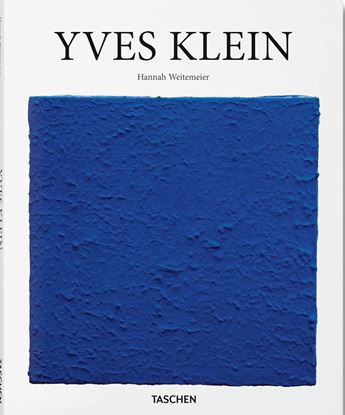
In the mid-1950s, Yves Klein (1928–1962) declared that “a new world calls for a new man.” With his idiosyncratic style and huge charisma, this bold artist would go on to pursue a brief but bountiful career, producing more than 1,000 paintings over seven years in an oeuvre now considered a mainstay of postwar modernism.Klein made his name above all with his large monochrome canvases in his own patented hue of blue. International Klein Blue (IKB), composed of pure pigment and binding medium, is at once rich and luminous, evocative and decorative, and was conceived by Klein as a means of evoking the immateriality and infinitude of the world. The works of this “Blue Revolution” seem to draw us into another dimension, as if hypnotized by a perfect summer sky. Klein was also renowned for his deployment of “living brushes,” in which naked women, daubed in International Klein Blue, would make imprints of their bodies on large sheets of paper.
5,995

1,650
JANIS JOPLIN
Janis Joplin ha pasado a la historia como un alma impulsiva y apasionada, un ser con un destino sentenciado por el dolor que generaba una de las voces más extraordinarias que ha dado la historia del rock.
La célebre autora y biógrafa Holly George-Warren fue elegida expresamente por el Janis Joplin Estate para escribir el libro definitivo sobre su vida y su música, un complejo retrato revelador y profundo de una artista extraordinaria. Así, los hermanos de Joplin, Laura y Michael Joplin, proporcionaron a George-Warren acceso exclusivo y privilegiado a miles de archivos, documentos, incluidas transcripciones, correspondencias, fotografías, entrevistas perdidas y recuerdos, así como el acceso directo a la familia, compañeros de banda y amigos de la cantante.
1,650
1,995
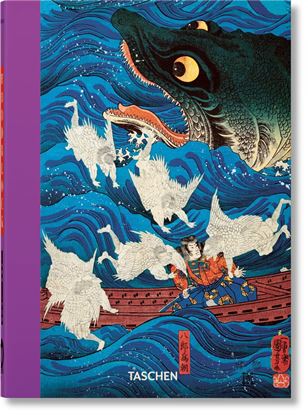
JAPANESE WOODBLOCK PRINTS. (40TH ED.)
Del retrato que hizo Edouard Manet del escritor naturalista Émile Zola ante una estampa japonesa a las meticulosas copias de los grabados de Hiroshige que Van Gogh coleccionó con devoción, los pioneros del modernismo europeo del siglo XIX no ocultaron su amor por el arte japonés. En toda su sensualidad, libertad y efervescencia, la xilografía es el ejemplo por antonomasia de la ola de japonismo que primero cautivó a Francia y más tarde a toda Europa, a menudo en forma de objetos “exóticos” malinterpretados que contribuyeron a inspirar la creatividad occidental.
La xilografía japonesa es un fenómeno sin equivalente en el arte occidental. Algunas de las ideas más disruptivas del arte moderno —entre ellas, como expresó Karl Marx, que “todo lo sólido se derrite en el aire”— se inventaron en Japón a principios del siglo XVIII y se expresaron como nunca antes en las obras de maestros de la talla de Hokusai, Utamaro e Hiroshige a principios del siglo XIX.
1,995