
2,500
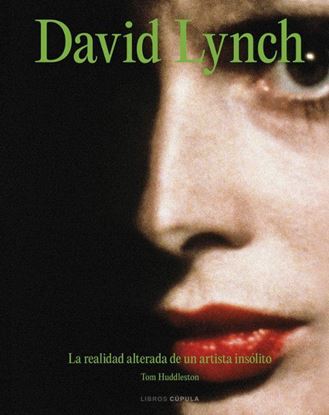
DAVID LYNCH
El universo cinematográfico de uno de los directores de cine más aclamados de la historia, recientemente fallecido.
Un recorrido completo y sin precedentes sobre la obra y la vida de uno de los creadores de culto más importantes de la historia.
Nuestro mundo no sería lo mismo sin David Lynch, seguramente
un lugar mucho menos especial e interesante. Como director, guionista, diseñador, músico, artista visual y artífice de las cosas más especiales,
su influencia prevalece en cada rincón de nuestra cultura. Junto a su icónica Twin Peaks, Lynch también creó obras de arte en la gran pantalla como su debut con Cabeza borradora y thrillers poco convencionales como Terciopelo azul, Carretera perdida y Mulholland Drive. Pero Lynch también ha sido una figura de culto en otros ámbitos, firmando álbumes con su nombre, encabezando exposiciones de arte, exhibiciones fotográficas y shows de moda desde Los Ángeles hasta Milán, compartiendo su filosofía espiritual y su amor por la meditación trascendental alrededor de todo el mundo. Esta obra cubre todos los aspectos del complejo e iridescente mundo de Lynch, a la vez que explora sus influencias para explicar, sin dejar lugar a dudas, cómo trabajaba, creaba, pensaba y vivía su arte.
2,500

950
MILAGRERIA Y ESCALAS DISONANTES
La expresividad y la sensibilidad únicas de Alfred Brendel al piano parecen trasladarse a las páginas del presente libro, en que el gran intérprete ofrece una visión crítica de la práctica pianística, especialmente de algunas composiciones de Beethoven y Schubert, así como un iluminador repaso de sus grabaciones. Siguiendo el hilo invisible que une música, palabras e imágenes, Brendel, lector voraz y de una curiosidad inagotable, pone además la mirada en el cine, y nos ofrece lúcidas observaciones sobre el séptimo arte que revelan su comprensión del mundo y su conocimiento de sí mismo.
950

2,995
LIFE-CHANGING HOMES
For most people, the search for a home involves setting a budget, finding a place, then filling rooms with stuff. But Kirsten Dirksen and Nicolás Boullosa believe the search for a home is a search for meaning, and that the right dwelling can set the direction for one’s life.
Fifteen years ago, armed with a camera and limitless curiosity, they set out across the globe to prove their theory and to challenge traditional assumptions about what makes a home.
Now that the past few years have completely altered the way we live and work, most of us are asking the same questions and seeking homes that reflect our lifestyles and values.
The dozens of spaces featured in Life-Changing Homes urge readers to think differently about their own lives and what might be possible, and the gorgeous photography and thought-provoking writing share the inspiring stories of those who have made the change.
2,995
1,100
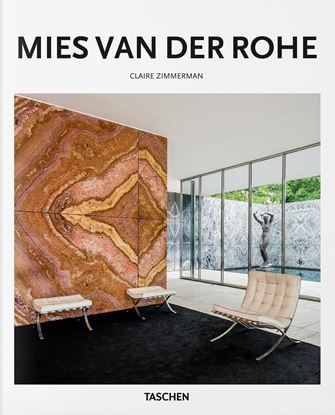
MIES VAN DER ROHE- BASIC ART
Famed for his motto “less is more,” Ludwig Mies van der Rohe (1886–1969) was one of the founding fathers of modern architecture and a hotly-debated tastemaker of twentieth-century aesthetics and urban experience.Mies van der Rohe’s philosophy was one of underlying truth in pure forms and proportions. With the help of contemporary technological and material developments, he sought a stripped-down purity to architecture, showcased by the likes of the Seagram Building and Farnsworth House. Some spoke out against this stark approach as the precursor to bland, generic cityscapes. Others cite Mies van der Rohe as the ultimate master of an abidingly elegant essence.This book presents more than 20 of Mies van der Rohe’s projects from the period 1906–1967 to introduce his groundbreaking practise and influence in both America and Europe.
1,100
1,250
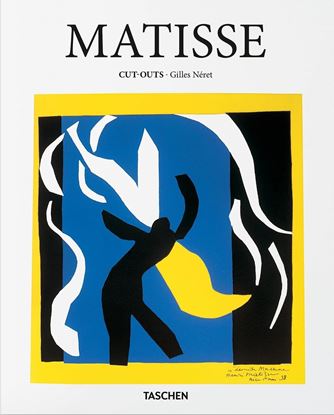
MATISSE. CUT-OUTS
Henri Matisse (1869–1954) was a fighting spirit. Despite a cancer diagnosis in 1941, increasing frailty, and the confines of a wheelchair, the indomitable Frenchman never stopped in his quest to make art. With what he called une seconde vie, a second life, he embarked on a remarkable collage period, cutting and pasting pieces of colored paper into gouaches découpées of birds, plants, flowers, and the female form.Emphasizing color and contrast, the cut-out technique generated both striking lines and vivid juxtapositions. In works such as Icarus (1943), The Blue Nude (1952), The Snail (1953), and The Sheaf (1953), clean forms and elemental structures power a compositional force that belies the work’s decorative appeal, at once tightly organized and infectious with joie de vivre. As his work progressed, Matisse’s excitement with his results fueled ever-larger pieces, advancing from small works to vast wall-sized murals.As his final years approached, Matisse reveled in the simplicity and brilliance of these pieces, avowing, “Only what I created after the illness constitutes my real self: free, liberated…” In this essential introductory book, we revisit this joyful final chapter of Matisse’s long and prodigious career, examining how the cut-outs encapsulated the artist’s many years exploring the possibilities of composition, form, and color.
1,250
1,250
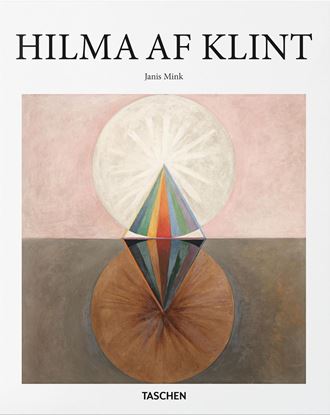
HILMA AF KLINT
Hilma af Klint painted as though she was channeling the universe. Fascinated from childhood by botany and mathematics, she began her career painting landscapes and portraits, but other preoccupations stirred within her: questions of spirit, unseen energies, patterns too vast for the eye alone.
Her art was inseparable from her spiritual practice. With a circle of female artists called The Five, she held séances, heard voices from "High Masters," and was inspired by the Theosophical Society and Rudolf Steiner’s theories. Working tirelessly to map life’s hidden dimensions, she would paint to the point of physical collapse.
By 1906, her canvases featured radiant geometries of spirals and orbs, impregnated with symbols, letters, and words, anticipating the later embrace of abstraction by Kandinsky, Malevich, Mondrian, and others. Her vast painted cycles―like her works for the Temple and The Ten Largest―often depicted dualities: inside and out, the earthly and the esoteric, man and woman, good and evil.
Living as a vegetarian, questioning the fixity of gender, af Klint was clearly before her time, yet very much of it too, and pretty much uncelebrated in her day. Her prodigious output lay unseen for decades, locked away by her own instruction. Only in the 1980s did the world begin to recognize her as a true pioneer of abstract art.
1,250
1,250
THEODORE DE BRY THE NEW WORLD.45TH ED
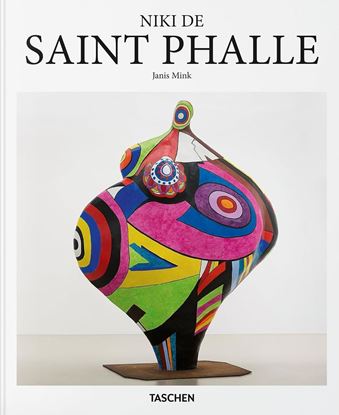
A key contributor to Nouveau Réalisme in early 1960s Paris, Niki de Saint Phalle (1930-2002) worked alongside artists such as Arman, Yves Klein, and Jean Tinguely, scavenging real objects in place of traditional art materials. She connected art to life by instrumentalizing household items, machine parts, and even toys for her early assemblages. Saint Phalle created her first shooting painting, or Tir, in 1961, and went on to conduct these performances in such varied locations as the Impasse Ronsin in Paris, a garden in Amsterdam, a sandpit outside Stockholm, and the Malibu Hills. Reliefs made of plaster, small objects, paint, wood, and wire were punctured by the bullets of a gun.
1,250
1,600
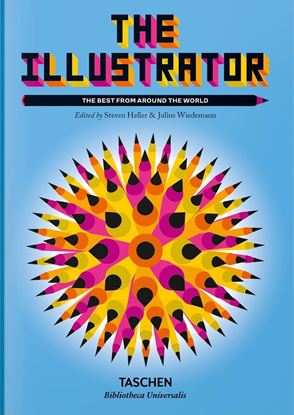
THE ILLUSTRATOR- ING.- BIB. UNIVERSALIS
For the last couple of years, Steven Heller and Julius Wiedemann have traced the latest developments in illustration around the globe—and for all those who thought digital heralded the end of an era, they’re here to set the record straight.
There were extraordinary eras before mass media changed our viewing habits, back in the day when illustration was the primary means of illuminating the word on paper—all the way to today, when we get our words and images on screens as small as a watch face. In this environment, today’s designers and artists are holding their own brilliantly. Illustration is more free and varied than ever, and it is ubiquitous in all kinds of media, from paper to screen to books, packages, clothing, cars, and restaurants.
1,600
1,600
1,200
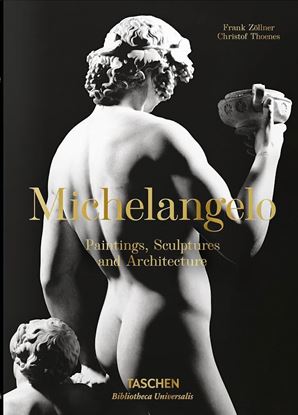
MICHELANGELO. PAINTINGS, SCULPTURES AND
Before reaching the tender age of 30, Michelangelo Buonarroti (1475–1564) had already sculpted Pietà and David, two of the most famous sculptures in the entire history of art. As a sculptor, painter, draftsman, and architect, the achievements of this Italian master are unique—no artist before or after him has ever produced such a vast, multifaceted, and wide-ranging œuvre.
This fresh TASCHEN edition traces Michelangelo’s ascent to the cultural elite of the Renaissance. Ten richly illustrated chapters cover the artist’s paintings, sculptures, and architecture, including a close analysis of the artist’s tour de force frescoes in the Sistine Chapel.Full-page reproductions and enlarged details allow readers to appreciate the finest details in the artist’s repertoire, while the book’s biographical essay considers Michelangelo’s more personal traits and circumstances, such as his solitary nature, his thirst for money and commissions, his immense wealth, and his skill as a property investor.
1,600
1,200
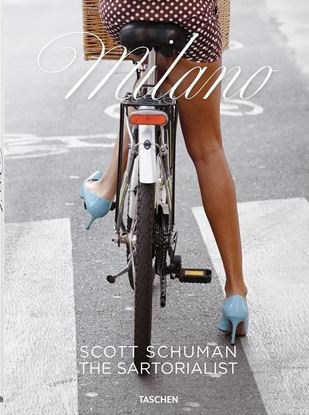
4,995
THE SARTORIALIST. MILANO
In 2005, Scott Schuman transformed fashion photography forever when he founded the blog The Sartorialist. The idea was simple: to open a dialogue between fashion and daily life, by shooting locals in public spaces. But in the lineage of Bill Cunningham and August Sander, that unpretentious, radical emphasis on “real people”—off the runway, out of the studio—elevated people-watching to an art and street style to high fashion, long before Instagram. In Milan, Schuman found a muse dressed for the task.
Milano chronicles nearly twenty years of his devotion to the inimitable Milanese and their bustling, stylish city, first as a visitor, then as a local. Featuring a foreword by the late Giorgio Armani and an extensive interview unpacking Schuman’s unique approach to capturing fashion in the wild, the photos are so cinematically composed, it’s a wonder they were shot on the move. Schuman seems to pause Milano, not only those shoppers, skaters, and smokers who might have the time but those without it: Miuccia Prada, Emiliano Salci, Luciano Barbera, the Sozzani sisters, all caught here in the same streets and |caffés. What emerges is a street-view history of modern Milanese fashion, by an American with the open mind to see the elegance overlooked by locals born to it and missed in stiffer fashion shoots—the beauty in the authentic, unpredictable styles combined only by those under no pressure to conform. Young and old, they pose while Milan flies by on bikes, Vespas, and trams, amid a dazzle of marble, frescos, sculptures, spires, columns, ornate palazzi and brutalist facades, local markets, florists, vertical gardens, iconic hangouts like Bar Basso and Marchesi 1824, espressos, handbags, high heels, and suits in every color imaginable. From the canals of Naviglio Grande to the cobblestones of Via Brera to the glass ceiling of “the Galleria Vittorio Emanuele II” and Milano Centrale, the city’s blend of architectural styles is seen as a radiant reflection of its people.
4,995