
3,995
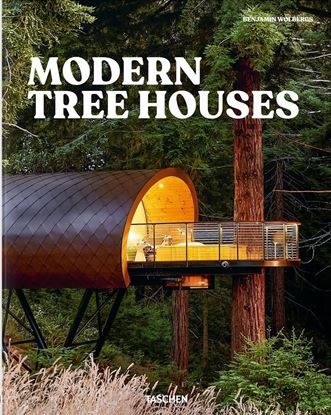
MODERN TREE HOUSES (JU) (GB)
Above the forest floor, a world of wonder awaits. Tree houses have always captured our imaginations—symbols of escapism, endless youthful summers, and a deep-rooted connection to nature. But today, they’ve evolved beyond childhood hideaways into architectural marvels that blend sustainability and cutting-edge design. So, climb up and explore 62 elaborate tree houses from around the world, each with its own fascinating story. With no single blueprint, they take many forms—some are anchored within towering branches, others mimic the shapes of trees, some shelter in the foliage without touching a trunk. But all have the same goal: to bring us closer to nature.
3,995

1,995
MOTORCYCLES. 45TH ED. (GB)
Dream Rides: The most spectacular bikes on the planet. From the 1894 Hildebrand & Wolfmüller to the 2020 Aston Martin AMB 001, this book lavishly explores 50 of the most desirable motorcycles to have ever sped thrillingly around a circuit or along an open road. From pioneering record-breakers, luxury tourers, and legendary roadracers to GP-winning machines, iconic superbikes, and exotic customs, this book celebrates motorcycle design and engineering at its highest level. Many examples are from acclaimed private collections and very rarely seen. Others are the all-out stars of renowned motorcycle museums—such as the 1938 Brough Superior “Golden Dream” or the 1957 MV Agusta 500 4C, which took John Surtees to World Championship glory. Alongside some early survivors in astonishingly original condition is a stable of fabled racers—the actual machines that were competed on by the likes of Tarquinio Provini, Mike Hailwood, Giacomo Agostini, and Barry Sheene.
1,995

4,200
MY LIFE IN COLORS
For Brudnizki, color is an essential ingredient for storytelling and conjuring atmosphere. Color is a force that brings his spaces to life, defining them, and enhancing the experience within them; it is a character in itself and Brudnizki uses it to blur the lines between eras and styles, to marry heritage with modern luxury.
From the fantasy-full and decadent rococo interiors of London members club Annabel’s to the soft, muted palette of the Splendido’s Baronessa Suite and the Parisian spirit of the restaurant at New York’s outpost of Fouquet’s, Brudnizki’s signature paintbrush imbues his interiors with idiosyncrasy and flair.
In this enchanting volume, the designer draws inspiration from nature, art, fashion, and history to show us how color influences his life and work. The charming design of the book brings the magic of his world to life: classical busts are unmoored from their pedestals, silky peonies embellish texts, candelabras glow, and birds flutter free from their frescoes and travel with us for pages. Each chapter is devoted to a single color, illuminating how Brudnizki leverages the emotional power of color to enhance the overwhelmingly beautiful and luxurious spaces he creates.
4,200
1,850
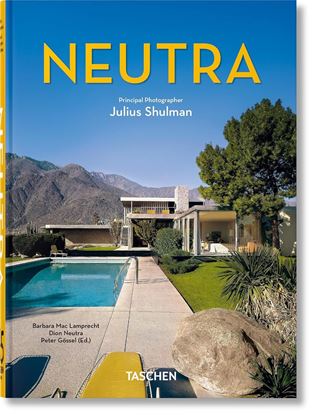
NEUTRA. 45TH ED.
Originally from Vienna, Richard Neutra came to America early in his career, settling in California. His influence on postwar architecture is undisputed, the sunny climate and rich landscape being particularly suited to his cool, sleek modern style.
Neutra had a keen appreciation for the relationship between people and nature; his trademark plate glass walls and ceilings which turn into deep overhangs have the effect of connecting the indoors with the outdoors. His ability to incorporate technology, aesthetics, science, and nature into his designs brought him to the forefront of Modernist architecture.
1,850
6,500
NORMAN FOSTER. NETWORKS
Norman Foster. Networks offers a rare first-person insight into the ideas, influences, and connections that have shaped one of the world’s greatest architects. Penned and curated by Foster himself, it brings together eight immersive essays in which he explores architecture not as a professional pursuit, but a nexus of passions, disciplines, and lived experience. In Roots, Foster examines his modest start in Manchester alongside his lifelong fascination with aviation, tracing the formative threads that underpin his work. Flight emerges as both obsession and metaphor, informing his pursuit of lightness, efficiency, and technical elegance. His deep attachment to the Alpine landscape―where he lives in a self-designed home of the future―reveals how place, climate, and topography continue to shape his thinking. Nature, Art, and Making are explored as essential creative partners to his architectural practice. The essays on Place and Cities widen the lens, considering memory, identity, and civic life, and how buildings collectively shape the public realm. Illustrated with nearly 1,000 photographs, sketches, artworks, film stills, and other cultural references, this extraordinary book is both a visual atlas and an intellectual framework―a self-exploration of the thinking behind such iconic works as Apple Park in Cupertino, the Reichstag in Berlin, the British Museum’s Great Court in London, the Millau Viaduct in France, and the Zayed National Museum in Abu Dhabi. It brings into focus the ideas, curiosities, and connections that define this colossus of modern architecture.
6,500
5,800
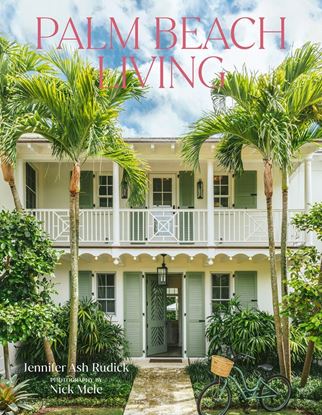
PALM BEACH LIVING
From charming bungalows to sleek minimalist houses and apartments to restorations of iconic Mediterranean Revival residences to a garden dotted with oversized insect sculptures, the homes showcased in Palm Beach Living are as distinctive as they are representative of the ever-evolving design trends on the nation’s most exclusive barrier island.
Some of the homes incorporate the exuberant colors of the island’s flora; others opt for a soothing, more neutral palette to contrast with the surrounding landscape. All embrace indoor-outdoor living, and each reflects the unique aesthetic of the owner.
Guided by native Palm Beacher Jennifer Ash Rudick, with photographs by Nick Mele, “a modern-day Slim Aarons,” readers are granted an intimate look at the best in tropical living.
This gorgeous coffee table book highlights the work of renowned architects—from the legendary Maurice Fatio and John Volk to Daniel Kahan, Fairfax & Sammons, Jeffrey W. Smith, and David Fox & Chris Stone—superb landscape designers, including Mario Nievera, Jorge Sánchez, and Fernando Wong, and such world-class interior designers as Tom Scheerer, Amanda Lindroth, Mark D. Sikes, Jonathan Adler, Frank de Biasi, Mimi McMakin, the late Carleton Varney, and Kim Coleman.
5,800