

1,150
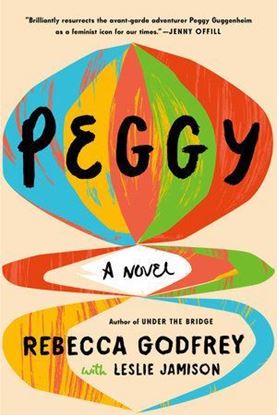
PEGGY
Venice, 1958. Peggy Guggenheim, heiress and now legendary art collector, sits in the sun at her white marble palazzo on the Grand Canal. She’s in a reflective mood, thinking back on her thrilling, tragic, nearly impossible journey from her sheltered, old-fashioned family in New York to here: iconoclast and independent woman.
Rebecca Godfrey’s Peggy is a blazingly fresh interpretation of a woman who defies every expectation to become an original. The daughter of two Jewish dynasties, Peggy finds her cloistered life turned upside down at fourteen, when her beloved father perishes on the Titanic. His death prompts Peggy to seek a life of passion and personal freedom and, above all, to believe in the transformative power of art. We follow Peggy as she makes her way through the glamorous but sexist and anti-Semitic art worlds of New York and Europe and meet the numerous men who love her (and her money) while underestimating her intellect, talent, and vision. Along the way, Peggy must balance her loyalty to her family with her need to break free from their narrow, snobbish ways and the unexpected restrictions that come with vast fortune.
1,150
1,150
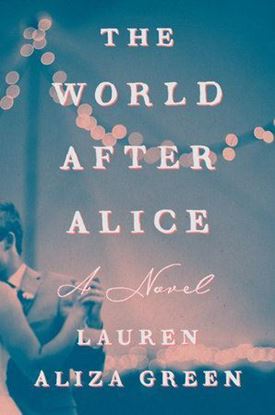
THE WORLD AFTER ALICE
When Morgan and Benji surprise their families with a wedding invitation to Maine, they’re aware the news of their clandestine relationship will come as a shock. Twelve years have passed since the stunning loss of sixteen-year-old Alice, Benji’s sister and Morgan’s best friend, and no one is quite the same. But the young couple decide to plunge headlong into matrimony, marking the first time their fractured families will reunite since Alice’s funeral.
As the arriving guests descend upon the tranquil coastal town, they bring with them not only skepticism about the impromptu nuptials but also deep-seated secrets and agendas of their own. Peter, Morgan’s father, may be trying to dissuade his daughter from saying “I do,” while Linnie, Benji’s mother, introduces a boyfriend who bears a tumultuous past of his own. Nick, Benji’s father, is scheming to secure a new job before his wife—formerly his mistress—discovers he’s lost his old one. Morgan, too, carries delicate secrets that threaten to jeopardize the happiness for which she has so longed. And as for Benji—well, he’s just trying to make sure the whole weekend doesn’t implode.
1,150

1,150
MARIA
In the 1950s, Oscar Hammerstein is asked to write the lyrics to a musical based on the life of a woman named Maria von Trapp. He’s intrigued to learn that she was once a novice who hoped to live quietly as an Austrian nun before her abbey sent her away to teach a widowed baron’s sickly child. What should have been a ten-month assignment, however, unexpectedly turned into a marriage proposal. And when the family was forced to flee their home to escape the Nazis, it was Maria who instructed them on how to survive using nothing but the power of their voices.
It’s an inspirational story, to be sure, and as half of the famous Rodgers & Hammerstein duo, Hammerstein knows it has big Broadway potential. Yet much of Maria’s life will have to be reinvented for the stage, and with the horrors of war still fresh in people’s minds, Hammerstein can’t let audiences see just how close the von Trapps came to losing their lives.
But when Maria sees the script that is supposedly based on her life, she becomes so incensed that she sets off to confront Hammerstein in person. Told that he’s busy, she is asked to express her concerns to his secretary, Fran, instead. The pair strike up an unlikely friendship as Maria tells Fran about her life, contradicting much of what will eventually appear in The Sound of Music.
A tale of love, loss, and the difficult choices that we are often forced to make, Maria is a powerful reminder that the truth is usually more complicated—and certainly more compelling—than the stories immortalized by Hollywood.
1,150
1,150
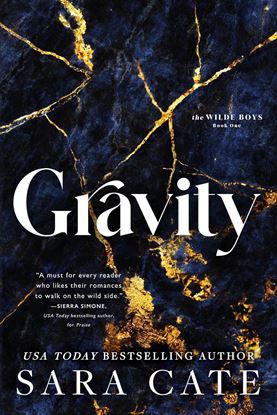
GRAVITY
Two years after Zara's sister and her boyfriend were killed in a plane crash, the last person Zara expected to show up on her doorstep was Preston's father, Alistair Wilde. Yet, there he is, with an offer Zara may not be able to pass up: be his son's girlfriend for three months, live with the two of them in a remote house, and one million dollars is hers for the taking.
The challenge turns out to be harder than she ever expected. Nash isn't just wild, he's dangerous. And Alistair is far more broken than he lets the world believe.
The three of them are bound by grief. Only Zara can feed Nash's hunger and heal Alistair's pain. Lines are crossed. Rules are broken. On the island, there's no one to tell them this is wrong. And now she'll have to choose before she tears their family apart.
1,150
1,150
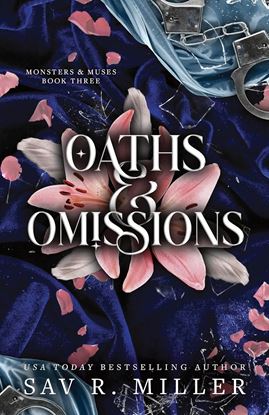
OATHS AND OMISSIONS
Lenny Primrose has lived her entire life as her rich father's puppet. Now, at twenty-three, she's no longer interested in playing his games. Unfortunately, the only way to avoid being married off to one of her father's business partners is to involve the man he fears most: the British assassin who almost killed him.
Jonas Wolfe would be content to never be in the same room as a Primrose ever again. His days are filled with contracted murder and running his pub anything to keep from sitting around thinking about his one failed mission.
But when Lenny commits a rash crime, Jonas steps in to help, and extracting himself from her family becomes impossible.
1,150
1,150
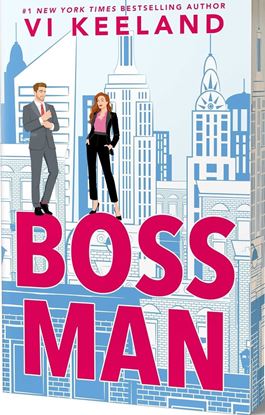
BOSSMAN (DELUXE EDITION)
Reese Annesley was hiding in the bathroom hallway of a restaurant leaving a message for her best friend to save her from her awful date, when a gorgeous stranger overhears and offers her some dating advice. She proceeds to tell him to mind his own damn business his own tall, handsome, full-of-himself damn business and goes back to her miserable date, though she can't help but sneak hidden glances at the condescending jerk on the other side of the room. Of course, he catches her―and winks.
When Chase Parker and his equally hot date suddenly appear at Reese's table, she's sure he's going to rat her out. But instead, he pretends he and Reese are old friends and joins them, telling elaborate, embarrassing stories about their fake childhood. And her date suddenly goes from boring to bizarrely exciting.
1,150