

700
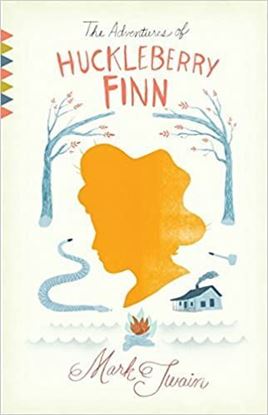
THE ADVENTURES OF HUCKLEBERRY FINN
Long cherished by readers of all ages, The Adventures of Huckleberry Finn is both a hilarious account of an incorrigible truant and a powerful parable of innocence in conflict with the fallen adult world.
The mighty Mississippi River of the antebellum South gives the novel both its colorful backdrop and its narrative shape, as the runaways Huck and Jim—a young rebel against civilization allied with an escaped slave—drift down its length on a flimsy raft. Their journey, at times rollickingly funny but always deadly serious in its potential consequences, takes them ever deeper into the slave-holding South, and our appreciation of their shared humanity grows as we watch them travel physically farther from yet morally closer to the freedom they both passionately seek.
700
650
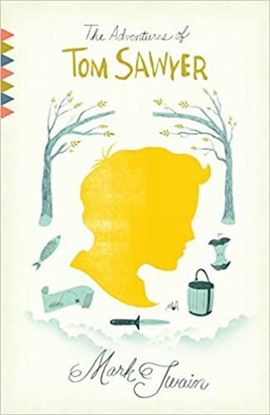
THE ADVENTURES OF TOM SAWYER (VINTAGE CL
Mark Twain was one of the nineteenth century's greatest chroniclers of childhood, and of all his works his beloved novel The Adventures of Tom Sawyer most enchantingly and timelessly captures the sheer pleasure of being a boy.
Tom Sawyer is as clever, imaginative, and resourceful as he is reckless and mischievous, whether conning his friends into painting a fence, playing pirates with his pal Huck Finn, witnessing his own funeral, or helping to catch a murderer. Twain’s novel glows with nostalgia for the Mississippi River towns of his youth and sparkles with his famous humor, but it is also woven throughout with a subtle awareness of the injustices and complexities of the old South that Twain so memorably portrays.
650
700
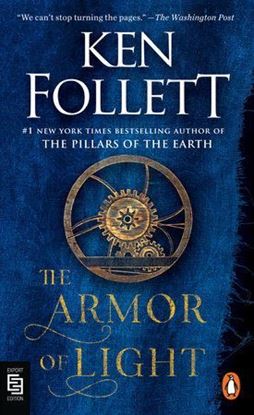
THE ARMOR OF LIGHT (EXP) (MM)
The Spinning Jenny was invented in 1770, and with that, a new era of manufacturing and industry changed lives everywhere within a generation. A world filled with unrest wrestles for control over this new world order: A mother’s husband is killed in a work accident due to negligence; a young woman fights to fund her school for impoverished children; a well-intentioned young man unexpectedly inherits a failing business; one man ruthlessly protects his wealth no matter the cost, all the while war cries are heard from France, as Napoleon sets forth a violent master plan to become emperor of the world. As institutions are challenged and toppled in unprecedented fashion, ripples of change ricochet through our characters’ lives as they are left to reckon with the future and a world they must rebuild from the ashes of war.
700
1,350
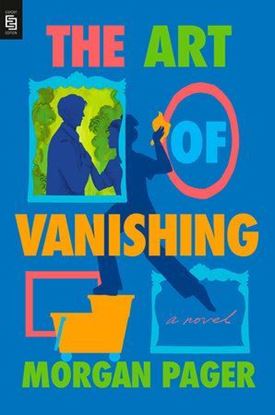
THE ART OF VANISHING
Something magical is happening inside this museum. . . .
Jean’s life is the same day in and day out. Frozen in time by his painter father, the legendary Henri Matisse, Jean observes the ebb and flow of museum guests as they take in the works of his father and other masters like Renoir, Picasso, and Modigliani. But his world takes a mesmerizing turn when Claire, a new museum employee, enters his life.
Night after night, Claire moves through the gallery where Jean’s painting hangs, mopping the floors, talking softly to herself to stem her loneliness, and gazing admiringly at the masterpieces above. The alluring man in the corner of the Matisse—is he watching her? Why does she feel a deepening pull to him, like he can see her truest self, her most profound secrets? Did he just move?
1,350
995
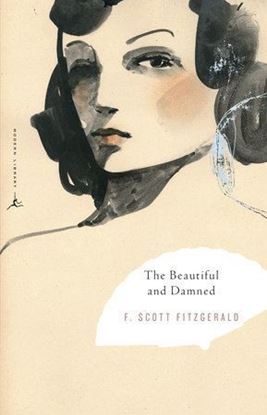
THE BEAUTIFUL AND DAMNED
Fitzgerald’s second novel, a devastating portrait of the excesses of the Jazz Age, is a largely autobiographical depiction of a glamorous, reckless Manhattan couple and their spectacular spiral into tragedy. Published on the heels of This Side of Paradise, the story of the Harvard-educated aesthete Anthony Patch and his willful wife, Gloria, is propelled by Fitzgerald’s intense romantic imagination and demonstrates an increased technical and emotional maturity. The Beautiful and Damned is at once a gripping morality tale, a rueful meditation on love, marriage, and money, and an acute social document. As Hortense Calisher observes in her Introduction, “Though Fitzgerald can entrance with stories so joyfully youthful they appear to be safe—when he cuts himself, you will bleed.”
995
1,250
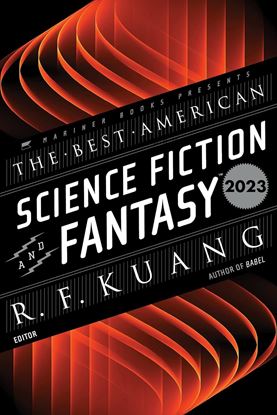
THE BEST AMERICAN SCIENCE FICTION AND.
“The most important part of this magic trick is just a willingness to get weird.” The stories in The Best American Science Fiction and Fantasy 2023 are brimming with bizarre and otherworldly premises. Women can’t lie or fall in love. Fathers feed their children ghost preserves. Souls chase one another through animal incarnations. Yet these stories are grounded deeply in our reality. Out of these stories’ weirdness emerges the cruelty of border enforcement, the horror of legislation restricting reproductive freedom, the frightening pace of AI. The result is a stunning, immersive, intensely felt experience, showing us less of what the world is, and more of what it could be.
1,250