

1,995
1,496
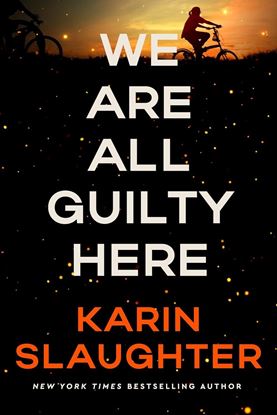
WE ARE ALL GUILTY HERE
Until the night of the fireworks. When two teenage girls vanish, and the town ignites.
For Officer Emmy Clifton, it’s personal. She turned away when her best friend's daughter needed help—and now she must bring her home.
But as Emmy combs through the puzzle the girls left behind, she realizes she never really knew them. Nobody did.
Every teenage girl has secrets. But who would kill for them? And what else is the town hiding?
1,995
1,496
500
375
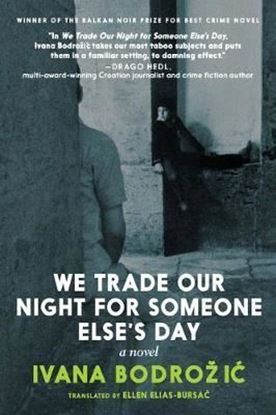
WE TRADE OUR NIGHT FOR SOMEONE (OF2)
The city of Vukovar, situated on Croatia's easternmost periphery, across the Danube River from Serbia, was the site of some of the worst violence in the wars that rocked ex-Yugoslavia in the early '90s. It is referred to only as the city throughout this taut political thriller from one of Europe's most celebrated young writers. In this city without a name, fences in schoolyards separate the children of Serbs from those of Croats, and city leaders still fight to free themselves from violent crimes they committed--or permitted--during the war a generation ago. Now, it is left to a new generation--the children, now grown up, to extricate themselves from this tragic place, innocents who are nonetheless connected in different ways to the crimes of the past.
Nora is a journalist assigned to do a puff piece on the perpetrator of a crime of passion--a Croatian high school teacher who fell in love with one of her students, a Serb, and is now in prison for having murdered her husband. But Nora herself is the daughter of a man who was murdered years earlier under mysterious circumstances. And she wants, if not to avenge her father, at least to bring to justice whoever committed the crime. There's a hothouse intensity to this extraordinary noir page-turner because of how closely the author sets the novel within the historical record. This city is unnamed, the story is fictional, so it can show us what actually happened there.
500
375
1,650
1,238
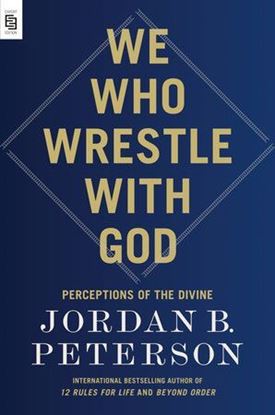
WE WHO WRESTLE WITH GOD
In We Who Wrestle with God, Dr. Peterson guides us through the ancient, foundational stories of the Western world. In riveting detail, he analyzes the Biblical accounts of rebellion, sacrifice, suffering, and triumph that stabilize, inspire, and unite us culturally and psychologically. Adam and Eve and the eternal fall of mankind; the resentful and ultimately murderous war of Cain and Abel; the cataclysmic flood of Noah; the spectacular collapse of the Tower of Babel; Abraham’s terrible adventure; and the epic of Moses and the Israelites. What could such stories possibly mean? What force wrote and assembled them over the long centuries? How did they bring our spirits and the world together, and point us in the same direction?
1,650
1,238