

1,500
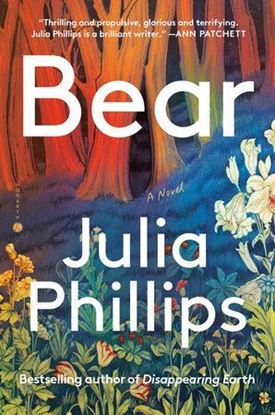
BEAR
They were sisters and they would last past the end of time.
Sam and Elena dream of another life. On the island off the coast of Washington where they were born and raised, they and their mother struggle to survive. Sam works on the ferry that delivers wealthy mainlanders to their vacation homes while Elena bartends at the local golf club, but even together they can’t earn enough to get by, stirring their frustration about the limits that shape their existence.
Then one night on the boat, Sam spots a bear swimming the dark waters of the channel. Where is it going? What does it want? When the bear turns up by their home, Sam, terrified, is more convinced than ever that it’s time to leave the island. But Elena responds differently to the massive beast. Enchanted by its presence, she throws into doubt the desire to escape and puts their long-held dream in danger.
A story about the bonds of sisterhood and the mysteries of the animals that live among us—and within us—Bear is a propulsive, mythical, richly imagined novel from one of the most acclaimed young writers in America.
1,500
700
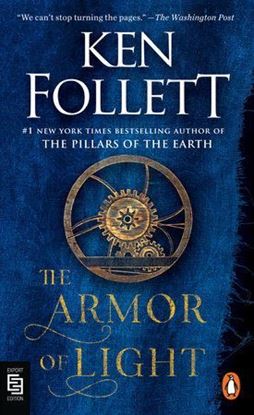
THE ARMOR OF LIGHT (EXP) (MM)
The Spinning Jenny was invented in 1770, and with that, a new era of manufacturing and industry changed lives everywhere within a generation. A world filled with unrest wrestles for control over this new world order: A mother’s husband is killed in a work accident due to negligence; a young woman fights to fund her school for impoverished children; a well-intentioned young man unexpectedly inherits a failing business; one man ruthlessly protects his wealth no matter the cost, all the while war cries are heard from France, as Napoleon sets forth a violent master plan to become emperor of the world. As institutions are challenged and toppled in unprecedented fashion, ripples of change ricochet through our characters’ lives as they are left to reckon with the future and a world they must rebuild from the ashes of war.
700
1,300
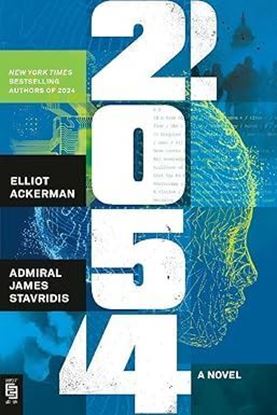
2054
It is twenty years after the catastrophic war between the United States and China that brought down the old American political order. A new party has emerged in the US, one that’s held power for over a decade. Efforts to cement its grip have resulted in mounting violent resistance. The American president has control of the media, but he is beginning to lose control of the streets. Many fear he’ll stop at nothing to remain in the White House. Suddenly, he collapses in the middle of an address to the nation. After an initial flurry of misinformation, the administration reluctantly announces his death. A cover-up ensues, conspiracy theories abound, and the country descends into a new type of civil war.
1,300
1,300
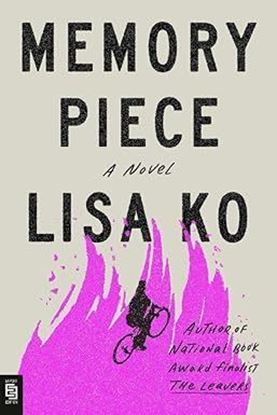
MEMORY PIECE
In the early 1980s, Giselle Chin, Jackie Ong, and Ellen Ng are three teenagers drawn together by their shared sense of alienation and desire for something different. “Allied in the weirdest parts of themselves,” they envision each other as artistic collaborators and embark on a future defined by freedom and creativity.
By the time they are adults, their dreams are murkier. As a performance artist, Giselle must navigate an elite social world she never conceived of. As a coder thrilled by the internet’s early egalitarian promise, Jackie must contend with its more sinister shift toward monetization and surveillance. And as a community activist, Ellen confronts the increasing gentrification and policing overwhelming her New York City neighborhood. Over time their friendship matures and changes, their definitions of success become complicated, and their sense of what matters evolves.
Moving from the predigital 1980s to the art and tech subcultures of the 1990s to a strikingly imagined portrait of the 2040s, Memory Piece is an innovative and audacious story of three lifelong friends as they strive to build satisfying lives in a world that turns out to be radically different from the one they were promised.
1,300
1,995
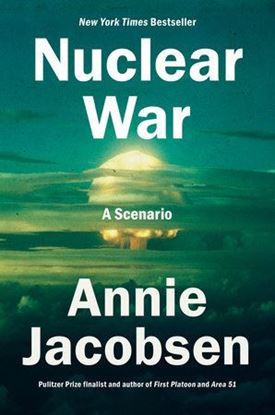
NUCLEAR WAR
Every generation, a journalist has looked deep into the heart of the nuclear military establishment: the technologies, the safeguards, the plans, and the risks. These investigations are vital to how we understand the world we really live in—where one nuclear missile will beget one in return, and where the choreography of the world’s end requires massive decisions made on seconds’ notice with information that is only as good as the intelligence we have.
Pulitzer Prize finalist Annie Jacobsen’s Nuclear War: A Scenario explores this ticking-clock scenario, based on dozens of exclusive new interviews with military and civilian experts who have built the weapons, have been privy to the response plans, and have been responsible for those decisions should they have needed to be made. Nuclear War: A Scenario examines the handful of minutes after a nuclear missile launch. It is essential reading, and unlike any other book in its depth and urgency.
1,995
1,450
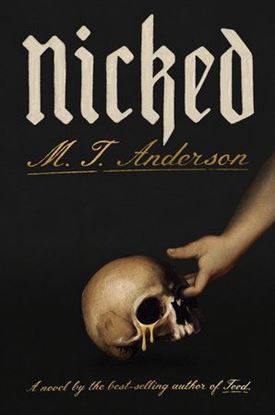
NICKED
The year is 1087, and a pox is sweeping through the Italian city of Bari. When a lowly monk is visited by Saint Nicholas in his dreams, he interprets the vision as a call to serve the sick. But his superiors, and the power brokers they serve, have different plans for the tender-hearted Brother Nicephorus.
Enter Tyun, a charismatic treasure hunter renowned for “liberating” holy relics from their tombs. The seven-hundred-year-old bones of Saint Nicholas are rumored to weep a mysterious liquid that can heal the sick, Tyun says. For the humble price of a small fortune, he will steal the bones and deliver them to Bari, curing the plague and restoring glory to the fallen city. And Nicephorus, the “dreamer,” will be his guide.
What follows is a heist for the ages, as Nicephorus is swept away on strange tides, and alongside even stranger bedfellows, to commit sacrilegious theft. Based on real historical accounts, Nicked is a swashbuckling saga, a medieval novel noir, a meditation on the miraculous, and a monastic meet-cute, filled with wide-eyed wonder at the world that awaits beyond our own borders.
1,450