


1,850
THE COIN
The Coin’s narrator is a wealthy Palestinian woman with impeccable style and meticulous hygiene. And yet the ideal self, the ideal life, remains just out of reach: her inheritance is inaccessible, her homeland exists only in her memory, and her attempt to thrive in America seems doomed from the start.
In New York, she strives to put down roots. She teaches at a school for underprivileged boys, where her eccentric methods cross boundaries. She befriends a homeless swindler, and the two participate in an intercontinental scheme reselling Birkin bags.
But America is stifling her—her willfulness, her sexuality, her principles. In an attempt to regain control, she becomes preoccupied with purity, cleanliness, and self-image, all while drawing her students into her obsessions. In an unforgettable denouement, her childhood memories converge with her material and existential statelessness, and the narrator unravels spectacularly.
1,850
1,500
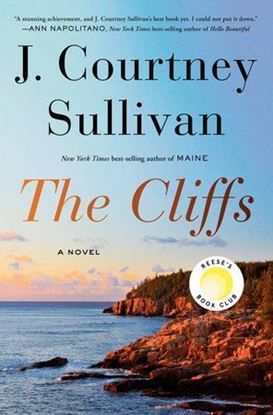
THE CLIFFS
On a secluded bluff overlooking the ocean sits a Victorian house, lavender with gingerbread trim, a home that contains a century’s worth of secrets. By the time Jane Flanagan discovers the house as a teenager, it has long been abandoned. The place is an irresistible mystery to Jane. There are still clothes in the closets, marbles rolling across the floors, and dishes in the cupboards, even though no one has set foot there in decades. The house becomes a hideaway for Jane, a place to escape her volatile mother.
Twenty years later, now a Harvard archivist, she returns home to Maine following a terrible mistake that threatens both her career and her marriage. Jane is horrified to find the Victorian is now barely recognizable. The new owner, Genevieve, a summer person from Beacon Hill, has gutted it, transforming the house into a glossy white monstrosity straight out of a shelter magazine. Strangely, Genevieve is convinced that the house is haunted—perhaps the product of something troubling Genevieve herself has done. She hires Jane to research the history of the place and the women who lived there. The story Jane uncovers—of lovers lost at sea, romantic longing, shattering loss, artistic awakening, historical artifacts stolen and sold, and the long shadow of colonialism—is even older than Maine itself.
1,500
1,550
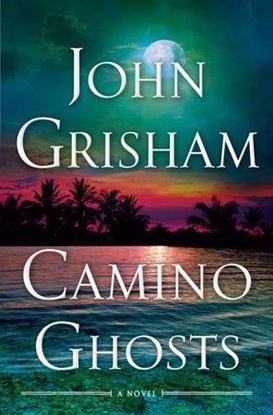
CAMINO GHOSTS
Don’t miss John Grisham’s upcoming Framed, his first work of nonfiction since The Innocent Man!
Mercer Mann, a popular writer from Camino Island, is back on the beach, marrying her boyfriend, Thomas, in a seaside ceremony. Bruce Cable, infamous owner of Bay Books, performs the wedding. Afterward, Bruce tells Mercer that he has stumbled upon an incredible story. Mercer desperately needs an idea for her next novel, and Bruce now has one.
The true story is about Dark Isle, a sliver of a barrier island not far off the North Florida coast. It was settled by freed slaves three hundred years ago, and their descendants lived there until 1955, when the last one was forced to leave. That last descendant is Lovely Jackson, elderly now, who loves her birthplace and its remarkable history. But now Tidal Breeze, a huge, ruthless corporate developer, wants to build a resort and casino on the island, which Lovely knows, deep down, is rightfully hers.
1,550
1,350
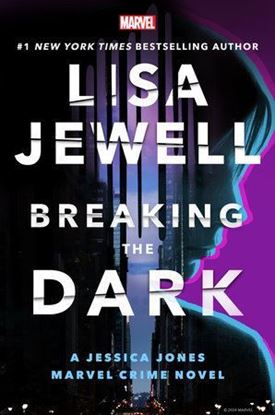
BREAKING THE DARK
Meet Jessica Jones: Retired super hero, private investigator, loner. She tried her best to be a shiny spandex crimefighter, but that life only led to unspeakable trauma. Now she avoids that world altogether and works on surviving day-to-day in Hell’s Kitchen, New York.
The morning a distraught mother comes into her office, Jessica would prefer to nurse her hangover and try to forget last night’s poor choices. But something about Amber Randall’s story strikes a chord with her. Amber is adamant that something happened to her teenage twins while they were visiting their father in the UK. The twins don’t act like themselves, and they now have flawless skin, have lost their distinctive tics and habits, and keep talking about a girl named Belle. Amber insists her children have been replaced by something horrible, something “perfect.”
Traveling to a small village in the British countryside, Jessica meets the mysterious Belle, who lives a curiously isolated life in an old farmhouse with a strange woman who claims to be her guardian. Can this unworldly teenager really be responsible for the Randall twins’ new personas? Why does the strange little village of Barton Wallop seem to harbor dark energies and mysteries in its tight-knit community?
1,350

995
THE BRIGHT SWORD
A gifted young knight named Collum arrives at Camelot to compete for a place at the Round Table, only to find that he’s too late. King Arthur died two weeks ago at the Battle of Camlann, and only a handful of the knights of the Round Table are left.
The survivors aren’t the heroes of legend like Lancelot or Gawain. They’re the oddballs of the Round Table, like Sir Palomides, the Saracen Knight, and Sir Dagonet, Arthur’s fool, who was knighted as a joke. They’re joined by Nimue, who was Merlin’s apprentice until she turned on him and buried him under a hill.
But it's up to them to rebuild Camelot in a world that has lost its balance, even as God abandons Britain and the fairies and old gods return, led by Morgan le Fay. They must reclaim Excalibur and make this ruined world whole again—but first they'll have to solve the mystery of why the lonely, brilliant King Arthur fell.
995
1,350
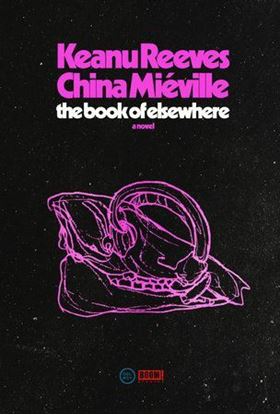
THE BOOK OF ELSEWHERE
She said, We needed a tool. So I asked the gods.
There have always been whispers. Legends. The warrior who cannot be killed. Who’s seen a thousand civilizations rise and fall. He has had many names: Unute, Child of Lightning, Death himself. These days, he’s known simply as “B.”
And he wants to be able to die.
In the present day, a U.S. black-ops group has promised him they can help with that. And all he needs to do is help them in return. But when an all-too-mortal soldier comes back to life, the impossible event ultimately points toward a force even more mysterious than B himself. One at least as strong. And one with a plan all its own.
In a collaboration that combines Miéville’s singular style and creativity with Reeves’s haunting and soul-stirring narrative, these two inimitable artists have created something utterly unique, sure to delight existing fans and to create scores of new ones.
1,350
1,500
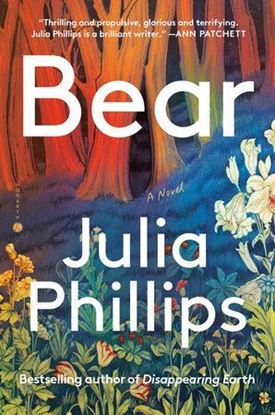
BEAR
They were sisters and they would last past the end of time.
Sam and Elena dream of another life. On the island off the coast of Washington where they were born and raised, they and their mother struggle to survive. Sam works on the ferry that delivers wealthy mainlanders to their vacation homes while Elena bartends at the local golf club, but even together they can’t earn enough to get by, stirring their frustration about the limits that shape their existence.
Then one night on the boat, Sam spots a bear swimming the dark waters of the channel. Where is it going? What does it want? When the bear turns up by their home, Sam, terrified, is more convinced than ever that it’s time to leave the island. But Elena responds differently to the massive beast. Enchanted by its presence, she throws into doubt the desire to escape and puts their long-held dream in danger.
A story about the bonds of sisterhood and the mysteries of the animals that live among us—and within us—Bear is a propulsive, mythical, richly imagined novel from one of the most acclaimed young writers in America.
1,500
700
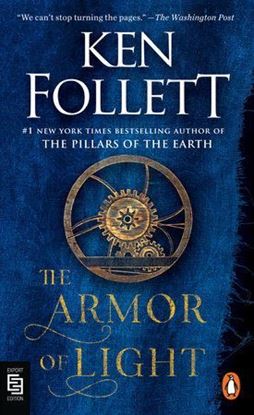
THE ARMOR OF LIGHT (EXP) (MM)
The Spinning Jenny was invented in 1770, and with that, a new era of manufacturing and industry changed lives everywhere within a generation. A world filled with unrest wrestles for control over this new world order: A mother’s husband is killed in a work accident due to negligence; a young woman fights to fund her school for impoverished children; a well-intentioned young man unexpectedly inherits a failing business; one man ruthlessly protects his wealth no matter the cost, all the while war cries are heard from France, as Napoleon sets forth a violent master plan to become emperor of the world. As institutions are challenged and toppled in unprecedented fashion, ripples of change ricochet through our characters’ lives as they are left to reckon with the future and a world they must rebuild from the ashes of war.
700

1,850
THE ANXIOUS GENERATION
After more than a decade of stability or improvement, the mental health of adolescents plunged in the early 2010s. Rates of depression, anxiety, self-harm, and suicide rose sharply, more than doubling on many measures. Why?
In The Anxious Generation, social psychologist Jonathan Haidt lays out the facts about the epidemic of teen mental illness that hit many countries at the same time. He then investigates the nature of childhood, including why children need play and independent exploration to mature into competent, thriving adults. Haidt shows how the “play-based childhood” began to decline in the 1980s, and how it was finally wiped out by the arrival of the “phone-based childhood” in the early 2010s. He presents more than a dozen mechanisms by which this “great rewiring of childhood” has interfered with children’s social and neurological development, covering everything from sleep deprivation to attention fragmentation, addiction, loneliness, social contagion, social comparison, and perfectionism. He explains why social media damages girls more than boys and why boys have been withdrawing from the real world into the virtual world, with disastrous consequences for themselves, their families, and their societies.
1,850