995
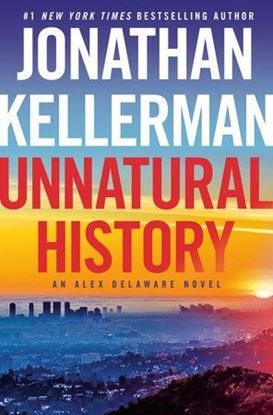
UNNATURAL HISTORY
Los Angeles is a city of stark contrast, the palaces of the affluent coexisting uneasily with the hellholes of the mad and the needy. That shadow world and the violence it breeds draw brilliant psychologist Dr. Alex Delaware and Detective Milo Sturgis into an unsettling case of altruism gone wrong.
On a superficially lovely morning, a woman shows up for work with her usual enthusiasm. She’s the newly hired personal assistant to a handsome, wealthy photographer and is ready to greet her boss with coffee and good cheer. Instead, she finds him slumped in bed, shot to death.
The victim had recently received rave media attention for his latest project: images of homeless people in their personal “dream” situations, elaborately costumed and enacting unfulfilled fantasies. There are some, however, who view the whole thing as nothing more than crass exploitation, citing token payments and the victim’s avoidance of any long-term relationships with his subjects.
Has disgruntlement blossomed into homicidal rage? Or do the roots of violence reach down to the victim’s family—a clan, sired by an elusive billionaire, that is bizarre in its own right?
Then new murders arise, and Alex and Milo begin peeling back layer after layer of intrigue and complexity, culminating in one of the deadliest threats they’ve ever faced.
995
800
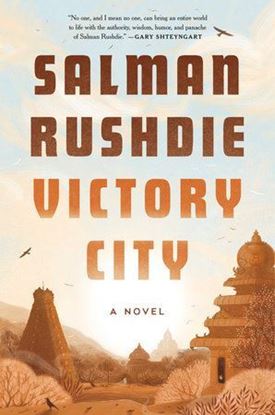
VICTORY CITY
In the wake of an unimportant battle between two long-forgotten kingdoms in fourteenth-century southern India, a nine-year-old girl has a divine encounter that will change the course of history. After witnessing the death of her mother, the grief-stricken Pampa Kampana becomes a vessel for a goddess, who begins to speak out of the girl’s mouth. Granting her powers beyond Pampa Kampana’s comprehension, the goddess tells her that she will be instrumental in the rise of a great city called Bisnaga—“victory city”—the wonder of the world.
Over the next 250 years, Pampa Kampana’s life becomes deeply interwoven with Bisnaga’s, from its literal sowing from a bag of magic seeds to its tragic ruination in the most human of ways: the hubris of those in power. Whispering Bisnaga and its citizens into existence, Pampa Kampana attempts to make good on the task that the goddess set for her: to give women equal agency in a patriarchal world. But all stories have a way of getting away from their creator, and Bisnaga is no exception. As years pass, rulers come and go, battles are won and lost, and allegiances shift, the very fabric of Bisnaga becomes an ever more complex tapestry—with Pampa Kampana at its center.
800
900
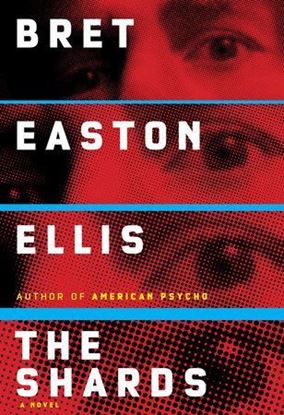
THE SHARDS
Bret Easton Ellis’s masterful new novel is a story about the end of innocence, and the perilous passage from adolescence into adulthood, set in a vibrantly fictionalized Los Angeles in 1981 as a serial killer begins targeting teenagers throughout the city.
Seventeen-year-old Bret is a senior at the exclusive Buckley prep school when a new student arrives with a mysterious past. Robert Mallory is bright, handsome, charismatic, and shielding a secret from Bret and his friends even as he becomes a part of their tightly knit circle. Bret’s obsession with Mallory is equaled only by his increasingly unsettling preoccupation with the Trawler, a serial killer on the loose who seems to be drawing ever closer to Bret and his friends, taunting them—and Bret in particular—with grotesque threats and horrific, sharply local acts of violence. The coincidences are uncanny, but they are also filtered through the imagination of a teenager whose gifts for constructing narrative from the filaments of his own life are about to make him one of the most explosive literary sensations of his generation. Can he trust his friends—or his own mind—to make sense of the danger they appear to be in? Thwarted by the world and by his own innate desires, buffeted by unhealthy fixations, he spirals into paranoia and isolation as the relationship between the Trawler and Robert Mallory hurtles inexorably toward a collision.
900