

650
488
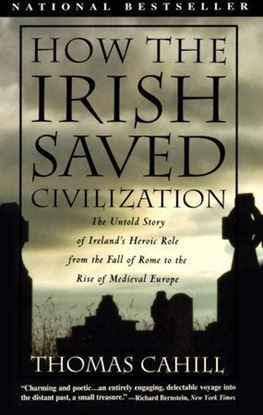
HOW THE IRISH SAVED CIVILIZATION
Every year millions of Americans celebrate St. Patrick’s Day, but they may not be aware of how great an influence St. Patrick was on the subsequent history of civilization. Not only did he bring Christianity to Ireland, he instilled a sense of literacy and learning that would create the conditions that allowed Ireland to become “the isle of saints and scholars”—and thus preserve Western culture while Europe was being overrun by barbarians.
In this entertaining and compelling narrative, Thomas Cahill tells the story of how Europe evolved from the classical age of Rome to the medieval era. Without Ireland, the transition could not have taken place. Not only did Irish monks and scribes maintain the very record of Western civilization — copying manuscripts of Greek and Latin writers, both pagan and Christian, while libraries and learning on the continent were forever lost—they brought their uniquely Irish world-view to the task.
As Cahill delightfully illustrates, so much of the liveliness we associate with medieval culture has its roots in Ireland. When the seeds of culture were replanted on the European continent, it was from Ireland that they were germinated.
650
488
650
488
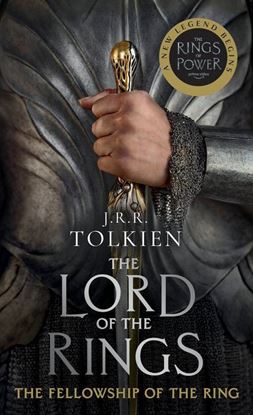
THE LORD OF THE RINGS. PART. 1 (MM)
The dark, fearsome Ringwraiths are searching for a Hobbit. Frodo Baggins knows that they are seeking him and the Ring he bears—the Ring of Power that will enable evil Sauron to destroy all that is good in Middle-earth. Now it is up to Frodo and his faithful servant, Sam, with a small band of companions, to carry the Ring to the one place it can be destroyed: Mount Doom, in the very center of Sauron’s realm.
650
488
650
488
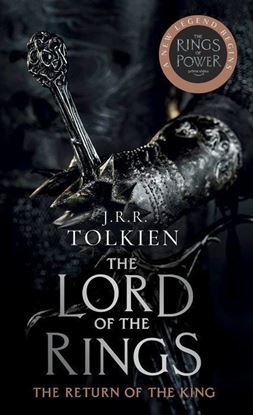
THE LORD OF THE RINGS. PART. 3 (MM)
While the evil might of the Dark Lord Sauron swarms out to conquer all Middle-earth, Frodo and Sam struggle deep into Mordor, seat of Sauron’s power. To defeat the Dark Lord, the One Ring, ruler of the accursed Rings of Power, must be destroyed in the fires of Mount Doom. But the way is impossibly hard, and Frodo is weakening. Weighed down by the compulsion of the Ring, he begins finally to despair.
650
488
650
488
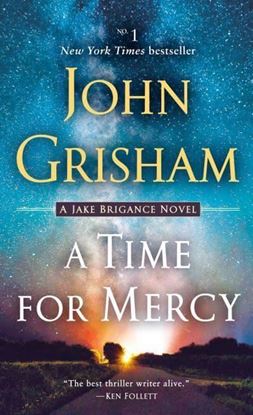
A TIME FOR MERCY (MM)
Clanton, Mississippi. 1990. Jake Brigance finds himself embroiled in a deeply divisive trial when the court appoints him attorney for Drew Gamble, a timid sixteen-year-old boy accused of murdering a local deputy. Many in Clanton want a swift trial and the death penalty, but Brigance digs in and discovers that there is more to the story than meets the eye. Jake's fierce commitment to saving Drew from the gas chamber puts his career, his financial security, and the safety of his family on the line.
650
488
650
488
THE LORD OF THE RINGS. PART. 2 (MM)
The second part of J.R.R. Tolkien’s epic adventure The Lord of the Rings.
The Fellowship is scattered. Some brace hopelessly for war against the ancient evil of Sauron. Others must contend with the treachery of the wizard Saruman. Only Frodo and Sam are left to take the One Ring, ruler of the accursed Rings of Power, to be destroyed in Mordor, the dark realm where Sauron is supreme. Their guide is Gollum, deceitful and obsessive slave to the corruption of the Ring.
650
488
650
488
PONTICAS
Publio Ovidio Nasón (43 a. C.-17 d. C.) es uno de los poetas capitales de la literatura latina. Nacido en Sulmona, demostró desde siempre una extraordinaria facilidad para versificar, lo cual le llevó a ser muy prolífico y cultivar con exito diversos generos. Fue poeta de moda entre sus contemporáneos, hasta que una repentina decisión del emperador Augusto lo condenó a vivir desterrado en Tomos, una ciudad en los confines del imperio, a orillas de Ponto Euxino (el actual mar Negro).
La traumática experiencia del exilio pasó a ser el tema central de su poesía. Pónticas representa una de las obras cumbre de la literatura universal sobre el destierro.
650
488