


1,750
1,313
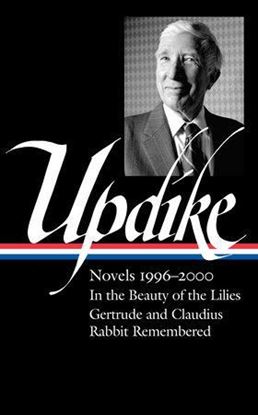
UPDIKE: NOVELS 1996–2000
The capstone volume of the Library of America edition of John Updike’s novels contains some of the master stylist and social observer’s most ambitious works.
In the Beauty of the Lilies (1996) opens in 1910, when Clarence Wilmot, a Presbyterian minister in Paterson, NJ, experiences a devastating loss of faith. This moment of crisis sets in motion an eighty-year, multigenerational saga whose subject is nothing less than the American Century and modernity itself, seen through the fluctuating fortunes of a single representative family.
In Gertrude and Claudius, Updike boldly imagines the long backstory to the world’s most famous play, prompting readers to revisit and perhaps revise their judgments about Hamlet’s notorious uncle and mother. Drawing on the twelfth- and fifteenth century sources for Hamlet, but also inventing a new history for Claudius in his far-flung travels across medieval Europe, Updike creates a vivid and surprising origin story for the fabled rottenness in Shakespeare’s Denmark.
1,750
1,313

1,750
1,313
BAD LIAR
A murder victim dumped at the dead end of a lonely country road, face and hands obliterated by a shotgun blast, is not the way sheriff’s detective Nick Fourcade wants to start his week. His only lead takes him to the family of a hometown hero suddenly gone missing. Marc Mercier left his home for a weekend hunting trip and hasn’t been seen since.
Meanwhile, sheriff’s detective Annie Broussard begins her first day back on the job after suffering a brutal attack by taking on the case of B’Lynn Fontenot, a mother desperate to find her grown son, a recovering drug addict. Robbie Fontenot has been missing for eight days, but the local police have no interest in the case, telling B’Lynn that an adult has the right to disappear, and a missing addict is no big surprise. But B’Lynn swears her son was turning his life around. Sympathetic to a mother’s anguish, Annie agrees to help B’Lynn, knowing she’s about to start a turf war with the city police.
1,750
1,313
1,750
1,313
ODISEA (GREDOS) (TD)
No hay, probablemente, en toda la literatura occidental una obra más rica en motivos que la Odisea, compuesta a finales del siglo viii a. C. por un gran poeta que llamamos Homero. Aunque compuesto en hexámetros y según las técnicas tradicionales de la composición oral, el Poema de Ulises es mucho más moderno y vario que un cantar de gestas guerreras. Es, como se ha dicho muchas veces, un primer relato de aventuras casi novelescas, con diversos registros y ambientes, como es también diverso y versátil su protagonista, Odiseo. Sus grandes lances son bien conocidos por todos, incluso por quienes no han leído la obra, pero tener acceso a una traducción rítmica tan cuidada como la que ofrece este volumen, pulida a lo largo de muchos años, acentúa el placer de sumergirse en este texto.
1,750
1,313

1,750
1,313
ENEIDA (GREDOS) (TD)
Hasta el final de su vida, y durante más de diez años, Publio Virgilio Marón (70-19 a.C.) estuvo dedicado a la composición de la Eneida, unánimemente reconocida como el más perfecto exponente del clasicismo romano. Virgilio pretendió con ella ofrecer al público romano la gran epopeya de sus orígenes, que sirviera al tiempo como justificación y exaltación del nuevo régimen impuesto por el emperador Augusto. El resultado sería esta magistral combinación entre el pasado legendario de Roma y su historia reciente.
1,750
1,313
1,750
1,313
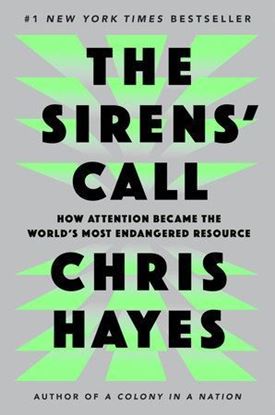
THE SIRENS' CALL
We all feel it—the distraction, the loss of focus, the addictive focus on the wrong things for too long. We bump into the zombies on their phones in the street, and sometimes they’re us. We stare in pity at the four people at the table in the restaurant, all on their phones, and then we feel the buzz in our pocket. Something has changed utterly: for most of human history, the boundary between public and private has been clear, at least in theory. Now, as Chris Hayes writes, “With the help of a few tech firms, we basically tore it down in about a decade.” Hayes argues that we are in the midst of an epoch-defining transition whose only parallel is what happened to labor in the nineteenth century: attention has become a commodified resource extracted from us, and from which we are increasingly alienated. The Sirens’ Call is the big-picture vision we urgently need to offer clarity and guidance.
1,750
1,313

1,750
1,313
AMERICA AMERICA
America, América traverses half a millennium, from the Spanish Conquest—the greatest mortality event in human history—through the eighteenth-century wars for independence, the Monroe Doctrine, the coups and revolutions of the twentieth century, and beyond. Grandin shows, among other things, how in response to U.S. interventions, Latin Americans remade the rules, leading directly to the founding of the United Nations; and how the Good Neighbor Policy allowed FDR to assume the moral authority to lead the fight against world fascism.
1,750
1,313