
1,450
1,160
EN VISPERA (ALBA)
Dos jóvenes amigos, un escultor con talento pero algo perezoso y un recién licenciado en Filosofía, están enamorados de Yelena Nikoláievna Stájova, una muchacha de clase media que siempre ha destacado por su bondad con los que sufren. Yelena encuentra frívolo a uno de ellos, y cada vez más interesante al otro, pero entonces se cruza en su camino un tercero. Mientras tanto, sus padres preparan su boda con un alto funcionario… Turguénev recreó en En vísperas (1860) un enfrentamiento generacional que los críticos de la época vieron como una alegoría de la Rusia que estaba por llegar (de ahí el título de la obra).
1,450
1,160

1,450
1,160
EL MARAVILLOSO MAGO DE OZ (ZORRO)
«Oz es ese lugar, diez minutos antes del sueño, donde […] decidimos que la humanidad, por muy maliciosa y mezquina y tonta que sea, merecerá otra oportunidad al amanecer.» Ray Bradbury
Célebre por la adaptación cinematográfica de Victor Fleming, la película fantástica más famosa de todos los tiempos, El maravilloso Mago de Oz era el tercer libro que Baum escribía, y fue un éxito inmediato. Se trataba de uno más entre muchos que estaba planeando, pero la presión de los lectores fue tal, que terminó escribiendo catorce novelas sobre este fantástico mundo. La multipremiada Olimpia Zagnoli despliega un cautivador imaginario, en el que los potentes patrones geométricos y el juego cromático entre el verde esmeralda y el dorado otorgan a esta edición un talante inigualable.
1,450
1,160
1,450
1,160
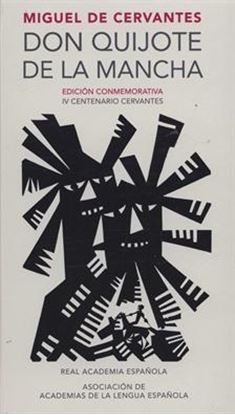
DON QUIJOTE DE LA MANCHA (RAE) (TD)
Hace diez años la Asociación de Academias de la Lengua Española pensó este Quijote para todos. Hoy se reedita -en edición limitada- para conmemorar los 400 años de la muerte de su autor. Los años 2015 y 2016 conforman un bienio de aniversarios cervantinos. A la celebración del IV Centenario de la publicación de la segunda parte de Don Quijote (2015), le sigue, en 2016, la conmemoración del IV Centenario de la muerte de su autor, Miguel de Cervantes. Como ocurrió hace más de una década, las Academias de la Lengua Española y la editorial Alfaguara se unen a esta celebración con la reedición de este clásico universal, que llevaba siete años fuera de las librerías. Esta edición reproduce el texto crítico y las notas de Francisco Rico, a su vez coordinador del volumen, y se completa con estudios de escritores y filólogos de la talla de Mario Vargas Llosa, Francisco Ayala, Martín de Riquer, José Manuel Blecua, Guillermo Rojo, José Antonio Pascual, Margit Frenk y Claudio Guillén.Como novedad, la presente edición cuenta con un prólogo de Darío Villanueva, director de la Real Academia Española, escrito especialmente para la ocasión. La crítica ha dicho... «Lo considero un libro para el siglo XXI.» Mario Vargas Llosa «Uno de los grandes acontecimientos literarios del año.» ABC «El volumen tiene una sobria y elegante presentación y una cuidadísima realización.» José Andrés Rojo, El País
1,450
1,160
1,450
1,160
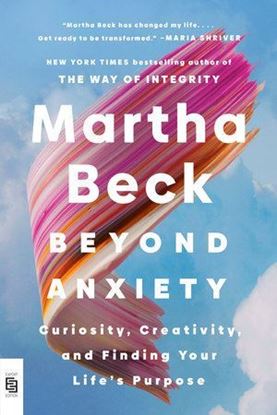
BEYOND ANXIETY
AN OPEN FIELD PUBLICATION FROM MARIA SHRIVER
Most of us assume that the key to overcoming anxiety is to think our way out of it. And for a while, it works. Meditation and mental exercises offer us relief, but there is always something—a work deadline, a family emergency, a particularly distressing newsbreak—that disrupts our sense of peace and sends us right back inside the same anxious spiral we’ve been trying to climb out of.
Is there a way to reduce our anxiety, not just in the moment, but in every moment after that?
After a lifetime of struggling with anxiety, Martha Beck studied just about everything there was to know about how to calm down. What she realized is that the analytical part of our brain—so valued in Western culture—is the same structure responsible for amping up anxiety. In other words, we cannot logic our way to relief. In Beyond Anxiety, she reveals that to find calm, we must activate an entirely different part of our brain, one responsible for curiosity, wonder, and, most of all, creativity.
1,450
1,160
1,450
1,160
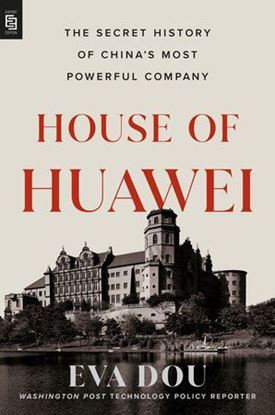
HOUSE OF HUAWEI
The untold story of the mysterious family dynasty at the center of China’s Huawei.
On December 1, 2018, Meng Wanzhou, daughter of Ren Zhengfei, founder and CEO of China’s most powerful company, Huawei Technologies, was detained at the request of U.S. authorities as she prepared to board a flight out of Vancouver, Canada. The detention of Huawei’s female scion set the U.S.-China trade skirmish on fire— and, for the first time, revealed the Ren family’s prominence in Beijing’s power structure.
In The Listening State, acclaimed Washington Post reporter Eva Dou exposes the untold story of the rise of Ren Zhengfei and the mysterious family dynasty at the center of Huawei, whose connections to state apparatus reveal a deeper truth about China’s surveillance web and its global ambitions. Through its technologies, Huawei has helped solidify and enforce China’s growing police state, in which outspoken entrepreneurs like Jack Ma have been silenced, tycoons have disappeared, and executives must put patriotism above profit.
1,450
1,160
1,450
1,160
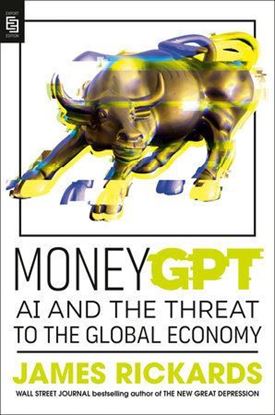
MONEYGPT
In November 2022, OpenAI released GPT-4 in a chatbot form to the public. In just two months, it claimed 100 million users—the fastest app to ever reach this benchmark. Since then, AI has become an all-consuming topic, popping up on the news, in ads, on your messenger apps, and in conversations with friends and family. But as AI becomes ubiquitous and grows at an ever-increasing pace, what does it mean for the financial markets?
In MoneyGPT, Wall Street veteran and former advisor to the Department of Defense James Rickards paints a comprehensive picture of the danger AI poses to the global financial order, and the insidious ways in which AI will threaten national security. Rickards shows how, while AI is touted to increase efficiency and lower costs, its global implementation in the financial world will actually cause chaos, as selling begets selling and bank runs happen at lightning speed. AI further benefits malicious actors, Rickards argues, because without human empathy or instinct to intervene, threats like total nuclear war that once felt extreme are now more likely. And throughout all this, we must remain vigilant on the question of whose values will be promoted in the age of AI. As Rickards predicts, these systems will fail when we rely on them the most.
1,450
1,160