

1,450
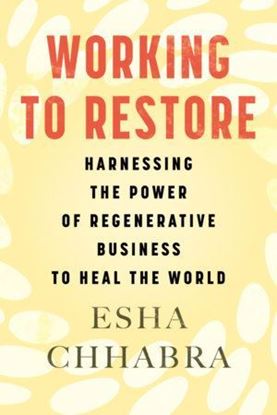
WORKING TO RESTORE
Political upheaval and social turmoil have peeled back the glitzy layers of capitalism to reveal an uncomfortable truth: historically, businesses have sourced materials from remote corners of the globe and moved millions of people and tons of cargo around the clock—all in the name of profit. Yet many of today’s startups are rewriting the rules of business: how it’s done, by whom, and, most importantly, for what purpose. Journalist Esha Chhabra draws on her decades of reporting to explore not only the “feel good, do good” factors of these restorative enterprises but also the nuanced realities and promise of regenerative business operations.
1,450
1,450
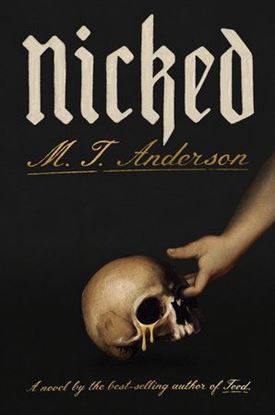
NICKED
The year is 1087, and a pox is sweeping through the Italian city of Bari. When a lowly monk is visited by Saint Nicholas in his dreams, he interprets the vision as a call to serve the sick. But his superiors, and the power brokers they serve, have different plans for the tender-hearted Brother Nicephorus.
Enter Tyun, a charismatic treasure hunter renowned for “liberating” holy relics from their tombs. The seven-hundred-year-old bones of Saint Nicholas are rumored to weep a mysterious liquid that can heal the sick, Tyun says. For the humble price of a small fortune, he will steal the bones and deliver them to Bari, curing the plague and restoring glory to the fallen city. And Nicephorus, the “dreamer,” will be his guide.
What follows is a heist for the ages, as Nicephorus is swept away on strange tides, and alongside even stranger bedfellows, to commit sacrilegious theft. Based on real historical accounts, Nicked is a swashbuckling saga, a medieval novel noir, a meditation on the miraculous, and a monastic meet-cute, filled with wide-eyed wonder at the world that awaits beyond our own borders.
1,450
1,450
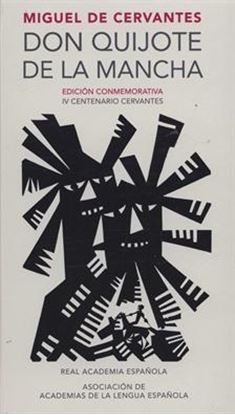
DON QUIJOTE DE LA MANCHA (RAE) (TD)
Hace diez años la Asociación de Academias de la Lengua Española pensó este Quijote para todos. Hoy se reedita -en edición limitada- para conmemorar los 400 años de la muerte de su autor. Los años 2015 y 2016 conforman un bienio de aniversarios cervantinos. A la celebración del IV Centenario de la publicación de la segunda parte de Don Quijote (2015), le sigue, en 2016, la conmemoración del IV Centenario de la muerte de su autor, Miguel de Cervantes. Como ocurrió hace más de una década, las Academias de la Lengua Española y la editorial Alfaguara se unen a esta celebración con la reedición de este clásico universal, que llevaba siete años fuera de las librerías. Esta edición reproduce el texto crítico y las notas de Francisco Rico, a su vez coordinador del volumen, y se completa con estudios de escritores y filólogos de la talla de Mario Vargas Llosa, Francisco Ayala, Martín de Riquer, José Manuel Blecua, Guillermo Rojo, José Antonio Pascual, Margit Frenk y Claudio Guillén.Como novedad, la presente edición cuenta con un prólogo de Darío Villanueva, director de la Real Academia Española, escrito especialmente para la ocasión. La crítica ha dicho... «Lo considero un libro para el siglo XXI.» Mario Vargas Llosa «Uno de los grandes acontecimientos literarios del año.» ABC «El volumen tiene una sobria y elegante presentación y una cuidadísima realización.» José Andrés Rojo, El País
1,450

1,450
EL MARAVILLOSO MAGO DE OZ (ZORRO)
«Oz es ese lugar, diez minutos antes del sueño, donde […] decidimos que la humanidad, por muy maliciosa y mezquina y tonta que sea, merecerá otra oportunidad al amanecer.» Ray Bradbury
Célebre por la adaptación cinematográfica de Victor Fleming, la película fantástica más famosa de todos los tiempos, El maravilloso Mago de Oz era el tercer libro que Baum escribía, y fue un éxito inmediato. Se trataba de uno más entre muchos que estaba planeando, pero la presión de los lectores fue tal, que terminó escribiendo catorce novelas sobre este fantástico mundo. La multipremiada Olimpia Zagnoli despliega un cautivador imaginario, en el que los potentes patrones geométricos y el juego cromático entre el verde esmeralda y el dorado otorgan a esta edición un talante inigualable.
1,450
1,450
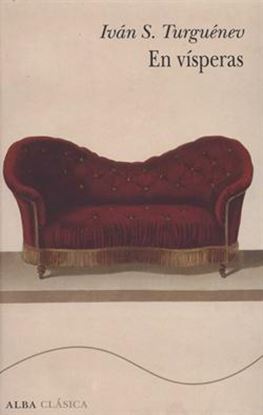
EN VISPERA (ALBA)
Dos jóvenes amigos, un escultor con talento pero algo perezoso y un recién licenciado en Filosofía, están enamorados de Yelena Nikoláievna Stájova, una muchacha de clase media que siempre ha destacado por su bondad con los que sufren. Yelena encuentra frívolo a uno de ellos, y cada vez más interesante al otro, pero entonces se cruza en su camino un tercero. Mientras tanto, sus padres preparan su boda con un alto funcionario… Turguénev recreó en En vísperas (1860) un enfrentamiento generacional que los críticos de la época vieron como una alegoría de la Rusia que estaba por llegar (de ahí el título de la obra).
1,450
1,450
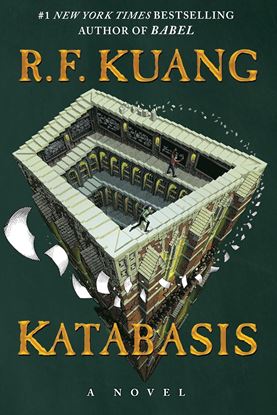
KATABASIS (EXP)
The story of a hero’s descent to the underworld
Alice Law has only ever had one goal: to become one of the brightest minds in the field of Magick. She has sacrificed everything to make that a reality: her pride, her health, her love life, and most definitely her sanity. All to work with Professor Jacob Grimes at Cambridge, the greatest magician in the world.
That is, until he dies in a magical accident that could possibly be her fault.
Grimes is now in Hell, and she’s going in after him. Because his recommendation could hold her very future in his now incorporeal hands and even death is not going to stop the pursuit of her dreams….
Nor will the fact that her rival, Peter Murdoch, has come to the very same conclusion.
With nothing but the tales of Orpheus and Dante to guide them, enough chalk to draw the Pentagrams necessary for their spells, and the burning desire to make all the academic trauma mean anything, they set off across Hell to save a man they don’t even like.
But Hell is not like the storybooks say, Magick isn’t always the answer, and there’s something in Alice and Peter’s past that could forge them into the perfect allies…or lead to their doom.
1,450