

1,450
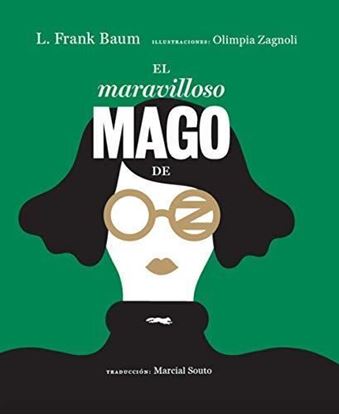
EL MARAVILLOSO MAGO DE OZ (ZORRO)
«Oz es ese lugar, diez minutos antes del sueño, donde […] decidimos que la humanidad, por muy maliciosa y mezquina y tonta que sea, merecerá otra oportunidad al amanecer.» Ray Bradbury
Célebre por la adaptación cinematográfica de Victor Fleming, la película fantástica más famosa de todos los tiempos, El maravilloso Mago de Oz era el tercer libro que Baum escribía, y fue un éxito inmediato. Se trataba de uno más entre muchos que estaba planeando, pero la presión de los lectores fue tal, que terminó escribiendo catorce novelas sobre este fantástico mundo. La multipremiada Olimpia Zagnoli despliega un cautivador imaginario, en el que los potentes patrones geométricos y el juego cromático entre el verde esmeralda y el dorado otorgan a esta edición un talante inigualable.
1,450
1,450
EN VISPERA (ALBA)
Dos jóvenes amigos, un escultor con talento pero algo perezoso y un recién licenciado en Filosofía, están enamorados de Yelena Nikoláievna Stájova, una muchacha de clase media que siempre ha destacado por su bondad con los que sufren. Yelena encuentra frívolo a uno de ellos, y cada vez más interesante al otro, pero entonces se cruza en su camino un tercero. Mientras tanto, sus padres preparan su boda con un alto funcionario… Turguénev recreó en En vísperas (1860) un enfrentamiento generacional que los críticos de la época vieron como una alegoría de la Rusia que estaba por llegar (de ahí el título de la obra).
1,450
1,450
MOMENTOS ESTELARES DE LA HUMANIDAD
Este es probablemente el libro más famoso de Stefan Zweig. En él lleva a su cima el arte de la miniatura histórica y literaria. Muy variados son los acontecimientos que reúne bajo el título de Momentos estelares: el ocaso del imperio de Oriente y la caída de Constantinopla a manos de los turcos en 1453; el nacimiento de El Mesías de Hán-del en 17 41; la derrota de Napoleón en 1815; el indulto de Dostoievski, momentos antes de su ejecución, en 1849; el viaje de Lenin hacia Rusia en 1917... «Cada uno de estos momentos estelares—escribe Zweig—marca un rumbo durante décadas y siglos». Como lectores descubrimos, de este modo, mínimos, inesperados puntos de inflexión de la historia, a los que asistimos con la fascinación que la escritura de Stefan Zweig siempre nos produce.
1,450
1,450
LA EMBRIAGUEZ DE LA METAMORFOSIS
"Las dos partes de la novela, cuya acción se desarrolla en el año 1926, guardan una estracha relación, pero están claramente separadas en cuanto a los hechos y al ambiente.
1,450
1,450
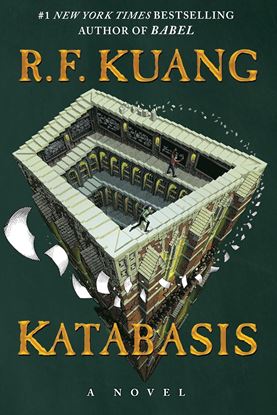
KATABASIS (EXP)
The story of a hero’s descent to the underworld
Alice Law has only ever had one goal: to become one of the brightest minds in the field of Magick. She has sacrificed everything to make that a reality: her pride, her health, her love life, and most definitely her sanity. All to work with Professor Jacob Grimes at Cambridge, the greatest magician in the world.
That is, until he dies in a magical accident that could possibly be her fault.
Grimes is now in Hell, and she’s going in after him. Because his recommendation could hold her very future in his now incorporeal hands and even death is not going to stop the pursuit of her dreams….
Nor will the fact that her rival, Peter Murdoch, has come to the very same conclusion.
With nothing but the tales of Orpheus and Dante to guide them, enough chalk to draw the Pentagrams necessary for their spells, and the burning desire to make all the academic trauma mean anything, they set off across Hell to save a man they don’t even like.
But Hell is not like the storybooks say, Magick isn’t always the answer, and there’s something in Alice and Peter’s past that could forge them into the perfect allies…or lead to their doom.
1,450
1,450
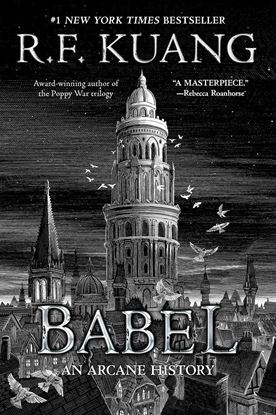
BABEL (PB)
1828. Robin Swift, orphaned by cholera in Canton, is brought to London by the mysterious Professor Lovell. There, he trains for years in Latin, Ancient Greek, and Chinese, all in preparation for the day he’ll enroll in Oxford University’s prestigious Royal Institute of Translation—also known as Babel.
Babel is the world's center for translation and, more importantly, magic. Silver working—the art of manifesting the meaning lost in translation using enchanted silver bars—has made the British unparalleled in power, as its knowledge serves the Empire’s quest for colonization.
For Robin, Oxford is a utopia dedicated to the pursuit of knowledge. But knowledge obeys power, and as a Chinese boy raised in Britain, Robin realizes serving Babel means betraying his motherland. As his studies progress, Robin finds himself caught between Babel and the shadowy Hermes Society, an organization dedicated to stopping imperial expansion. When Britain pursues an unjust war with China over silver and opium, Robin must decide…
1,450