1,450
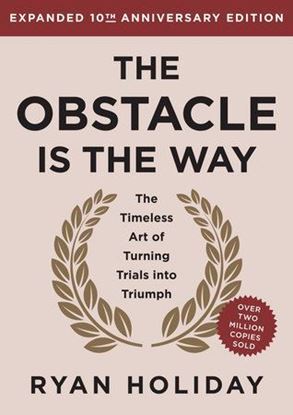
THE OBSTACLE IS THE WAY EXPANDED 10TH
Icons of history—from Epictetus and Demosthenes to Amelia Earhart and Richard Wright—followed a simple formula to achieve greatness. They were not exceptionally brilliant, lucky, or gifted. Their success in overcoming extreme obstacles was the result of a timeless set of philosophical principles that the greatest men and women have always pursued.
1,450
1,450
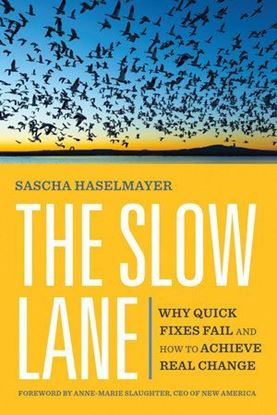
THE SLOW LANE
Avoid the speed trap! Discover how changemakers can find lasting solutions to urgent social problems through a proven 5-step process for listening thoughtfully, building broad support, and exploring unconventional options.
Society celebrates leaders who promise fast, easy solutions to the world’s problems—but quick fixes are just mirages that fade, leaving us with the same broken systems. The truth is, effective social change happens through slow, intentional actions.
1,450
1,450
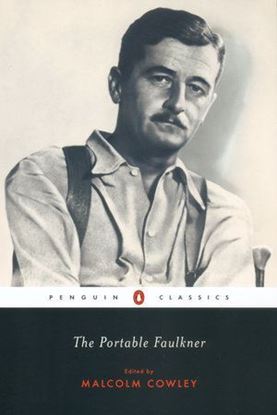
THE PORTABLE FAULKNER
In prose of biblical grandeur and feverish intensity, William Faulkner reconstructed the history of the American South as a tragic legend of courage and cruelty, gallantry and greed, futile nobility and obscene crimes. He set this legend in a small, minutely realized parallel universe that he called Yoknapatawpha County, Mississippi.
1,450
1,450
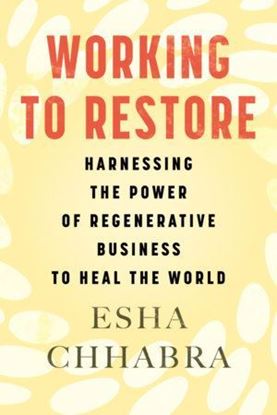
WORKING TO RESTORE
Political upheaval and social turmoil have peeled back the glitzy layers of capitalism to reveal an uncomfortable truth: historically, businesses have sourced materials from remote corners of the globe and moved millions of people and tons of cargo around the clock—all in the name of profit. Yet many of today’s startups are rewriting the rules of business: how it’s done, by whom, and, most importantly, for what purpose. Journalist Esha Chhabra draws on her decades of reporting to explore not only the “feel good, do good” factors of these restorative enterprises but also the nuanced realities and promise of regenerative business operations.
1,450
1,450
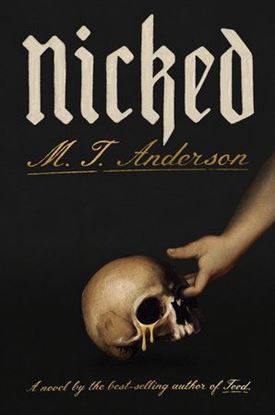
NICKED
The year is 1087, and a pox is sweeping through the Italian city of Bari. When a lowly monk is visited by Saint Nicholas in his dreams, he interprets the vision as a call to serve the sick. But his superiors, and the power brokers they serve, have different plans for the tender-hearted Brother Nicephorus.
Enter Tyun, a charismatic treasure hunter renowned for “liberating” holy relics from their tombs. The seven-hundred-year-old bones of Saint Nicholas are rumored to weep a mysterious liquid that can heal the sick, Tyun says. For the humble price of a small fortune, he will steal the bones and deliver them to Bari, curing the plague and restoring glory to the fallen city. And Nicephorus, the “dreamer,” will be his guide.
What follows is a heist for the ages, as Nicephorus is swept away on strange tides, and alongside even stranger bedfellows, to commit sacrilegious theft. Based on real historical accounts, Nicked is a swashbuckling saga, a medieval novel noir, a meditation on the miraculous, and a monastic meet-cute, filled with wide-eyed wonder at the world that awaits beyond our own borders.
1,450

1,450
DON QUIJOTE DE LA MANCHA (RAE) (TD)
Hace diez años la Asociación de Academias de la Lengua Española pensó este Quijote para todos. Hoy se reedita -en edición limitada- para conmemorar los 400 años de la muerte de su autor. Los años 2015 y 2016 conforman un bienio de aniversarios cervantinos. A la celebración del IV Centenario de la publicación de la segunda parte de Don Quijote (2015), le sigue, en 2016, la conmemoración del IV Centenario de la muerte de su autor, Miguel de Cervantes. Como ocurrió hace más de una década, las Academias de la Lengua Española y la editorial Alfaguara se unen a esta celebración con la reedición de este clásico universal, que llevaba siete años fuera de las librerías. Esta edición reproduce el texto crítico y las notas de Francisco Rico, a su vez coordinador del volumen, y se completa con estudios de escritores y filólogos de la talla de Mario Vargas Llosa, Francisco Ayala, Martín de Riquer, José Manuel Blecua, Guillermo Rojo, José Antonio Pascual, Margit Frenk y Claudio Guillén.Como novedad, la presente edición cuenta con un prólogo de Darío Villanueva, director de la Real Academia Española, escrito especialmente para la ocasión. La crítica ha dicho... «Lo considero un libro para el siglo XXI.» Mario Vargas Llosa «Uno de los grandes acontecimientos literarios del año.» ABC «El volumen tiene una sobria y elegante presentación y una cuidadísima realización.» José Andrés Rojo, El País
1,450