

1,150
THE WORLD AFTER ALICE
When Morgan and Benji surprise their families with a wedding invitation to Maine, they’re aware the news of their clandestine relationship will come as a shock. Twelve years have passed since the stunning loss of sixteen-year-old Alice, Benji’s sister and Morgan’s best friend, and no one is quite the same. But the young couple decide to plunge headlong into matrimony, marking the first time their fractured families will reunite since Alice’s funeral.
As the arriving guests descend upon the tranquil coastal town, they bring with them not only skepticism about the impromptu nuptials but also deep-seated secrets and agendas of their own. Peter, Morgan’s father, may be trying to dissuade his daughter from saying “I do,” while Linnie, Benji’s mother, introduces a boyfriend who bears a tumultuous past of his own. Nick, Benji’s father, is scheming to secure a new job before his wife—formerly his mistress—discovers he’s lost his old one. Morgan, too, carries delicate secrets that threaten to jeopardize the happiness for which she has so longed. And as for Benji—well, he’s just trying to make sure the whole weekend doesn’t implode.
1,150
1,150
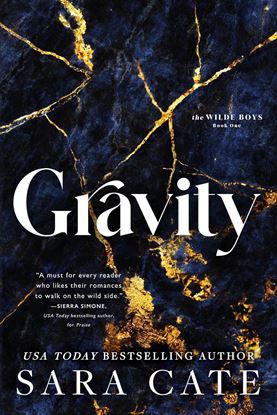
GRAVITY
Two years after Zara's sister and her boyfriend were killed in a plane crash, the last person Zara expected to show up on her doorstep was Preston's father, Alistair Wilde. Yet, there he is, with an offer Zara may not be able to pass up: be his son's girlfriend for three months, live with the two of them in a remote house, and one million dollars is hers for the taking.
The challenge turns out to be harder than she ever expected. Nash isn't just wild, he's dangerous. And Alistair is far more broken than he lets the world believe.
The three of them are bound by grief. Only Zara can feed Nash's hunger and heal Alistair's pain. Lines are crossed. Rules are broken. On the island, there's no one to tell them this is wrong. And now she'll have to choose before she tears their family apart.
1,150
1,150
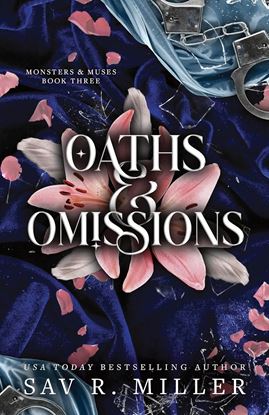
OATHS AND OMISSIONS
Lenny Primrose has lived her entire life as her rich father's puppet. Now, at twenty-three, she's no longer interested in playing his games. Unfortunately, the only way to avoid being married off to one of her father's business partners is to involve the man he fears most: the British assassin who almost killed him.
Jonas Wolfe would be content to never be in the same room as a Primrose ever again. His days are filled with contracted murder and running his pub anything to keep from sitting around thinking about his one failed mission.
But when Lenny commits a rash crime, Jonas steps in to help, and extracting himself from her family becomes impossible.
1,150

1,150
FULL TILT (DELUXE EDITION)
Kacey Dawson is a rising rock guitarist, living fast and burning out faster. When a concert in Vegas spirals into chaos, she wakes up on the couch of Jonah Fletcher, a quiet, artistic limo driver with a secret that's ticking down the days of his life.
Jonah has no room for distractions. His final months are mapped out: finish his glass art installation and leave behind a legacy. But Kacey crashes into his world like a supernova messy, vibrant, and impossible to ignore.
1,150
1,150
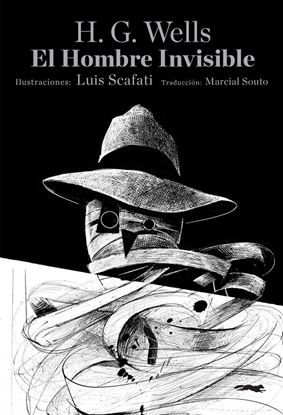
EL HOMBRE INVISIBLE (ILUSTR)
Publicada originalmente en 1897 por entregas, El Hombre Invisible relata las contradicciones de un joven y brillante científico que se desprende de toda ética en pro de su sed de dominio y lucro personal. Este clásico atemporal del escritor británico H. G. Wells, conocido como el padre de la ciencia ficción, nos pide reflexionar acerca de los límites éticos de la ciencia en esta época de veloces avances médicos y tecnológicos.
La novela empieza en un día de nieve cerrada, con la llegada de un hombre, cubierto con vendas, sombrero y gafas oscuras, a un pequeñísimo pueblo inglés. A los pocos días, el inquietante personaje recibe un paquete con un cargamento lleno de tubos de ensayo y productos químicos, y se encierra a trabajar en un misterioso experimento. Todo indica que ha sufrido un terrible accidente. Sin embargo, la curiosidad de los vecinos puede más que la compasión y poco a poco conseguirán arrancarle a este forastero su terrible secreto.
1,150

1,150
UNA HUMILDE PROPUESTA... Y OTROS ESCRITO
Conocido sobre todo por sus célebres Viajes de Gulliver, ya publicados en esta colección, Jonathan Swift (1667-1745) fue un satírico mordaz y un polemista incansable. Dentro de esta línea se inserta el que sin duda es su otro trabajo más popular, obra maestra del sarcasmo y el humor negro, titulado «Una humilde propuesta que tiene por objeto evitar que los hijos de los pobres sean una carga para sus padres o para el país, y hacer que redunden en beneficio de la comunidad». La sugerencia que en él se hace de la antropofagia como lenitivo del problema social es el máximo exponente de la ironía que impregna asimismo «Instrucciones a los sirvientes» o «Un proyecto serio y útil para construir un hospital de incurables». Completan el volumen otros escritos de carácter misceláneo que dan un atisbo de la personalidad e inquietudes de Swift.
1,150