

750
563
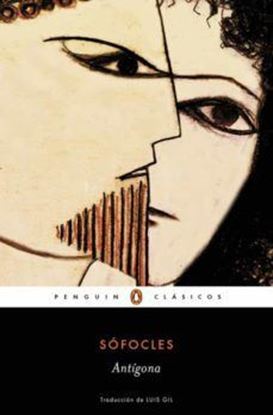
ANTIGONA
Antígona, hija del rey Edipo, se debate entre ceñirse a la ley impuesta o infringirla para honrar a su difunto hermano
Antígona está basada en el mito de la mujer que se atrevió a enfrentarse a los hombres para lograr sus propósitos. En esencia, la trama de la obra plantea una reflexión sobre la tiranía, las razones del estado y los dilemas de conciencia. Representada por primera vez en el año 442 a.C., Sófocles utilizó personajes arquetípicos para contraponer dos nociones opuestas del deber: el respeto a las normas religiosas frente a las civiles, caracterizadas unas por Antígona y las otras por Creonte.
Esta edición cuenta con la traducción y el prólogo Luis Gil, profesor emérito en la Universidad Complutense de Madrid. Incluye, además, el estudio en forma de epílogo realizado por los profesores de comunicación audiovisual de la Universidad Pompeu Fabra Jordi Balló y Xavier Pérez.
«Y ¿qué derecho divino he transgredido? Mas ¿por qué he de poner, desdichada de mí, mi vista aún en los dioses? ¿A qué aliado puedo invocar?»
750
563
750
563
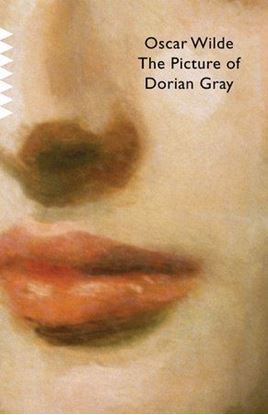
THE PICTURE OF DORIAN GRAY (VINTAGE CLAS
The Picture of Dorian Gray is Oscar Wilde's enduringly popular story of a beautiful and corrupt man and the portrait that reveals all his secrets. Entranced by the perfection of his recently painted portrait, the youthful Dorian Gray expresses a wish that the figure on the canvas could age and change in his place. When his wish comes true, the portrait becomes his hideous secret as he follows a downward trajectory of decadence and cruelty that leaves its traces only in the portrait's degraded image. Wilde's unforgettable portrayal of a Faustian bargain and its consequences is narrated with his characteristic incisive wit and diamond-sharp prose. The result is a novel that is as flamboyant and controversial as its incomparable author.
750
563
750
563
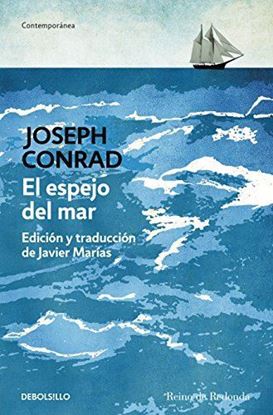
EL ESPEJO DEL MAR (BOL)
Las crónicas que conforman este libro repasan las vivencias marítimas de Conrad, primero como marinero en Francia y más adelante en la marina mercante británica. Estos textos componen un vivísimo retrato de la relación entre el hombre y el mar en una época en que la llegada del vapor supuso el fin de la hegemonía de los barcos devela. Considerado como el cruce entre un cantar de gesta sobre la navegación a vela y la biblia del oleaje, El espejo del mares la insuperable reminiscencia de una forma de vida y una obra imprescindible para comprender a su autor.
750
563

750
563
THE DOG OF THE NORTH
Penny Rush has problems. Her marriage is over; she’s quit her job. Her mother and stepfather went missing in the Australian outback five years ago; her mentally unbalanced father provokes her; her grandmother Dr. Pincer keeps experiments in the refrigerator and something worse in the woodshed. But Penny is a virtuoso at what’s possible when all else fails.
750
563
750
563
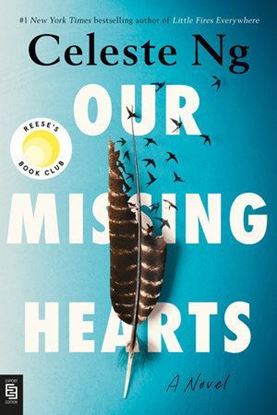
OUR MISSING HEARTS
Twelve-year-old Bird Gardner lives a quiet existence with his loving but broken father, a former linguist who now shelves books in a university library. His mother Margaret, a Chinese American poet, left the family when he was nine years old without a trace. Bird knows to not ask too many questions, stand out too much, or stray too far. For a decade, his family's life has been governed by laws written to preserve “American culture” in the wake of years of economic instability and violence. To keep the peace and restore prosperity, the authorities are now allowed to relocate children of dissidents, especially those of Asian origin, and libraries have been forced to remove books seen as unpatriotic.
Bird has grown up disavowing his mother and her poems; he doesn’t know her work or what happened to her, and he knows he shouldn’t wonder. But when he receives a mysterious letter containing only a cryptic drawing, he is pulled into a quest to find her. His journey will take him back to the many folktales she poured into his head as a child, through the ranks of an underground network of librarians, into the lives of the children who have been taken, and finally to New York City, where a new act of defiance may be the beginning of much-needed change.
750
563
750
563
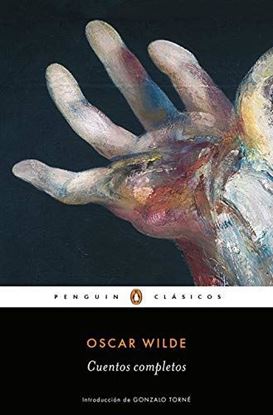
CUENTOS COMPLETOS (WILDE)
La ironía, la honda melancolía y la inconfundible mirada desencantada de Oscar Wilde impregnan cada una de estas páginas, erigiéndose como monumento paródico y duramente crítico hacia la sociedad victoriana de finales del siglo XIX. Todo ello esbozado con un estilo único, patente desde las sátiras de «El crimen de lord Arthur Savile» y «El fantasma de Canterville» hasta los cuentos de hadas como «El Príncipe Feliz», «El ruiseñor y la rosa» y «El gigante egoísta». El presente volumen reúne toda la narrativa breve del autor irlandés, vertida por el maestro Julio Gómez de la Serna-.
750
563