

2,995
2,246
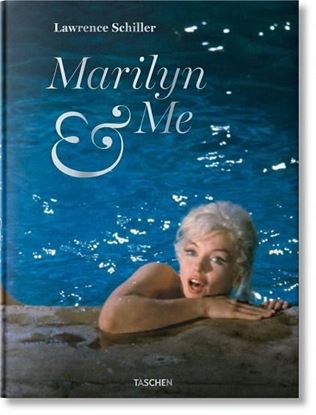
LAWRENCE SCHILLE. MARILYN & ME (FO)
“Tú ya eres famosa, el que se va a hacer famoso ahora soy yo”, le dijo el fotógrafo Lawrence Schiller mientras hablaban de las fotografías que estaba a punto de hacerle. “No seas tan arrogante”, le respondió burlona Marilyn. “Sustituir a un fotógrafo es fácil”. Esto ocurrió en 1962, y Schiller, que por entonces tenía 25 años, cumplía un encargo para Paris Match. Conocía ya a Marilyn (ambos habían trabado amistad dos años antes, cuando se conocieron durante el rodaje de El multimillonario), pero esto no le sirvió de nada el día en que ella accedió a posar desnuda ante su cámara durante la escena de la piscina en Something’s Got to Give.
2,995
2,246
1,250
938
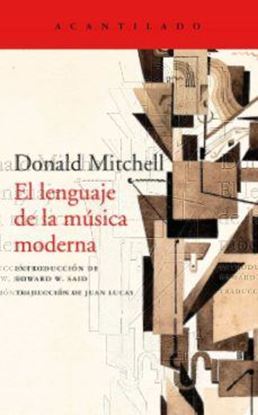
EL LENGUAJE DE LA MUSICA MODERNA
En este extraordinario ensayo publicado originalmente en 1963, Donald Mitchell examina con gran perspicacia y sensibilidad los valores filosóficos y estéticos que determinaron el lenguaje de la música del siglo xx. Para ello se centra en las figuras de Schoenberg y Stravinski, representantes de dos estilos genuinamente modernos y de una nueva sensibilidad. Mediante la rigurosa aplicación de técnica y construcción formal, ambos compositores dotaron a la música de nuevos vocabularios y transformaron las convenciones de escucha y composición para siempre. Dado el carácter multidisciplinar de este ensayo, los años lo han elevado al estatus de clásico no sólo en el campo de la musicología, sino también de los estudios culturales.
1,250
938
6,700
5,025
VERMEER. THE COMPLETE WORKS (GB)
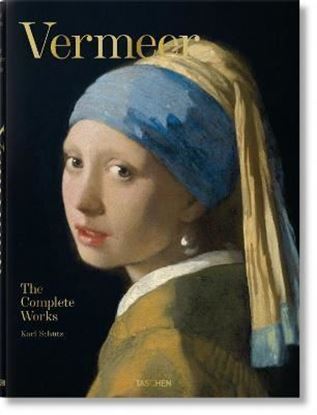
His works have prompted a New York Times bestseller; a film starring Scarlett Johansson and Colin Firth; record visitor numbers at art institutions from Amsterdam to Washington, DC; and special crowd-control measures at the Mauritshuis, The Hague, where thousands flock to catch a glimpse of the enigmatic and enchanting Girl with a Pearl Earring, also known as the “Dutch Mona Lisa”.
In his lifetime, however, the fame of Johannes Vermeer (1632–1675) barely extended beyond his native Delft and a small circle of patrons. After his death, his name was largely forgotten, except by a few Dutch art collectors and dealers. Outside of Holland, his works were even misattributed to other artists. It was not until the mid-19th century that Vermeer came to the attention of the international art world, which suddenly looked upon his narrative minutiae, meticulous textural details, and majestic planes of light, spotted a genius, and never looked back.
6,700
5,025
2,300
1,725
HOMES FOR OUR TIME (ING) (40 ANIV.)
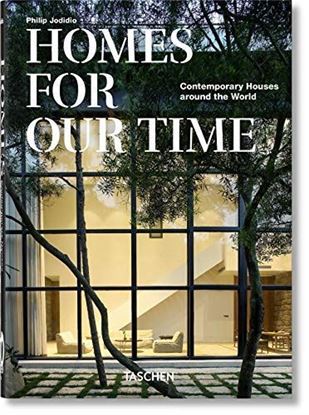
Across small cottages and lavish villas, beach houses and forest refuges, discover the world’s finest crop of new homes. This cutting-edge global digest features such talents as Shigeru Ban and Marcio Kogan alongside up-and-coming names like Aires Mateus, Xu Fu-Min, Vo Trong Nghia, Desai Chia, and Shunri Nishizawa. Here, there are homes in Australia and New Zealand, from China and Vietnam, in the United States and Mexico, and on to less expected places like Ecuador and Costa Rica. The result is a sweeping survey of the contemporary house and a revelation that homes across the globe may have more in common than expected.
Among guava trees and abandoned forts in Western India is a sanctuary designed for and by Kamal Malik of Malik Architecture. The House of Three Streams is a sprawling spectacle with high ceilings, verandas, and pavilions, perched atop a ridge overlooking two ravines. A medley of steel, glass, wood, and stone, the house weaves along the contour of the landscape, almost as an extension of the forest. Encina House by Aranguren & Gallegos, an elegant, sloping structure reminiscent of a gazebo, similarly inhabits its surrounding vista. Ensconced in a pine forest north of Madrid, the lower level is embedded in rock and connected to the upper by a natural stone wall. Shinichi Ogawa’s Seaside House is an immaculate two-story minimalist marvel in Kanagawa that overlooks the Pacific. Its living area spills onto a cantilevered terrace and infinity pool, almost dissolving into the ocean as one seamless entity. In Vietnam, Shunri Nishizawa’s House in Chau Doc exudes tropical sophistication with exposed timber beams, woven bamboo, plants, concrete panels, and inner balconies and terraces. Its corrugated iron panels act as moveable walls and shutters, ushering in views of surrounding rice fields.
2,300
1,725
1,350
1,013
HIROSHIGE (BASIC ART EDITION) GB
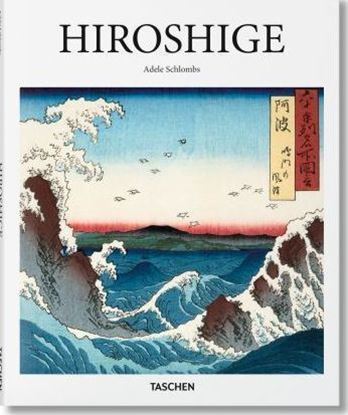
Utagawa Hiroshige (1797–1858) was one of the last great artists in the ukiyo-e tradition. Literally meaning “pictures of the floating world,” ukiyo-e was a particular woodblock print genre of art that flourished between the 17th and 19th centuries. Subjects ranged from the bright lights and attractions of Edo (modern-day Tokyo), to spectacular natural landscapes.
In the West, Hiroshige’s prints became exemplary of the Japonisme that swept through Europe and defined the Western world’s visual idea of Japan. Because they could be mass produced, ukiyo-e works were often used as designs for fans, greeting cards, and book illustrations. The style influenced Impressionist, Post-Impressionist, and Art Nouveau artists alike, with Vincent van Gogh and James Abbott McNeill Whistler both particularly inspired by Hiroshige’s landscapes.
1,350
1,013
1,350
1,013
EXPRESSIONISM (BASIC ART EDITION) GB
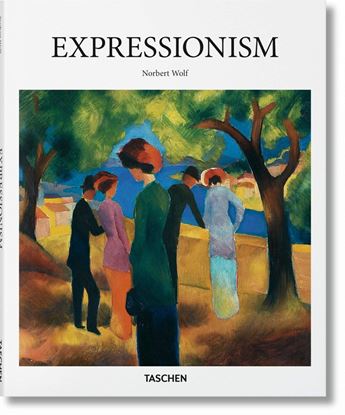
Sharp angles, strange forms, lurid colors, and distorted perspectives are classic hallmarks of Expressionism, the twentieth century movement that prioritized emotion over objective reality. Though particularly present in Germany and Austria, the movement’s approach flourished internationally and is today hailed as one of the most influential shifts in art history.
With leading groups Die Brücke (The Bridge) and Der Blaue Reiter (The Blue Rider), and key players such as Wassily Kandinsky, Egon Schiele, and Emil Nolde, the Expressionists disowned Impressionism, which they regarded as “man lowered to the position of a gramophone record of the outer world”, to depict instead a raw and visceral experience of life as it was felt, rather than seen on the surface. Their paintings brim with emotive force, conveyed in particular through intense and non-naturalistic color palettes, loose brushwork, and thick textures.
1,350
1,013