

2,300
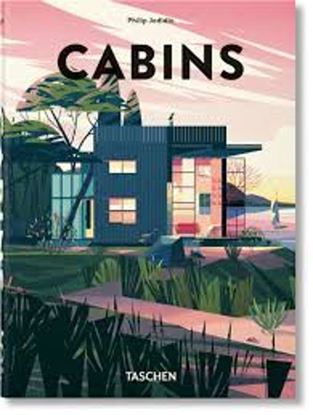
CABINS (45TH ED.) (INT)
Desde que Henry David Thoreau describiera en Walden o Vida en los bosques (1854) los dos años, dos meses y dos días que habitó en una cabaña en Walden Pond (Massachusetts), la idea de una vivienda refugio ha seducido a la psique moderna. En la última década, con el crecimiento exponencial del consumo de materias primas y el impacto de nuestra huella ecológica, arquitectos internacionales se han interesado por las posibilidades que brinda un tipo de casa aislada, minimalista y de bajo impacto.
Esta edición de Cabañas, que combina un texto en profundidad con abundantes fotografías y brillantes ilustraciones de Marie-Laure Cruschi, explora las oportunidades que brinda este tipo de arquitectura para la creatividad. La cabaña renuncia a los excesos y limita su intrusión espacial a cubrir las necesidades esenciales para vivir, al tiempo que se muestra respetuosa con el medio natural en el que se ubica y prioriza soluciones ecológicas. Así, las cabañas ofrecen algunas de las propuestas más innovadoras y con mayor visión de futuro de la arquitectura contemporánea, de la mano de Renzo Piano, Terunobu Fujimori, Tom Kundig y muchos otros jóvenes profesionales que trabajan en estos espacios refugio.
2,300

2,300
HIROSHIGE (45TH ED.) (INT)
Utagawa Hiroshige (1797–1858) was one of the last great artists in the ukiyo-e tradition. Literally meaning “pictures of the floating world,” ukiyo-e was a particular genre of art that flourished between the 17th and 19th centuries and came to characterize the Western world’s visual idea of Japan. In many ways images of hedonism, ukiyo-e scenes often represented the bright lights and attractions of Edo (modern-day Tokyo): beautiful women, actors and wrestlers, city life, and spectacular landscapes.
Though he captured a variety of subjects, Hiroshige was most famous for landscapes, with a final masterpiece series known as “One Hundred Famous Views of Edo” (1856–1858), which depicted various scenes of the city through the seasons, from bustling shopping streets to splendid cherry orchards.
This reprint is made from one of the finest complete original sets of woodblock prints belonging to the Ota Memorial Museum of Art in Tokyo. It pairs each of the 120 illustrations with a description, allowing readers to immerse themselves in these beautiful, vibrant vistas that became paradigms of Japonisme and inspired Impressionist, Post-Impressionist and Art Nouveau artists alike, from Vincent van Gogh to James McNeill Whistler.
2,300
1,500
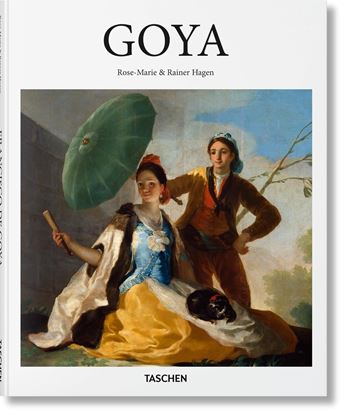
GOYA (BASIC ART SERIES 2.0)
From court portraits for the Spanish royals to horrific scenes of conflict and suffering, Francisco José de Goya y Lucientes (1746–1828) made a mark as one of Spain’s most revered and controversial artists. A master of form and light, his influence reverberates down the centuries, inspiring and fascinating artists from the Romantic Eugène Delacroix to Britart enfants terribles, the Chapman brothers.Born in Fuendetodos, Spain, in 1746, Goya was apprenticed to the Spanish royal family in 1774, where he produced etchings and tapestry cartoons for grand palaces and royal residences across the country. He was also patronized by the aristocracy, painting commissioned portraits of the rich and powerful with his increasingly fluid and expressive style. Later, after a bout of illness, the artist moved towards darker etchings and drawings, introducing a nightmarish realm of witches, ghosts, and fantastical creatures.It was, however, with his horrific depictions of conflict that Goya achieved enduring impact. Executed between 1810 and 1820, The Disasters of War was inspired by atrocities committed during the Spanish struggle for independence from the French and penetrated the very heart of human cruelty and sadism. The bleak tones, agitated brushstrokes, and aggressive use of Baroque-like light and dark contrasts recalled Velázquez and Rembrandt, but Goya’s subject matter was unprecedented in its brutality and honesty.In this introductory book from TASCHEN Basic Art 2.0 we set out to explore the full arc of Goya’s remarkable career, from elegant court painter to deathly seer of suffering and grotesquerie. Along the way, we encounter such famed portraits as Don Manuel Osorio Manrique de Zúñiga, the dazzling Naked Maja, and The 3rd of May 1808 in Madrid, one of the most heart-stopping images of war in the history of art.
1,500

1,450
BREVE HISTORIA DE LOS AGUJEROS NEGROS
En este preciso momento estás orbitando alrededor de un agujero negro.
Rebecca Smethurst, galardonada investigadora de la Universidad de Oxford, arroja luz sobre el fenómeno más misterioso y emocionante de la astrofísica, y desarma los equívocos construidos a su alrededor para contarnos que los agujeros negros no son realmente negros. Que se parecen más a una mullida almohada que a una potente aspiradora. Que orbitamos alrededor del agujero negro supermasivo denominado Sagitario A*.
1,450
4,500
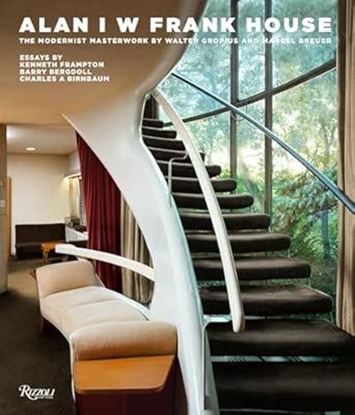
ALAN I W FRANK HOUSE: THE MODERNIST M.
The first book to feature this modernist masterpiece, one of Walter Gropius and Marcel Breuer's most important residential commissions.
Offering a rare opportunity to explore the largest and most luxurious house designed by Walter Gropius, founder of the Bauhaus, and Marcel Breuer, leading architect and furniture designer of the twentieth century, this beautifully designed volume celebrates the Alan I W Frank House in Pittsburgh, Pennsylvania.
Built in 1939-40, the house embodies the Bauhaus "total work of art" philosophy, with Gropius and Breuer having designed every aspect of the building and its site. Illustrations including new and archival images and the architects' plans and sketches highlight an exquisite balance of proportions and colors. Accompanying essays place this house firmly within the American modernist canon just as the Bauhaus celebrates its one-hundreth anniversary in 2019.
4,500
1,950
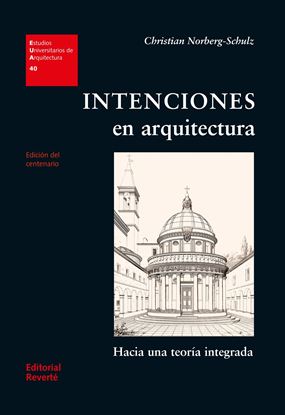
INTENCIONES EN ARQUITECTURA. HACIA UNA
Este libro apareció originalmente en inglés, fruto de la tesis doctoral del autor. La primera versión española se publicó en 1979 y se reimprimió en 1988. Desde entonces el libro ha estado descatalogado. Esta nueva edición, totalmente revisada y remaquetada con las figuras junto al texto, se publica para celebrar el centenario del nacimiento de Christian Norberg-Schulz.
Los arquitectos siempre se han mostrado bastante reacios a desarrollar una base teórica en su campo, sobre todo a causa del prejuicio de que la teoría acaba con la facultad creadora. En este estudio se intentará demostrar que esa visión es errónea.
El libro se centra principalmente en los aspectos simbólico y lingüístico, y su propósito es desarrollar una teoría integrada de la arquitectura. Para ello se indaga en la descripción y en las intenciones: la descripción, en la medida en que la arquitectura es una ciencia; las intenciones (tanto las del usuario como las del arquitecto), en la medida en que la arquitectura es un arte.
La estructura del libro es seguramente una de las construcciones intelectuales más impresionantes que haya elaborado nunca un arquitecto. Los fundamentos en los que se basa incluyen la psicología de la Gestalt, el mecanismo de la percepción, la teoría de la información, la filosofía analítica (en particular el análisis lingüístico) y la teoría general de los signos y los símbolos. Todos esos conocimientos tienen su lugar y su propósito, ninguno se emplea para lograr un efecto puramente decorativo. Y todos esos enfoques, aparentemente divergentes, se articulan en un plan estrictamente organizado para proponer una teoría de aplicación general, una teoría que abarca los aspectos funcionales, formales y técnicos que, combinados mediante relaciones semánticas, están siempre presentes en la obra de arquitectura, entendida como una totalidad.
1,950