

1,350
1,013
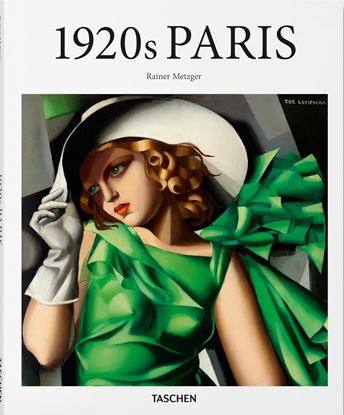
PARIS 1920S (BA) (GB)
Paris is the City of Light in all its facets. In the 1920s La Ville des lumières gleams especially bright and becomes a magnet for creative people from around the world. This is the decade of Coco Chanel and Josephine Baker, Art Deco and Surrealism, café culture and cabaret. The most famous artists of the epoch, later called Classic Modernism, are in close contact and have lively exchanges with one another – including Marcel Duchamp, Francis Picabia, Pablo Picasso, René Clair, Sonia Delaunay, André Breton, Paul Éluard, Max Ernst and Salvador Dalí. The creative life and all its excesses flourish bohème is the word for this way of living. Composers like Igor Stravinsky, writers like James Joyce or Ernest Hemingway and exiles from Eastern Europe like Constantin Brancusi or Marc Chagall enrich the illustrious scene on Montparnasse.
1,350
1,013
1,350
1,013
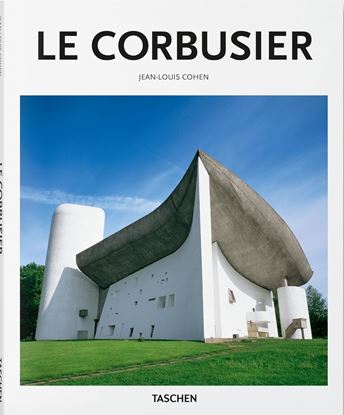
LE CORBUSIER (BA) (GB)
Born Charles-Édouard Jeanneret, Le Corbusier (1887–1965) is widely acclaimed as the most influential architect of the 20th century. From private villas to mass social housing projects, his radical ideas, designs, and writings presented a whole-scale reinvention not only of individual structures, but of entire concepts of modern living.
1,350
1,013
1,350
1,013
HOKUSAI (BASIC ART) (ES)
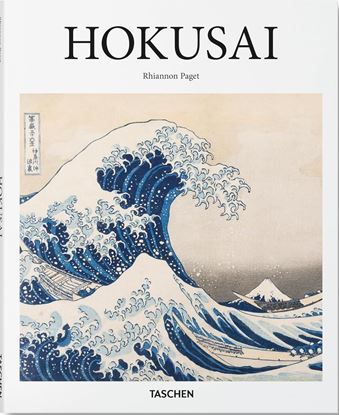
Meet the artist whose majestic breaking wave sent ripples across the world. Hokusai (1760–1849) is not only one of the giants of Japanese art and a legend of the Edo period, but also significantly influenced Western modernism, whose prolific gamut of prints, illustrations, paintings, and beyond forms one of the most comprehensive oeuvres of ukiyo-e art and a benchmark of japonisme. His influence spread through Impressionism, Art Nouveau, and beyond, enrapturing the likes of Claude Monet, Berthe Morisot, Edgar Degas, Mary Cassatt, and Vincent van Gogh.
1,350
1,013
1,350
1,013
LICHTENSTEIN (ES)
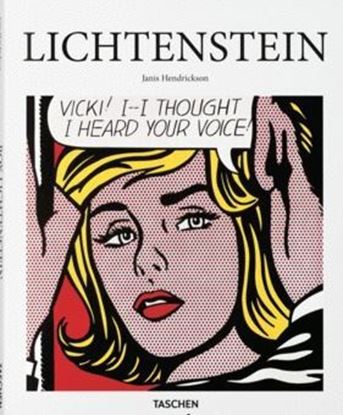
The American painter Roy Lichtenstein (1923-1997) sparked an artistic renewal in his country when he burst onto the scene dominated by Abstract Expressionism in New York in the late 1950s, defining a new creative language for a new era. With his innovative use of industrial production techniques and mundane, everyday imagery, such as cartoons, comic strips, and advertising, Lichtenstein joined contemporary artists such as Andy Warhol and James Rosenquist in portraying and satirizing American media and consumer culture.
1,350
1,013
13,500
10,125
XL-HOKUSAI-INT
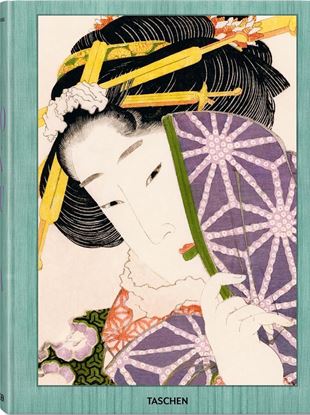
At the age of six, Hokusai was said to have painted his first picture, and a year after his death aged 89, his designs for illustrated books were posthumously published. Tracing a long, prolific career, this edition spans each of the artist’s creative phases: from the actor portraits with which Hokusai started out to the 1,300 designs carried out in his final years under the name Manji.Reproducing 746 woodblock prints, paintings, sketches, and book illustrations, many of them in granular detail, this volume is comfortably the most complete publication on perhaps Japan’s most famous artist. Hokusai’s wide appeal as the recognizable figure of Japan’s Edo period endures to this day: in March 2023, a version of his iconic woodblock print Under the Wave off Kanagawa (or The Great Wave), from his series Thirty-six Views of Mount Fuji, was auctioned for 2.76 million US dollars.
13,500
10,125
9,500
7,125
XL-HIROSHIGE/EISEN, KISOKAIDO-INT
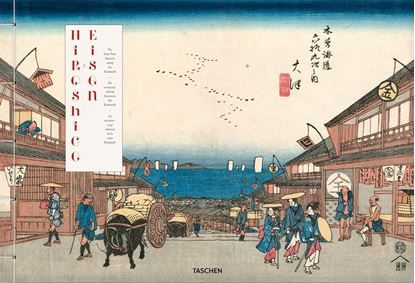
The Kisokaido route through Japan was ordained in the early 1600s by the country’s then-ruler Tokugawa Ieyasu, who decreed that staging posts be installed along the length of the arduous passage between Edo (present-day Tokyo) and Kyoto. Inns, shops, and restaurants were established to provide sustenance and lodging to weary travelers. In 1835, renowned woodblock print artist Keisai Eisen was commissioned to create a series of works to chart the Kisokaido journey. After producing 24 prints, Eisen was replaced by Utagawa Hiroshige, who completed the series of 70 prints in 1838.
9,500
7,125