
1,350
1,013
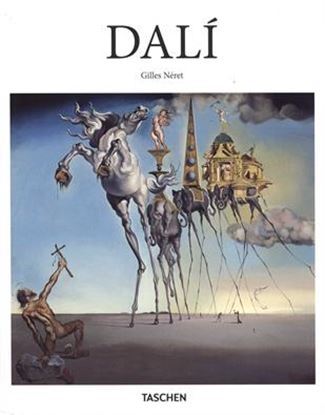
DALI (BA-ART)
Pintor, escultor, escritor, cineasta y un auténtico showman, Salvador Dalí (1904-1989) fue uno de los personajes más exhibicionistas y excéntricos del siglo xx. Pionero en introducir en el arte las ideas del psicoanálisis freudiano, es célebre en particular por sus prácticas surrealistas, con ideas tales como los relojes blandos o el teléfono langosta, que se han convertido en iconos del movimiento surrealista y del arte moderno en general.
Dalí solía describir sus cuadros como «fotografías de sueños pintadas a mano». La precisa representación de elementos estrambóticos y su disposición incongruente crean una incitante tensión e interés. El mismo Dalí explicó que pintaba con «el afán de la precisión más imperialista», pero solo «para sistematizar la confusión y contribuir al descrédito total del mundo de la realidad».
Con su peculiar bigote revolucionó el papel del artista representando a un personaje polémico en la esfera pública y creando obras que, además de contemplarse en las paredes de las galerías, podían consumirse en el ámbito de las artes gráficas, la moda, la publicidad, la escritura y el cine.
Este libro descubre las pinturas y la personalidad de Dalí, mostrando no solo su destreza técnica sino también sus composiciones provocadoras y sus temas estimulantes, como la muerte, la decadencia y el erotismo.
1,350
1,013
1,350
1,013
BACON (BASIC ART EDITION) GB
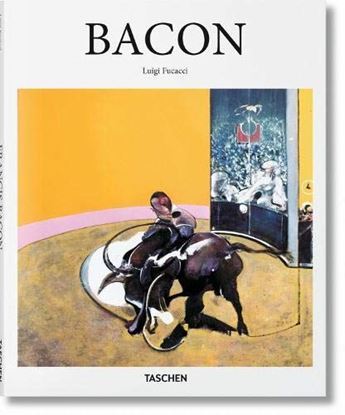
Largely self-taught as an artist, Francis Bacon (1909–1992) developed a unique ability to transform interior and unconscious impulses into figurative forms and intensely claustrophobic compositions.
Emerging into notoriety in the period following World War II, Bacon took the human body as his nominal subject, but a subject ravaged, distorted, and dismembered so as to writhe with intense emotional content. With flailing limbs, hollow voids, and tumurous growths, his gripping, often grotesque, portraits are as much reflections on the trials and the traumas of the human condition as they are character studies. These haunting forms were also among the first in art history to depict overtly homosexual themes.
1,350
1,013
1,350
1,013
EXPRESSIONISM (BASIC ART EDITION) GB
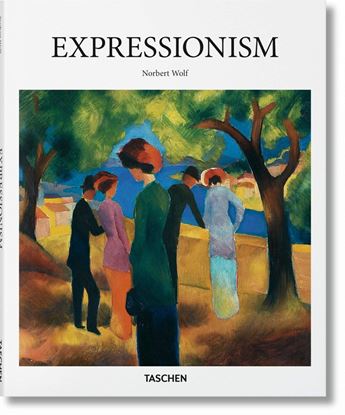
Sharp angles, strange forms, lurid colors, and distorted perspectives are classic hallmarks of Expressionism, the twentieth century movement that prioritized emotion over objective reality. Though particularly present in Germany and Austria, the movement’s approach flourished internationally and is today hailed as one of the most influential shifts in art history.
With leading groups Die Brücke (The Bridge) and Der Blaue Reiter (The Blue Rider), and key players such as Wassily Kandinsky, Egon Schiele, and Emil Nolde, the Expressionists disowned Impressionism, which they regarded as “man lowered to the position of a gramophone record of the outer world”, to depict instead a raw and visceral experience of life as it was felt, rather than seen on the surface. Their paintings brim with emotive force, conveyed in particular through intense and non-naturalistic color palettes, loose brushwork, and thick textures.
1,350
1,013
1,350
1,013
HIROSHIGE (BASIC ART EDITION) GB
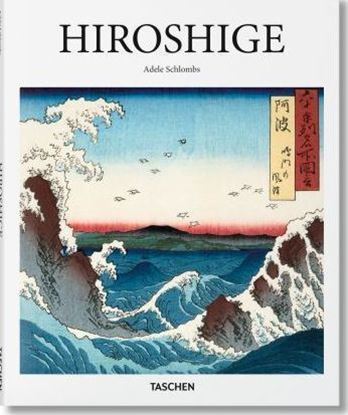
Utagawa Hiroshige (1797–1858) was one of the last great artists in the ukiyo-e tradition. Literally meaning “pictures of the floating world,” ukiyo-e was a particular woodblock print genre of art that flourished between the 17th and 19th centuries. Subjects ranged from the bright lights and attractions of Edo (modern-day Tokyo), to spectacular natural landscapes.
In the West, Hiroshige’s prints became exemplary of the Japonisme that swept through Europe and defined the Western world’s visual idea of Japan. Because they could be mass produced, ukiyo-e works were often used as designs for fans, greeting cards, and book illustrations. The style influenced Impressionist, Post-Impressionist, and Art Nouveau artists alike, with Vincent van Gogh and James Abbott McNeill Whistler both particularly inspired by Hiroshige’s landscapes.
1,350
1,013
1,350
1,013
ABSTRACT EXPRESSIONISM (BA-ARCH) (GB)
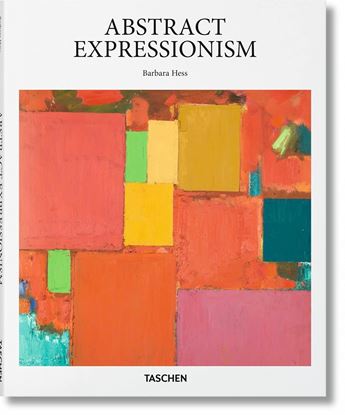
Hailed as the first American-born art movement to have a worldwide influence, Abstract Expressionism denotes the non-representational use of paint as a means of personal expression. It emerged in America in the 1940s, with lead protagonists including Jackson Pollock, Philip Guston, Robert Motherwell, Mark Rothko, and Willem de Kooning.
Abstract Expressionism spawned many different stylistic tendencies but two particularly prominent sub-categories: action painting, exemplified by de Kooning and Pollock, and color field painting, made most famous by Rothko. Throughout, Abstract Expressionists strove to convey emotions and ideas through the making of marks, through forms, textures, shades, and the particular quality of brushstrokes. The movement favored large-scale canvases, and embraced the role of accident or chance.
With featured works from 20 key Abstract Expressionist artists, this book introduces the movement which shifted the center of art gravity from Paris to New York and remains for many the golden moment of American art.
1,350
1,013
1,350
1,013
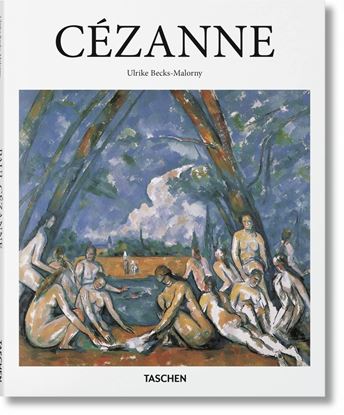
CEZANNE (BA-ART) (GB)
In the latter half of the 19th century, in the verdant countryside near Aix-en-Provence, Paul Cézanne (1839–1906), busily plied his brush to landscapes and still lifes that would become anchors of modern art. With compact, intense dabs of paint and bold new approaches to light and space, he mediated the way from Impressionism to the defining movements of the early 20th century and became, in the words of both Matisse and Picasso, “father of us all.”
This fresh artist introduction selects key works from Cézanne’s oeuvre to understand his development, innovation, and crucial influence on modern art. From compositions of fruits and pears to scenes of outdoor bathers, we trace his experimentation with color, perspective, and texture to evoke “a harmony parallel to Nature,” as well as the very process of seeing and recording.
Along the way, we discover Cézanne’s celebrated Card Players, his layering of warm and cool hues to build up form and surface, and the geometric rigor of his landscapes from the vicinity of Aix-en-Provence, as bright with the light of southern France as they are bold with a radical new rendering of dimensions and depth.
1,350
1,013