4,500
BUILDING ON TRADITION
Over two decades, William Curtis and Russell Windham have worked to show that classical architecture can embody the same attention to context and custom approach to design often ascribed to more modern movements, underscoring how versatile classical ideals and details can be. In styles reminiscent of the great Tudor manor houses of England to quaint symmetrical clapboard farmhouses, quintessentially Mission-style haciendas, and of course neo-Georgian mansions, the firm builds houses with a faithful adherence to historical detail, proportion, and materials that makes them stand out as truly world-class designers.
With interiors as much a part of their core practice as exteriors, this firm is able to carry through an integrity of vision—graciously curved banisters, warm and inviting mantels, detailed brickwork, and coffered ceilings—that makes every project feel truly whole, complete. Yet a strong sense still pervades every featured home that they are organized to support modern lifestyles, taking the best of the past and adapting it to create homes that are truly comfortable and functional for today’s families.
4,500
4,995
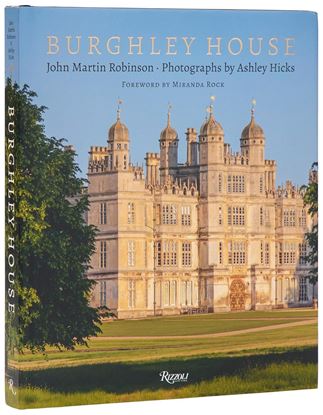
BURGHLEY HOUSE
Conceived by William Cecil, Lord High Treasurer to Queen Elizabeth I, and built between 1555 and 1587, Burghley House is a testament to the ambition and vision of the most powerful courtier of the first Elizabethan age.
Designed by Cecil himself, in consultation with the Dutch Renaissance architect and painter Hans Vredeman de Vries, the architecture and interiors at Burghley reflect a mix of contemporary fashionable influences. The house’s facades are each markedly different, with a striking and ornate Gothic gatehouse beneath a roofline of cupolas and obelisks, and with French and Italian styles visible in the windows and pilasters. And inside, where the State Rooms house remarkable collections of furniture, textiles, and Old Master paintings acquired over the centuries, Cecil’s Gothic-style Old Kitchen remains alongside the magnificent Renaissance staircase and Italianate fireplace in the Great Hall.
4,995
1,995
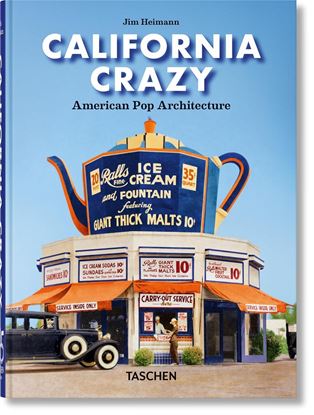
CALIFORNIA CRAZY. AMERICAN POP ARCHITEC
At the dawn of the automobile age, Americans’ predilection for wanderlust prompted a new wave of inventive entrepreneurs to cater to this new mode of transportation. Starting in the 1920s, attention-grabbing buildings began to appear that would draw in passing drivers for snacks, provisions, souvenirs, or a quick meal. The architectural establishment of the day dismissed these roadside buildings as “monstrosities”.
1,995

4,995
CAROLINA HERRERA
The sophistication and modern femininity of the American luxury fashion house Carolina Herrera is captured in this evocative and vividly hued volume photographed by Elizaveta Porodina. A collaborative series of images, the first chapter of which was created in 2020 over Zoom, feature Porodina’s signature timeless, painterly style—an effect achieved through complex lighting techniques and equipment— capture the brand’s evolving collections designed by Creative Director Wes Gordon in a dreamy, otherworldly light.
Inspired by dance, movement and the Herrera signature of bold color, this mesmerizing tome is flooded with photography of models and dancers in motion to reflect the vibrant energy and optimism of the clothing, arranged according to the chroma wheel instead of chronologically. Ethereal beauties, including singer and actress Dove Cameron, dancers Wendy Wheelan and Misa Kuranaga, and models Maggie Maurer and Mao Xing Xing, wear sweeping ballgowns, bold, saturated colors and dramatic silhouettes across ten collections designed by Wes Gordon over the past four years, capturing the fantastical universe of Beauty that is Carolina Herrera.
4,995

995
CARTIER. HISTORIA DETRAS DE LA MODA
Siga los pasos de la realeza, las celebridades y los mejor vestidos del mundo, y sumérjase en el lujoso universo de Cartier.
Recorra la historia de la famosa joyería y relojería, desde sus humildes comienzos en el París del siglo xix hasta el deslumbrante imperio que es ahora.
Descubra cómo la ambiciosa familia Cartier revolucionó el diseño, cautivó a marajás y presidentes, forjó estratégicas relaciones creativas y se hizo popular con diseños emblemáticos como el Panthère, el Tank y el brazalete Love.
995

5,995
CASE STUDY HOUSES. THE COMPLETE (FP)(INT
The Case Study House program (1945–66) was an exceptional, innovative event in the history of American architecture and remains to this day unique. The program, which concentrated on the Los Angeles area and oversaw the design of 36 prototype homes, sought to make available plans for modern residences that could be easily and cheaply constructed during the postwar building boom.
The program’s chief motivating force was Arts & Architecture editor John Entenza, a champion of modernism who had all the right connections to attract some of architecture’s greatest talents, such as Richard Neutra, Charles and Ray Eames, and Eero Saarinen. Highly experimental, the program generated houses that were designed to redefine the modern home, and thus had a pronounced influence on architecture―American and international―both during the program’s existence and even to this day.
TASCHEN brings you a monumental retrospective of the entire program with comprehensive documentation, brilliant photographs from the period and, for the houses still in existence, contemporary photos, as well as extensive floor plans and sketches.
5,995